Medical Identity Theft Prevention Checklist for Secure Operations
Medical identity theft bypasses financial alerts because health systems rely on clinical accuracy rather than billing fraud detection mechanisms.

Protect medical identity by monitoring Explanation of Benefits, restricting access to health records, and using dedicated accounts for healthcare portals. Verify every billing statement and restrict data sharing to minimize exposure vectors.
Understanding the Unique Threat Model
Medical identity theft operates differently from financial fraud. A thief uses your personal details to obtain medical services, prescriptions, or equipment. The provider bills the insurance company, not you directly. You may not see the charge on a bank statement. The damage accumulates in your medical history. This false history can lead to incorrect diagnoses or denied coverage later. The thief gains access to care while you bear the long-term consequences of altered records.
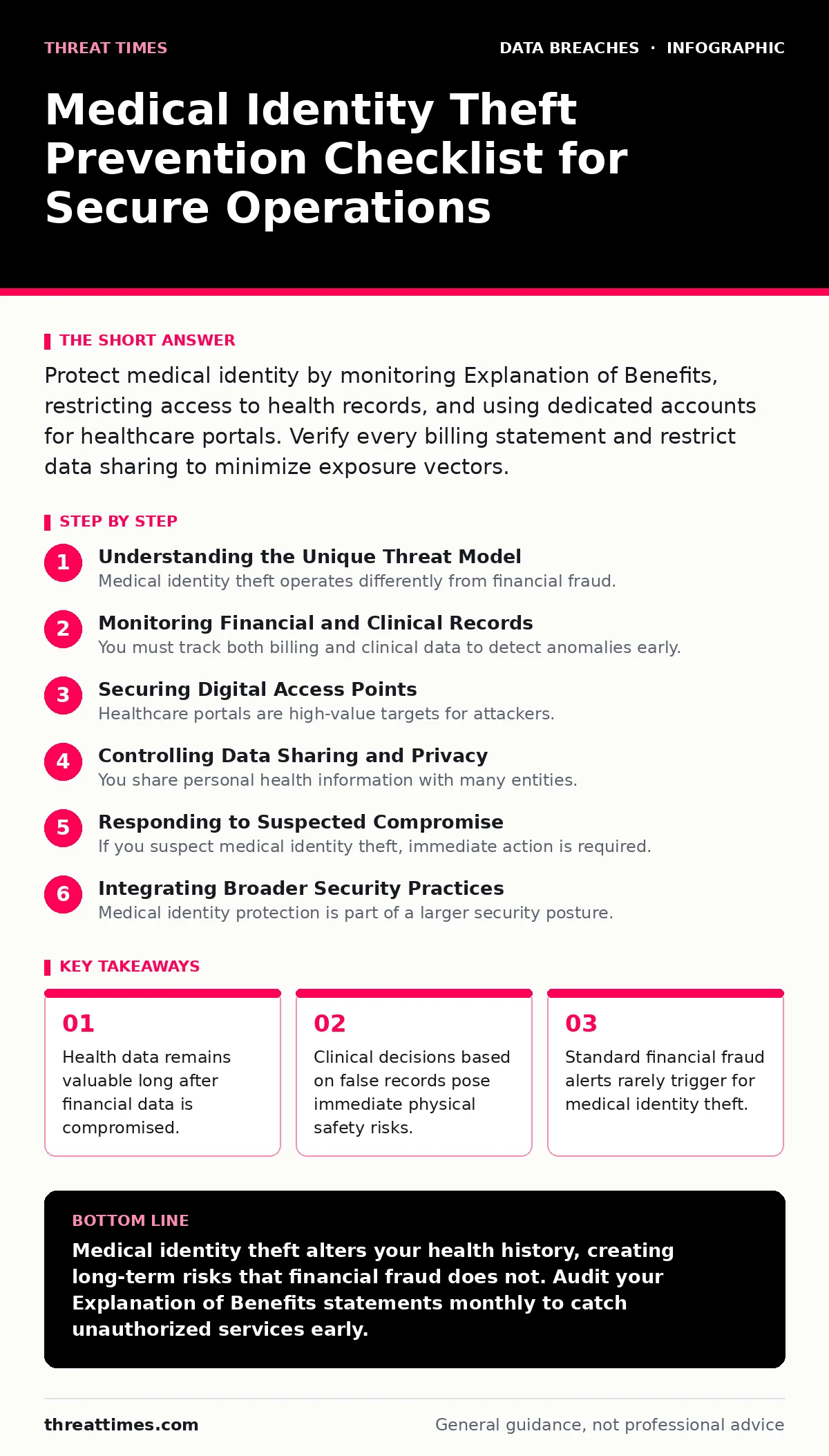
Monitoring Financial and Clinical Records
You must track both billing and clinical data to detect anomalies early. Financial records show unauthorized charges, while clinical records show altered health history. Both require active review. Passive protection fails here because many health systems do not send immediate alerts for every service rendered. You need to establish a routine for checking these documents.
- Review Explanation of Benefits statements monthly: These documents list every service billed to your insurance, revealing treatments you never received.
- Check annual credit reports for medical liens: Unpaid medical debts appear here, indicating potential fraud even if your insurance paid the initial bill.
- Request a copy of your medical record annually: Comparing your memory of visits against the official record highlights unauthorized additions or changes.
Securing Digital Access Points
Healthcare portals are high-value targets for attackers. They contain sensitive personal information and often reuse credentials from other sites. You must secure these accounts with the same rigor as banking logins. Weak passwords or reused credentials allow attackers to access your full medical history. This access enables them to request prescriptions or schedule appointments under your name.
- Enable multi-factor authentication on all health portals: This adds a second verification step, blocking access even if your password is stolen from a credential dump.
- Use a unique password for each healthcare provider: Reusing passwords across sites means one breach compromises all your medical accounts simultaneously.
- Log out of shared or public computers: Session cookies on public devices allow others to access your account without needing your password.
Controlling Data Sharing and Privacy
You share personal health information with many entities. Each sharing event creates a potential leak point. Limiting who sees your data reduces the attack surface. You have rights regarding how your information is used and disclosed. Understanding these rights allows you to restrict unnecessary data flow. Over-sharing increases the risk of your details appearing in unauthorized databases.
- Opt out of non-essential data sharing agreements: Many providers share data for marketing or research without explicit consent, increasing exposure risk.
- Verify the identity of callers requesting medical information: Scammers often pose as providers to extract sensitive details like dates of birth or policy numbers.
- Shred physical mail containing health information: Discarded statements provide thieves with the exact data needed to impersonate you to other providers.
Responding to Suspected Compromise
If you suspect medical identity theft, immediate action is required. The longer the false data sits in your record, the harder it is to remove. Incorrect medical history can lead to dangerous treatment decisions. You must contact multiple parties simultaneously to freeze the damage. This process is more complex than freezing a credit card.
- Contact your health insurer to report fraud: They can flag your account and investigate suspicious claims before paying them.
- Notify the healthcare provider where the fraud occurred: They must correct their records and place a fraud alert on your patient file.
- File a report with law enforcement: This creates an official record that helps dispute incorrect medical information and credit entries.
See also: Difference Between Tokenization and Chunking: Security vs NLP
Integrating Broader Security Practices
Medical identity protection is part of a larger security posture. You cannot isolate health data from your digital life. Strong overall security practices reduce the likelihood of initial compromise. Integrating these measures ensures that your health data remains protected alongside your financial and professional information.
- Implement full disk encryption on personal devices: This protects health apps and stored records if your device is lost or stolen.
- Review user access provisioning for family members: Shared accounts or delegated access can blur the line between legitimate use and abuse.
- Understand data subject rights under local regulations: Knowing your rights allows you to request deletion or correction of inaccurate data from providers.
Maintaining Ongoing Vigilance
Protection against medical identity theft is continuous. New threats emerge as technology evolves. Your habits must adapt to these changes. Regular audits and updates to your security settings are necessary. Complacency leads to exposure. Staying informed about current tactics helps you recognize attempts early.
- Update your emergency contact information regularly: Accurate contacts ensure that providers can verify your identity quickly during suspicious activities.
- Monitor for unsolicited prescription notifications: Unexpected refill alerts indicate that someone may be using your identity to obtain medication.
- Educate family members on privacy best practices: They may inadvertently share your information or fall for phishing attempts targeting your household.
Key takeaways
- Health data remains valuable long after financial data is compromised.
- Clinical decisions based on false records pose immediate physical safety risks.
- Standard financial fraud alerts rarely trigger for medical identity theft.
Medical identity theft alters your health history, creating long-term risks that financial fraud does not. Audit your Explanation of Benefits statements monthly to catch unauthorized services early.
Frequently asked questions
How do I know if my medical identity has been stolen?
Look for Explanation of Benefits statements for services you did not receive, unexpected prescription notifications, or denied insurance claims citing pre-existing conditions you do not have.
Should I freeze my medical records?
You cannot freeze medical records like credit reports, but you can request restrictions on how your data is shared and place fraud alerts with your insurer and providers.
What is the difference between medical and financial identity theft?
Medical identity theft involves using your identity to obtain healthcare services, altering your medical history, while financial theft focuses on monetary gain through banking or credit accounts.
How long does it take to fix a medical identity theft issue?
Resolution can take months or years because you must dispute incorrect information with multiple providers, insurers, and credit bureaus simultaneously.
How this guide was produced: written by the Threat Times editorial team with AI assistance, checked against the public references listed below, and reviewed when the facts change. See our editorial policy or report an error.