Edge Computing Explained: Why Processing Data Locally Changes Everything
Moving computation closer to data sources reduces latency and bandwidth costs while creating new attack surfaces that central models ignore
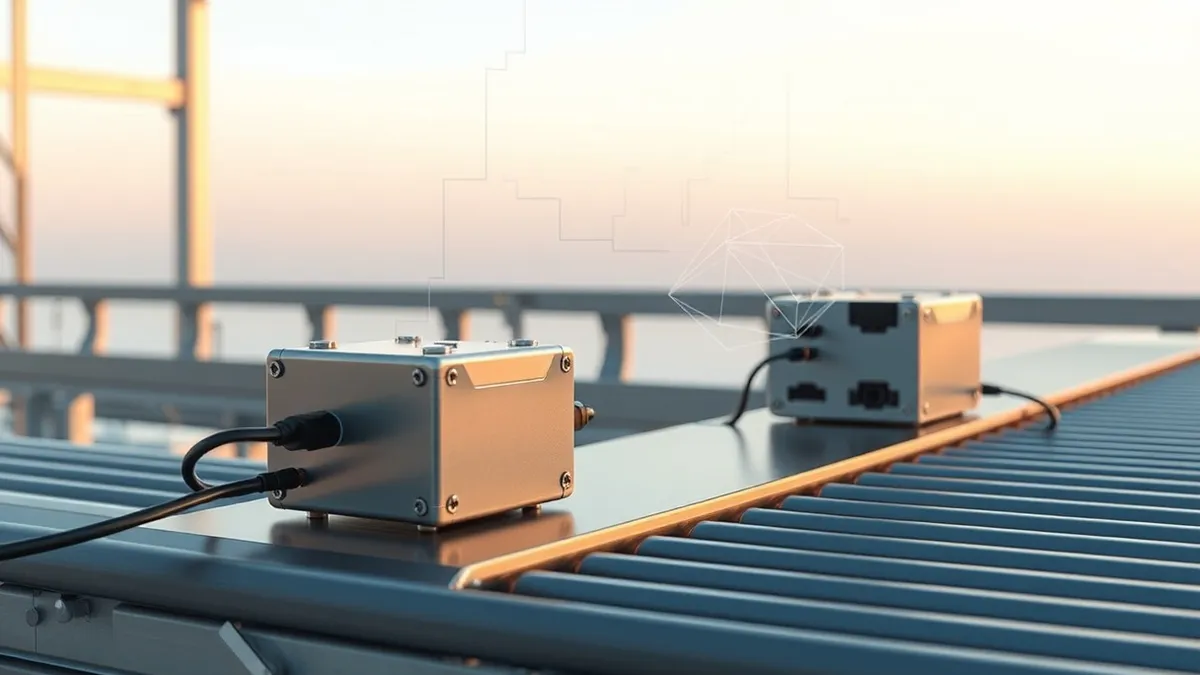
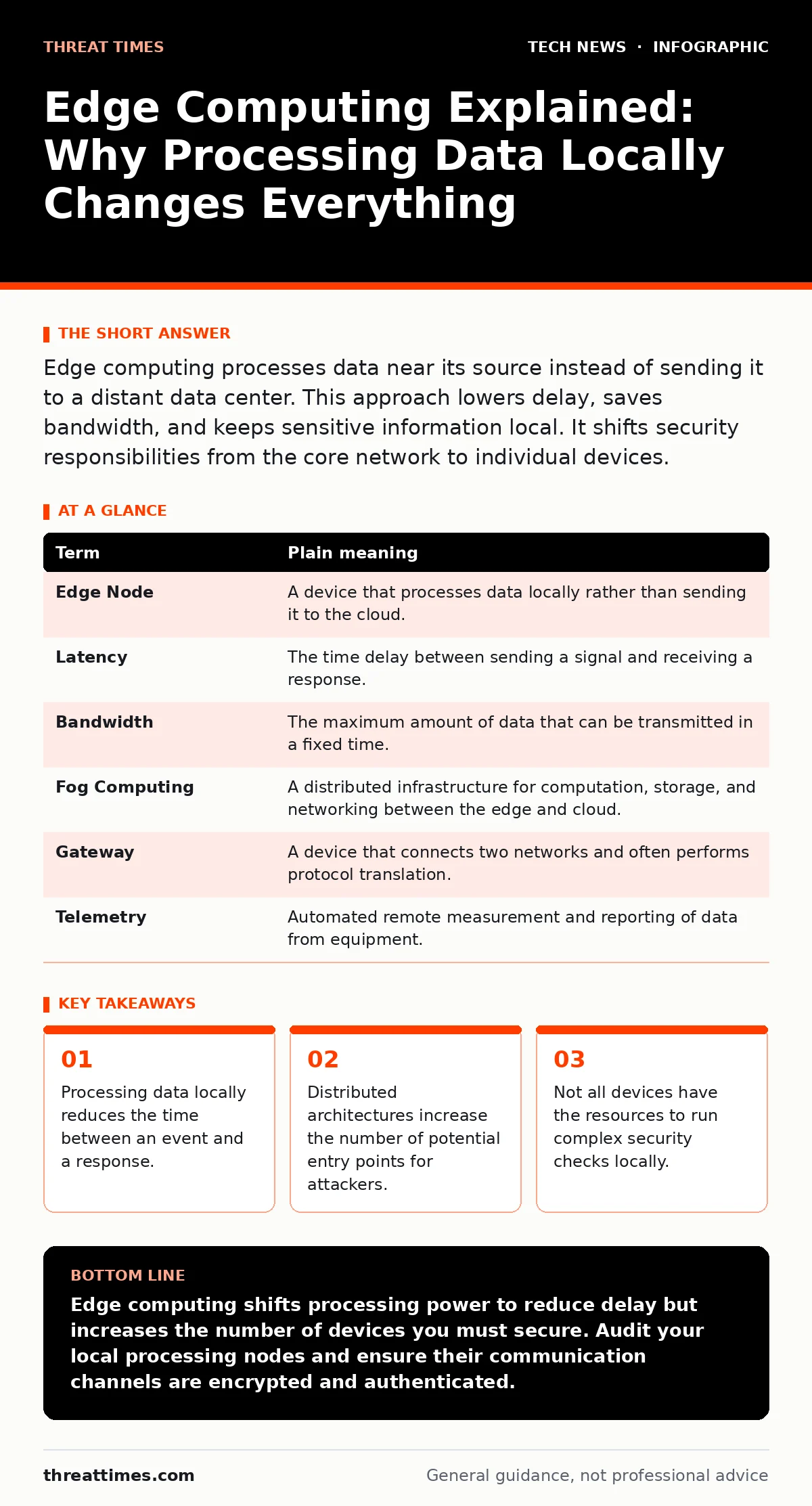
Edge computing processes data near its source instead of sending it to a distant data center. This approach lowers delay, saves bandwidth, and keeps sensitive information local. It shifts security responsibilities from the core network to individual devices.
The Kitchen Counter Analogy
Imagine you are cooking a complex meal. In a traditional centralized model, you send every ingredient to a master chef in another city. The chef chops, mixes, and cooks, then sends the finished dish back to you. This takes time and requires a secure delivery truck.
In an edge computing model, you do the chopping and mixing on your own kitchen counter. You only send the final, plated dish to the master chef for archival or further refinement. The work happens where the ingredients are. This analogy helps visualize why moving computation to the edge changes how you manage data flow and security.
Why Latency Matters More Than Bandwidth
Latency is the delay between a request and a response. In cloud-centric systems, this delay includes the time data travels across physical networks. For applications like autonomous vehicles or industrial robotics, milliseconds matter. A delayed command can cause a collision or a machine failure.
Edge computing reduces this travel time by processing data on or near the device that generated it. You do not need to wait for a round trip to a distant server. This immediacy allows for real-time decision making. However, this speed comes with a trade-off in visibility and control.
The Hidden Cost of Distributed Security
When you process data centrally, you secure one large perimeter. You apply firewalls, intrusion detection, and access controls at the data center. When you move to the edge, you distribute that perimeter to thousands of locations. Each sensor, gateway, or local server becomes a potential entry point.
This distribution creates a hidden cost: management overhead. You cannot patch a thousand remote sensors as easily as you update one central server. Some edge devices lack the processing power to run heavy security software. They may rely on simpler, less secure protocols.
This reality intersects with virtualization security. When edge nodes use virtual machines to handle different tasks, you must secure the hypervisor layer. A breach in the virtualization layer can compromise all containers running on that single edge device.
Common Points of Confusion
Many professionals confuse edge computing with fog computing. Fog computing acts as an intermediate layer between the edge devices and the cloud. It provides more processing power than a sensor but less than a data center. Edge refers specifically to the device or immediate gateway.
Another confusion involves the definition of the "edge." In a factory, the edge is the machine controller. In a city, the edge might be a 5G base station. The boundary shifts based on where you need the computation. Understanding this boundary is critical for defining your security scope.
Glossary of Edge Terms
| Term | Plain meaning |
|---|---|
| Edge Node | A device that processes data locally rather than sending it to the cloud. |
| Latency | The time delay between sending a signal and receiving a response. |
| Bandwidth | The maximum amount of data that can be transmitted in a fixed time. |
| Fog Computing | A distributed infrastructure for computation, storage, and networking between the edge and cloud. |
| Gateway | A device that connects two networks and often performs protocol translation. |
| Telemetry | Automated remote measurement and reporting of data from equipment. |
Integrating with Existing Security Frameworks
You cannot secure edge devices in isolation. They must communicate with central systems. This communication often uses APIs. Poorly secured APIs can allow attackers to manipulate data flowing from the edge to the cloud. You must validate every request that leaves an edge node.
Certificate management also becomes more complex. Each edge device needs a digital identity to authenticate with the network. If you lose track of these certificates, you cannot verify the source of incoming data. Expired certificates can cause service outages or security gaps.
For environments using wireless connections, Wi-Fi security standards like WPA3 provide stronger encryption for data in transit. However, wireless signals can leak outside physical boundaries, requiring careful signal containment strategies.
Try This Now: Assess Your Edge Posture
- Inventory all devices that process data locally. Identify which ones have direct internet access.
- Check the update mechanism for these devices. Ensure they verify the authenticity of updates before installing them.
- Review your API endpoints that receive edge data. Implement strict input validation to prevent injection attacks.
The Future of Distributed Processing
As devices become more capable, the line between edge and cloud blurs. Some workloads will always remain at the edge due to latency or privacy requirements. Others will move to the cloud for heavy analysis. You must design your architecture to handle this hybrid reality.
This evolution impacts smart home security. As homes become hubs of edge computing, the security of personal data depends on the weakest device in the network. A compromised smart bulb could provide a foothold for attackers to reach more critical systems.
Eventually, quantum computing and encryption will require new approaches to securing data in transit. Edge devices with limited power may struggle to implement post-quantum cryptographic algorithms. Planning for this transition now prevents future vulnerabilities.
Key takeaways
- Processing data locally reduces the time between an event and a response.
- Distributed architectures increase the number of potential entry points for attackers.
- Not all devices have the resources to run complex security checks locally.
Edge computing shifts processing power to reduce delay but increases the number of devices you must secure. Audit your local processing nodes and ensure their communication channels are encrypted and authenticated.
Frequently asked questions
Is edge computing the same as IoT?
No. IoT refers to the network of connected devices. Edge computing refers to the processing method used by those devices.
Can edge computing work without the cloud?
Yes. Standalone edge systems can operate independently, but they may lack centralized oversight and long-term storage.
Does edge computing improve privacy?
It can. By keeping sensitive data local, you reduce the risk of exposure during transmission to a central server.
How do I secure a headless edge device?
Use hardware-based security features, secure boot processes, and remote attestation to verify the device's integrity.
How this guide was produced: written by the Threat Times editorial team with AI assistance, checked against the public references listed below, and reviewed when the facts change. See our editorial policy or report an error.