
Cloud Security
Sola Security AI Agent Downgrades 58.5% of High-Severity Cloud Findings
Research shows static severity ratings from cloud security platforms often misrepresent actual risk in production environments.
Everything Threat Times has reported about Cloud Security: 25 stories, newest first. Part of our Vulnerabilities coverage.
Research shows static severity ratings from cloud security platforms often misrepresent actual risk in production environments.

Yandex Cloud has logged a third data center outage, marking the latest disruption in a series of infrastructure incidents affecting its cloud services.

Analysis reveals that AWS AgentCore’s security model is undermined by metadata token transmission, weak virtual machine isolation, and overly expansive permissions.

The Japanese media giant disclosed unauthorized access to staff accounts, with one leveraged to distribute thousands of phishing messages.

Amazon Web Services released security bulletins for CVE-2026-6911 and CVE-2026-6912, addressing issues in its Ops Wheel service.

Amazon Web Services has published advisory details for two new vulnerabilities, identified as CVE-2026-11400 and CVE-2026-11401, requiring immediate attention.

Amazon Web Services has published a security bulletin addressing issues within its Research and Engineering Studio service.

Amazon Web Services has released a security bulletin addressing issues within the Amazon Athena ODBC Driver, urging users to review their configurations.

Amazon Web Services has issued an ongoing advisory regarding the Copy.fail malware campaign, detailing detection methods and mitigation strategies for cloud customers.

Amazon Web Services has published a new security bulletin addressing vulnerability CVE-2026-31431, providing initial guidance for customers.

The cloud provider issued an advisory for CVE-2026-13769, citing insecure file permissions that could expose sensitive data in the AWS CLI.

Microsegmentation isolates workloads at the application layer, ensuring that compromised credentials cannot automatically grant access to adjacent systems.

Immediate isolation of the affected resource prevents lateral movement, while preserving logs before cleanup ensures accurate root cause analysis for future prevention.

Identity governance shifts security from perimeter defense to continuous verification of who accesses what and why, preventing silent privilege creep.

A service mesh encrypts traffic between services but cannot verify the integrity of the application code running inside those services.

Security groups enforce stateful packet filtering at the virtual network interface, creating an invisible perimeter that moves with your workload rather than sitting at a fixed network edge.
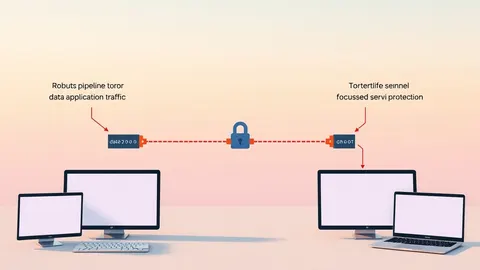
Secure Access Service Edge includes network functions while Secure Service Edge focuses only on application security, creating distinct operational costs.

Static credentials on long-lived service accounts create persistent backdoors that bypass human-led identity controls and survive employee turnover.

The online retailer confirmed customer data was exposed after attackers sent a notification claiming full access to its cloud infrastructure.

A vulnerability dubbed 'AgentCorruption' in AWS Bedrock AgentCore allowed attackers to compromise entire AI fleets with one prompt.

A high-severity flaw in OpenStack Mistral allows authenticated users to execute arbitrary commands on executor hosts via the ssh_proxied action.

An unauthenticated attacker can exploit CVE-2026-83943 to steal sensitive data from Azure API Center via network access.

Microsoft confirms a missing authentication flaw in Azure App Service allows unauthorized remote code execution.

Researchers detail how threat actors exploit Web3 tools and open-source components to breach enterprise cloud environments.