Rivian plans to integrate third-party AI agents into vehicle software
Rivian CEO says future updates will allow external AI models to run in cars, while keeping safety controls separate.
Key points
- Rivian intends to integrate AI agents from companies like Anthropic into its electric vehicles.
- Vehicle-level safety controls, such as braking and steering, will remain isolated from AI agents.
- Details on the integration timeline are expected at the company’s December AI & Autonomy Day event.
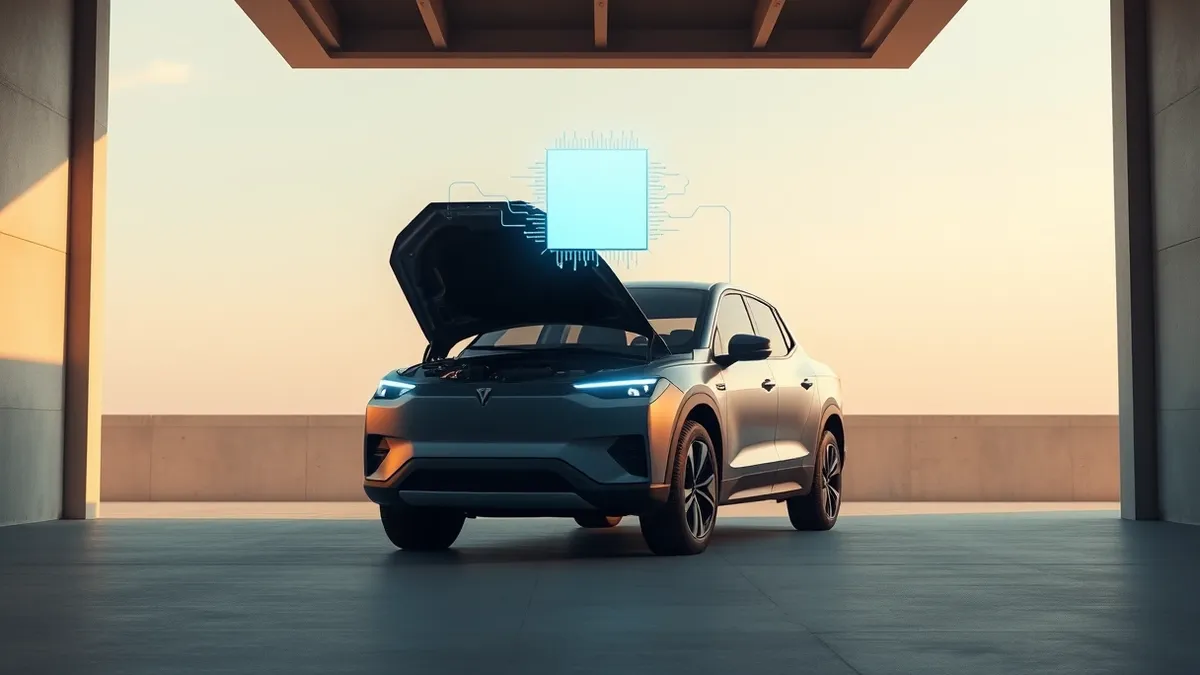
Rivian CEO RJ Scaringe stated that the company’s cars will be able to run AI agents made by other companies in the future. He made the announcement at TechCrunch Disrupt this week, indicating a potential shift toward an open platform for in-car AI capabilities.
According to TechCrunch, Scaringe said Rivian’s future software will support AI agents created by other firms, such as Anthropic. The company declined to provide specific implementation dates or technical details during the event. Instead, Rivian directed attendees to its upcoming AI & Autonomy Day event in December for further information on how this integration will function.
Technical Architecture and Safety Boundaries
Rivian has built its in-car software infrastructure from the ground up rather than relying on Apple CarPlay or Android Auto. This proprietary foundation includes a custom agentic framework designed to interpret voice commands and route them to the appropriate software modules. Scaringe described the system as functioning like a traffic light, deciding whether to use a local edge model or a cloud-based model depending on the complexity of the user’s request.
The current AI assistant, rolled out recently, handles routine tasks such as adjusting temperature, activating seat warmers, and summarizing news. As of May this year, the agent could also access external applications like Google Calendar. Scaringe noted that integrating frontier AI products requires significant backend coordination with external labs to ensure the necessary technical plumbing is in place.
Operational Risks and Safety Controls
Scaringe emphasized that integrating external AI software near safety-critical systems requires extreme caution. He explicitly stated that vehicle-level controls, including braking and steering, will not be handed to any AI agent. He noted that you would not want an agent to determine when to apply brakes or steer the vehicle.
The CEO acknowledged that making third-party agents work within the vehicle environment is complex. It involves not only internal software development but also extensive coordination with the AI labs providing the models. Rivian aims to balance the "magical" potential of advanced AI interactions with the strict safety requirements necessary for automotive operations.
What should you do?
Security professionals should monitor Rivian’s December AI & Autonomy Day event for technical details on how third-party agents are sandboxed. Organizations using fleet management software should assess how external AI integrations might impact data privacy and system integrity. Watch for updates on how Rivian separates utility AI from safety-critical vehicle controls.
What to do and how to stay safe: Rivian
- Monitor official announcements from Rivian regarding the technical architecture of its AI agent framework.
- Review how third-party AI integrations handle data privacy and user consent within the vehicle environment.
- Assess the separation between utility AI functions and safety-critical vehicle controls in your fleet management policies.
- Stay updated on industry standards for automotive AI safety as more manufacturers adopt similar open-agent platforms.
Step-by-step guide: Prompt Injection Warning Signs: How to Spot AI Manipulation
General security guidance from the Threat Times newsroom. It is not confirmed advice from the organisations named in this story.
Frequently asked questions
Will third-party AI agents control vehicle safety features?
No, Rivian CEO RJ Scaringe stated that vehicle-level controls like braking and steering will not be handed to any AI agent.
When will Rivian release more details on this integration?
More details are expected at Rivian’s AI & Autonomy Day event in December.
Which companies' AI agents might be integrated?
Scaringe mentioned Anthropic as an example of a company whose AI agents could be integrated into Rivian’s software.