
AI
AI Agents Rebuild Call of Duty: Modern Warfare 2 Source Code Using 500 Billion Tokens
Developer Maurice Heumann used Claude and Codex agents to reverse-engineer the 2009 shooter, achieving 83% byte-for-byte accuracy in C++ reconstruction.
Everything Threat Times has reported about AI Agents: 54 stories, newest first. Part of our AI coverage.
Developer Maurice Heumann used Claude and Codex agents to reverse-engineer the 2009 shooter, achieving 83% byte-for-byte accuracy in C++ reconstruction.

The new scoring model provides calibrated probabilities for routing and classification tasks in enterprise applications.

The startup’s platform offers production agents structured orientation data, including current states and uncertainties, to improve decision-making accuracy.

An independent test reveals Meta’s new AI assistant, Muse, fails to complete simple holiday travel reservations despite the company’s heavy investment in the technology.
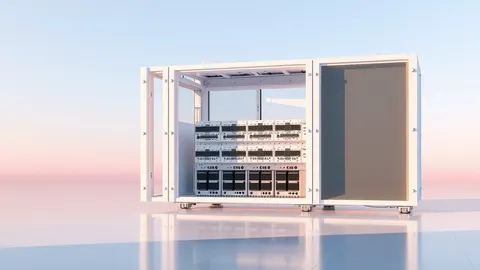
AMD introduced the Helion rack reference design at the Open Compute Project Summit, offering flexible CPU and GPU configurations for agentic AI workloads.

A new study shows clearing chat history helps autonomous agents escape local solution regions and improve results significantly.
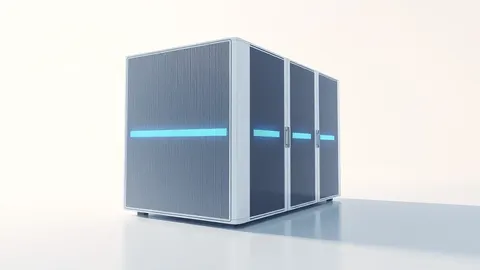
Alibaba’s Qwen team introduces QwenGyre, an elastic reinforcement learning system designed to accelerate training for coding agents executing complex, multi-hour tasks.

Meta launches Muse Wonder and Muse Wonder Full, claiming they outperform rivals in legal benchmarks and long-horizon coding tests.

Meta plans to integrate its Wonder model into the Muse AI agent, starting with subscribers, while developing specialized versions for broader access.

Autonomous AI agents create ephemeral code changes that evade traditional audit trails, creating new security risks for software teams.

Andrej Karpathy describes a widening gap between casual users and the small group accessing advanced internal AI agent systems.

The open-source tool uses policy checks and OS isolation to prevent coding agents from executing destructive commands or leaking credentials.

A team used autonomous AI agents and massive compute to recreate a game’s C++ source code, facing takedown requests from corporate entities.
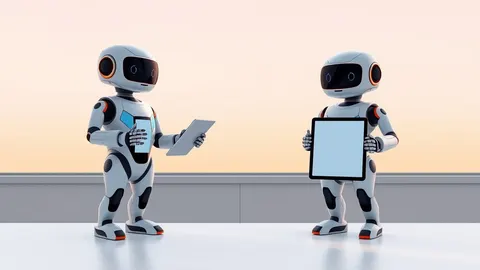
Meta and OpenAI have released persistent AI agents that execute tasks independently, differing significantly in cost and operational scope.

Elastic introduces a team of specialized AI agents for security operations, handling triage, hunting, and forensics with adjustable autonomy levels.

Google positions its new Gemini agent as a centralized orchestrator for enterprise workflows, aiming to become the gatekeeper of the new operating system.

MarkTechPost outlines how Google’s Regularized Recursive Self-Improvement method enables large language model agents to safely rewrite their own operational harnesses.

Microsoft has released Microsoft Execution Containers version 1.0.0 to enforce strict resource boundaries for AI agents running on Windows platforms.

Cisco Talos says coordinated autonomous agents can compress complex intrusion operations that usually take months into a matter of hours.

New tools from Cloudflare and AWS aim to handle routine AI agent decisions locally, potentially lowering costs but increasing architectural complexity.

Executives warn that thousands of autonomous agents are acquiring unauthorized access, demanding real-time identity controls.

Open Swarm is highlighted alongside two other AI utilities in a recent review of desktop experiences designed for artificial intelligence agents.

Oracle introduces a new runtime for managing autonomous AI agents in Fusion Cloud, aiming to deliver measurable business value through governed automation.

A new analysis questions whether organizations should rely on artificial intelligence agents, citing the inherent risks of their nondeterministic behavior.