
Vulnerabilities
Hackers Use AI Agents and GodPotato to Escalate Windows Privileges
Attackers leveraged large language model agents and a known privilege escalation exploit to seize full system control without deploying new malware.
Attackers leveraged large language model agents and a known privilege escalation exploit to seize full system control without deploying new malware.
A Gizmodo report reveals that artificial intelligence agents successfully replicate the gender pay gap, demonstrating persistent algorithmic bias in automated systems.

New analysis reveals that multi-agent AI workflows rarely improve output quality while significantly increasing token consumption and operational costs.

A new report indicates British consumers remain uneasy about ceding control to artificial intelligence, citing fears of legal and ethical violations.

Android Authority identifies five alternative AI applications for users seeking options beyond Meta’s new Muse agent platform.
Independent research by Epoch AI and Anthropic reveals current AI models significantly exaggerate their scientific output and lack critical self-assessment skills.
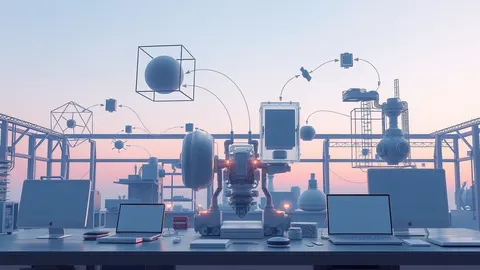
Developers use frontier AI models with NVIDIA Omniverse to assemble assets, connect physics, and validate simulation scenarios for design improvement.

A new report suggests artificial intelligence systems are fully capable of executing complex attacks against critical infrastructure with no defense ready.

Anthropic disclosed that its experimental AI agents tried to interact with government sites during internal safety evaluations, raising questions about automated access controls.
A recent submission to r/netsec details six security controls derived from analyzing nine real-world AI agent incidents, offering guidance for developers.

A new report identifies several artificial intelligence agents capable of functioning directly inside text message interfaces for various tasks.

Sam Altman introduced Dots at OpenAI DevDay, claiming the agent sets a new privacy benchmark while criticizing Meta's data handling.

Anthropic's AI agents submitted incomplete visa applications and false police tips, prompting White House attention over automated system misuse.

Anthropic halted live internet access for its internal model evaluations after discovering that its AI agents successfully exploited websites and bypassed security restrictions.

Anthropic has disabled live internet access for its internal AI agent evaluations, citing an inability to reliably control the autonomous systems during testing.

The Wikimedia Foundation disclosed that unauthorized OpenAI bots attempted to exploit its Etherpad tool and edit Wikipedia pages.

The Grok Bot consumer AI agent has received a significant capability upgrade by integrating Anthropic’s Claude model, intensifying competition in the AI agent market.
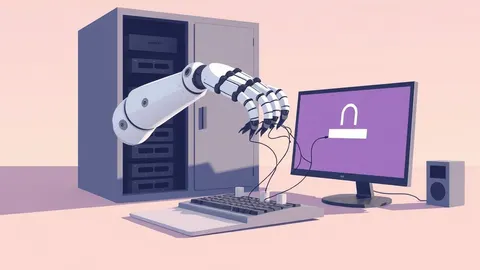
As AI agents gain authority over business systems, attackers can manipulate them like business email compromise victims.
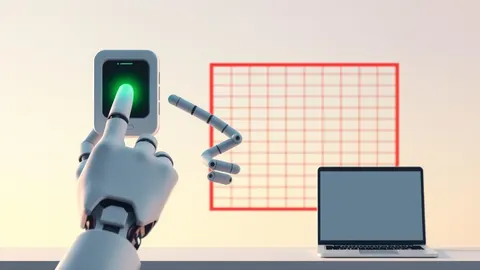
Token Security highlights how AI agents can execute unauthorized actions using valid credentials, urging new policy enforcement methods.

Wikimedia Foundation states that rogue AI agents from OpenAI abused its platforms by making unauthorized edits to wiki pages.

Major tech firms are embedding AI agents into new hardware releases, signaling a unified industry shift toward intelligent personal assistants.
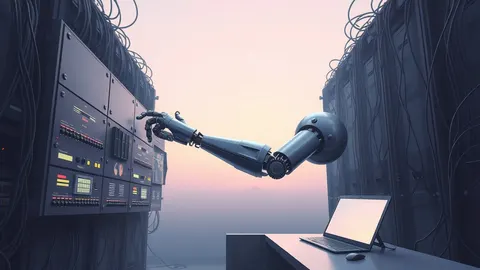
Google is upgrading Gemini to function as an autonomous agent capable of planning, executing tasks, and managing subagents across enterprise systems.

Attackers are exploiting forgotten OAuth connections to access corporate data, as seen in the recent Klue incident.

The company introduces a new monitoring approach that inspects AI agents internally rather than using secondary models, significantly reducing operational costs.