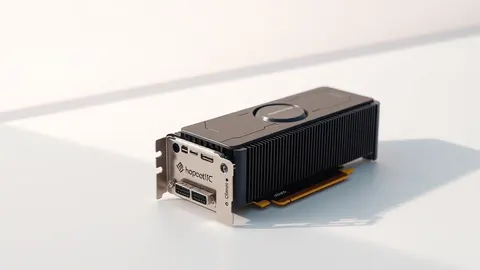
DeepSeek Releases DeepInfer Inference Tool to Lower AI Compute Costs for Developers
The Chinese AI firm open-sourced its production inference engine to reduce energy use and operational expenses for enterprises.

Key points
- DeepSeek published DeepInfer on GitHub under the Apache 2.0 license to support its V4-1 Flash model.
- The tool aims to lower compute costs and energy consumption, targeting high pricing from US competitors.
- Accenture recently capped employee spending on AI tools like Claude at $29 per month to control budgets.
DeepSeek released DeepInfer, its in-house inference framework, on GitHub on October 20, 2026. The Hangzhou-based startup published the code under the Apache 2.0 license to help the community reduce compute expenses and energy usage during AI model deployment.
The open-source release targets the high operational costs associated with running large language models. According to Gizmodo, DeepSeek intends to pressure US rivals like OpenAI and Anthropic by providing a cheaper alternative for deploying AI workloads. The tool currently supports DeepSeek’s V4-1 Flash model, which offers faster and more efficient processing than the company’s flagship AI.
Context and Background
Inference is the computationally expensive phase where trained models generate outputs based on user prompts. McKinsey & Company reported earlier this year that data center compute will increasingly shift toward inference rather than training new models by the end of the decade. This trend makes efficiency critical for developers handling complex, multi-step tasks.
DeepSeek previously gained attention in early 2025 with its R1 model, which disrupted Silicon Valley’s AI landscape. The new DeepInfer release continues that strategy by making proprietary optimization techniques available to the broader developer community. The company stated via X that future models will be added to the framework as they become publicly available.
Who Is Affected
American businesses are facing rising AI bills, prompting significant budget adjustments. Accenture, a major consulting firm, recently ordered many employees to limit their monthly spending on Claude to $29, according to 404 Media. This move follows earlier reports that Accenture tied AI usage to leadership promotion opportunities for senior staff.
The availability of cheaper open-source models from China presents a growing challenge for US AI companies. DeepSeek’s V4.1-Flash is priced at $0.035 per million input tokens and $0.12 per million output tokens, data sourced from OpenRouter. These rates are significantly lower than those charged by many Western providers.
That suggests enterprises may increasingly migrate toward open-source alternatives to maintain profitability while meeting demand for AI-driven tasks.
What should you do?
Security and technology professionals should evaluate their current AI spending against emerging open-source options. Teams should assess whether their workload requirements can be met by models like V4-1 Flash without compromising performance or data security standards. Organizations should also review vendor lock-in risks associated with proprietary inference platforms.
Background: Large language models
Large language models are a specific type of neural network trained on text. Generative AI is the broader umbrella term for any system that creates new content, including images and code. Not all generative AI uses large language models, but most modern text generators do.
What to do and how to stay safe: DeepSeek
- Audit current AI inference costs and compare them with open-source alternatives like DeepInfer to identify potential savings.
- Review data governance policies to ensure compliance when deploying open-source models from international vendors in production environments.
- Monitor vendor announcements for updates to inference frameworks that may improve performance or add support for additional hardware configurations.
- Consult legal and security teams to understand the implications of using Apache 2.0 licensed software developed by foreign entities.
Step-by-step guide: Prompt Injection Warning Signs: How to Spot AI Manipulation
General security guidance from the Threat Times newsroom. It is not confirmed advice from the organisations named in this story.
Frequently asked questions
What is DeepInfer and who released it?
DeepInfer is an open-source inference engine released by DeepSeek on October 20, 2026, to help lower compute costs and energy use for AI deployment.
Which AI models are supported by DeepInfer currently?
The framework currently supports DeepSeek’s V4-1 Flash model, with plans to add future models as they become publicly available.
How does DeepSeek’s pricing compare to other providers?
DeepSeek’s V4.1-Flash costs $0.035 per million input tokens and $0.12 per million output tokens, according to OpenRouter, making it cheaper than many competitors.