Kioxia market value drops two-thirds since June peak amid Chinese rival pressure
Japanese NAND flash maker Kioxia has seen its market capitalization shrink to one-third of its peak, according to Nikkei Asia reporting on the firm's financial trajectory.
Key points
- Kioxia lost two-thirds of its peak market value since June.
- The firm was Japan's most valuable listed company at that peak.
- Chinese rivals are emerging as a factor in this decline.
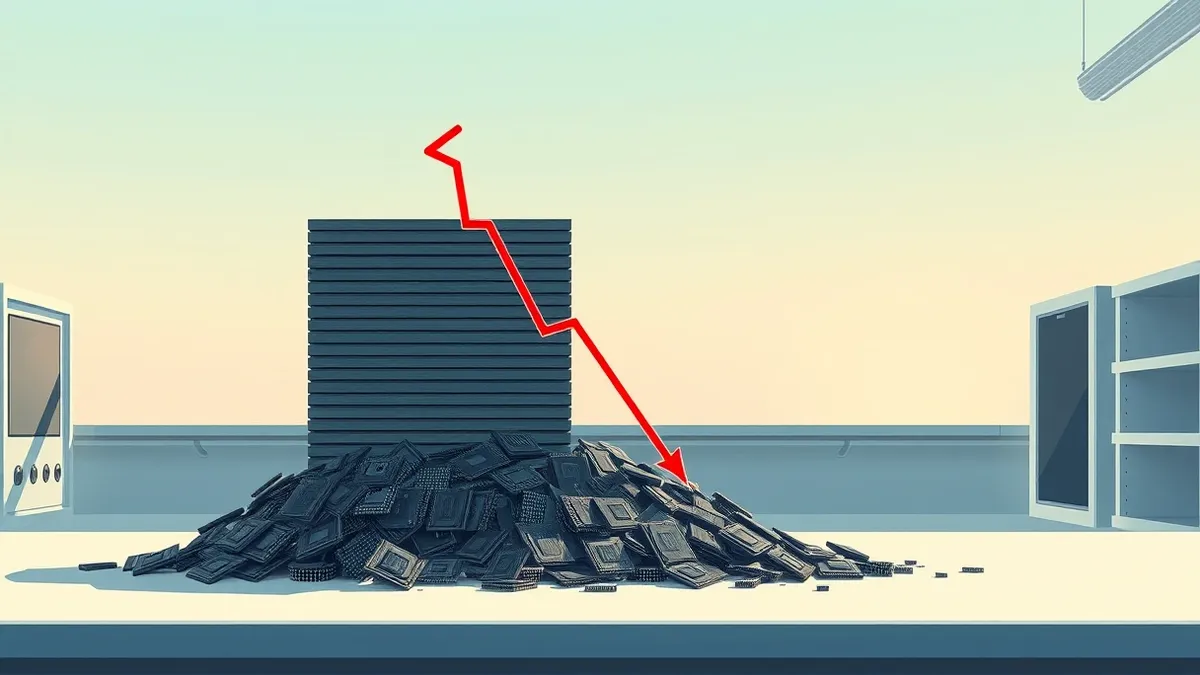
Japanese memory chip manufacturer Kioxia Holdings has experienced a significant contraction in its market valuation, according to reporting by Nikkei Asia. The company’s market value has shrunk to just one-third of the peak it reached four months ago, marking a substantial financial shift for the NAND flash maker.
The decline represents a loss of two-thirds of the firm's peak market capitalization. This drop occurred after June, when Kioxia held the distinction of being Japan's most valuable listed company. The report attributes part of this downward trend to the emergence of competitive pressure from Chinese rivals in the memory chip sector.
Market Context and Timeline
The timeline of this valuation change is concise, spanning only four months from the peak to the current low. Kioxia reached its highest market value in June, a period that coincided with its status as the top-listed company in Japan by market capitalization. Since that high point, the firm has seen its worth erode significantly, leaving it with only a fraction of its previous valuation.
Nikkei Asia identifies the rise of Chinese competitors as a key element in this market shift. The emergence of these rivals has contributed to the shrinking market value of Kioxia. The report highlights the competitive dynamics within the NAND flash memory market, noting how new entrants from China are impacting established players like Kioxia.
Impact on Industry Standing
Kioxia’s status as Japan’s most valuable listed company was temporary, lasting only until the recent valuation drop. The firm’s position in the Japanese market has weakened considerably over the last few months. This change reflects broader trends in the semiconductor industry, where competitive pressures can rapidly alter market perceptions and valuations.
The specific impact of Chinese rivals on Kioxia’s business operations is detailed in the Nikkei Asia report. The emergence of these competitors has coincided with the firm’s loss of market value. This suggests that the competitive landscape for NAND flash memory is becoming more intense, with Chinese manufacturers gaining ground against established Japanese firms.
What should you do?
Security and technology professionals should monitor market reports for signs of supply chain shifts in the semiconductor industry. Changes in market valuation can indicate broader strategic moves by manufacturers, which may affect product availability and pricing. Tracking these trends helps in anticipating potential disruptions in hardware supply chains.
What to do and how to stay safe: Kioxia
- Monitor industry reports for updates on semiconductor market valuations and competitive shifts.
- Review supply chain contracts for clauses related to market volatility or supplier changes.
- Evaluate alternative suppliers for critical components to mitigate risk from market consolidation.
- Stay informed about emerging competitors in key technology sectors through reputable news sources.
Step-by-step guide: Mobile Device Security: How to Protect Data Beyond Passwords
General security guidance from the Threat Times newsroom. It is not confirmed advice from the organisations named in this story.
Frequently asked questions
How much market value has Kioxia lost since June?
Kioxia has lost two-thirds of its peak market value since June, according to Nikkei Asia.
When did Kioxia reach its peak market value?
Kioxia reached its peak market value in June, four months before the reported decline.
What factor is cited for Kioxia's declining market value?
The emergence of Chinese rivals is cited as a factor in Kioxia's shrinking market value.