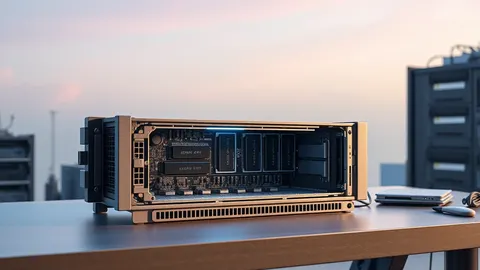
Intel launches D-series GPU with 480GB LPDDR5X for AI inference
The new accelerator uses laptop-grade memory to exceed Nvidia’s Blackwell Ultra B300 in capacity for enterprise workloads.

Key points
- Intel’s D-series GPU features 480GB of LPDDR5X memory.
- The chip targets data center AI inference tasks.
- It surpasses Nvidia’s Blackwell Ultra B300 in memory capacity.
Intel has introduced its D-series graphics processing unit for data centers, a device designed specifically for artificial intelligence inference tasks. The accelerator distinguishes itself by utilizing 480GB of LPDDR5X memory, a configuration that Techmeme reports represents an unusually large capacity for this class of hardware.
The decision to equip the D-series with LPDDR5X, a memory type typically found in laptops, allows Intel to achieve a higher total memory footprint. According to Techmeme, this approach sets a new GPU memory record with 480GB of LPDDR5X, highlighting the unique construction of the D-series accelerator.
Context and Background
As Threat Times reported on 2026-10-18, Intel previously unveiled this D-series accelerator, highlighting its 480GB of LPDDR5X memory as a key differentiator. That earlier coverage noted the chip’s ability to surpass Nvidia’s Blackwell Ultra B300 in capacity, a detail that aligns with the specifications mentioned in the Techmeme summary regarding enterprise AI workloads.
The focus on inference rather than training suggests Intel is targeting specific AI workloads. By leveraging high-density laptop memory, the company provides a hardware option with significant memory volume, which Techmeme notes is used to support demanding inference workloads.
Who Is Affected
Enterprise organizations running large-scale AI inference workloads are the primary audience for this hardware. Data centers that require substantial memory to handle complex model queries may find the D-series relevant. The competition with Nvidia’s Blackwell Ultra B300 places this product directly in the high-end accelerator market.
Technology professionals evaluating hardware for AI inference should consider the memory capacity trade-offs. While LPDDR5X offers high density, its performance characteristics differ from traditional server memory, which could influence how well specific models run on this architecture compared to competitors.
What should you do?
Readers should monitor vendor documentation for specific performance benchmarks comparing LPDDR5X against other memory types in inference scenarios. IT leaders should assess whether their current AI workloads are memory-bound, as the 480GB capacity offers a clear advantage for models that do not fit into smaller memory footprints.
What to do and how to stay safe: Intel
- Review current AI inference bottlenecks to determine if memory capacity is the limiting factor in your environment.
- Compare Intel’s D-series performance metrics against competing accelerators like Nvidia’s Blackwell Ultra B300 for your specific models.
- Consult with hardware vendors to understand the thermal and power implications of using high-density LPDDR5X in data center racks.
- Stay updated on official Intel documentation regarding software support and driver maturity for the D-series architecture.
Step-by-step guide: Mobile Device Security: How to Protect Data Beyond Passwords
General security guidance from the Threat Times newsroom. It is not confirmed advice from the organisations named in this story.
Frequently asked questions
How much memory does Intel’s new D-series GPU have?
The D-series GPU features 480GB of LPDDR5X memory, according to Techmeme.
What type of memory does the D-series use?
It uses LPDDR5X, a memory type commonly associated with laptops.
How does the D-series compare to Nvidia’s Blackwell Ultra B300?
The D-series surpasses the Blackwell Ultra B300 in memory capacity for enterprise AI workloads.