Florida Incident Highlights How 10-Second Laser Exposure Permanently Blinds Older CCTV Sensors
Sustained exposure to intense laser beams can destroy image sensors, causing dead pixels and rendering surveillance equipment unusable.
Key points
- High-intensity lasers held steady for roughly ten seconds can permanently damage CMOS or CCD sensors.
- A 2021 incident in Florida resulted in over $2,000 in damages after a laser created dead spots on camera sensors.
- Older camera models are more vulnerable to permanent sensor damage than newer devices.
Pointing a high-powered laser at a security camera can cause permanent damage to its image sensor, according to reporting by Engadget. While the act often appears in fiction as a clever escape tactic, real-world physics confirms that concentrated light beams can overwhelm and destroy the delicate electronic components inside surveillance devices.
The extent of the damage depends heavily on the power of the laser and the age of the camera. Engadget reports that permanently blinding a sensor requires a very powerful laser, an older camera model, and an extremely steady pulse. In most scenarios, this combination is difficult to achieve, but when it occurs, the results can be costly and lasting.
How Lasers Damage Sensors
Security cameras function by converting incoming light into electrical charges, which are then processed into digital video frames. This mechanism makes them significantly more susceptible to intense light sources than the human eye. While bright headlights or sunlight reflections can cause temporary glare or whiteout effects, laser pointers emit a concentrated beam of high-intensity light that targets the sensor directly.
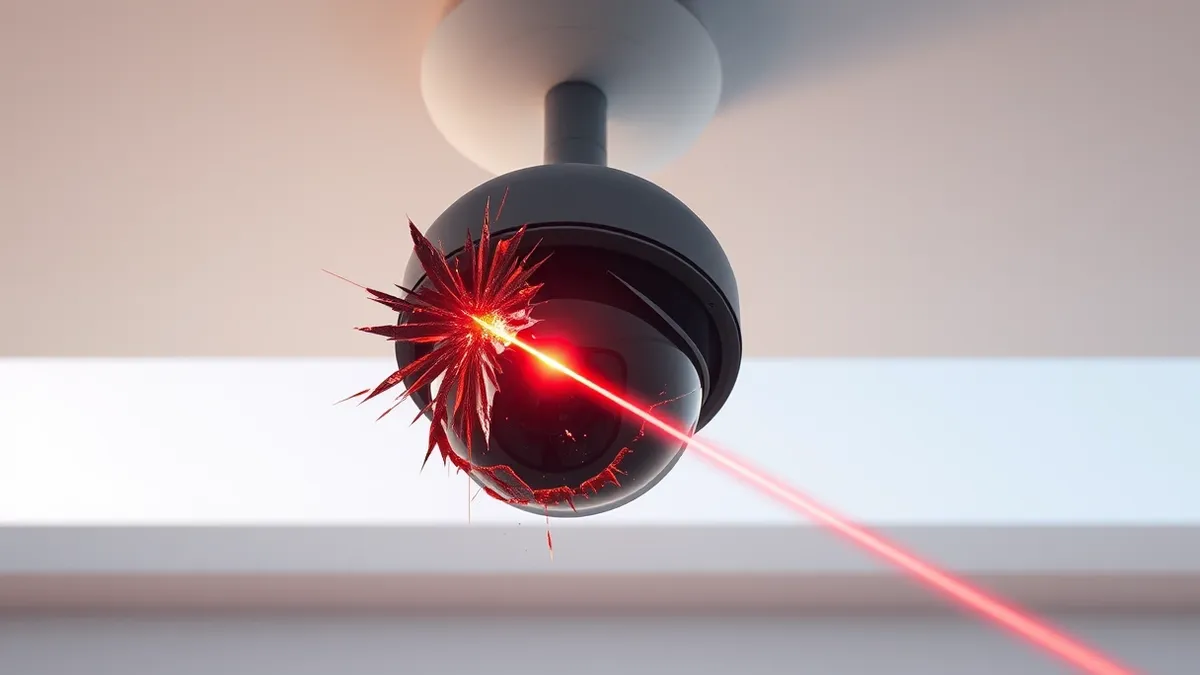
Most CCTV systems use complementary metal-oxide semiconductor (CMOS) or charge-coupled device (CCD) sensors. When a high-intensity laser is held steady on these sensors for approximately ten seconds, the concentrated energy overwhelms the device. This initial exposure temporarily blinds the camera, but the sustained heat generated by the laser can cause permanent physical damage to the sensor elements.
Real-World Incidents and Risks
The theoretical risk of laser damage has materialized in actual incidents. In 2021, a man in Clearwater, Florida, was arrested for pointing a laser at several surveillance cameras owned by the Church of Scientology. Although the lasers did not completely destroy the cameras, the exposure left dead spots on the sensors, resulting in over $2,000 in damages, according to Engadget.
Notably, the cameras were still able to capture footage of the perpetrator, leading to his arrest. However, the damage rendered parts of the image unusable. In the worst-case scenarios described by Engadget, prolonged exposure can create large dead areas on the sensor, leaving the camera entirely unusable. Such misuse is illegal in most jurisdictions.
What should you do?
Security professionals should assess the vulnerability of their current surveillance hardware, particularly older models with CMOS or CCD sensors. Monitoring for unusual artifacts in video feeds, such as persistent dead pixels or dark spots, can indicate prior laser exposure. Organizations should also consider physical shielding or positioning cameras to minimize direct line-of-sight exposure from ground-level threats.
What to do and how to stay safe: security cameras
- Inspect older CCTV cameras for signs of sensor damage, such as permanent dead pixels or dark spots in recorded footage.
- Position cameras to avoid direct line-of-sight from areas where unauthorized individuals could easily aim handheld devices.
- Monitor video feeds for sudden glare or whiteout effects that persist longer than typical environmental lighting changes.
- Ensure local security policies explicitly prohibit the use of laser pointers near surveillance infrastructure to deter misuse.
Step-by-step guide: Mobile Device Security: How to Protect Data Beyond Passwords
General security guidance from the Threat Times newsroom. It is not confirmed advice from the organisations named in this story.
Frequently asked questions
Can any laser pointer damage a security camera?
No, only high-powered lasers held steady for about ten seconds can cause permanent damage to camera sensors.
What type of damage does a laser cause?
Lasers can create dead pixels, dark spots, or large dead areas on the sensor, potentially rendering the camera unusable.
Is pointing a laser at a camera illegal?
Yes, Engadget notes that such misuse is illegal in most places, as demonstrated by a 2021 arrest in Florida.