Epic Games shifts to AI-first strategy, delaying Disney shooter indefinitely
Epic Games is overhauling its development process to rely on artificial intelligence for code and art, causing an indefinite delay for a major Marvel and Star Wars title.


Epic Games is overhauling its development process to rely on artificial intelligence for code and art, causing an indefinite delay for a major Marvel and Star Wars title.

Rising cloud token costs for agentic workloads are pushing enterprises to reconsider on-premises infrastructure and open-weight model strategies.

Epic Games has indefinitely delayed its upcoming Marvel and Star Wars shooter while restructuring teams to prioritize AI-generated code and art assets.

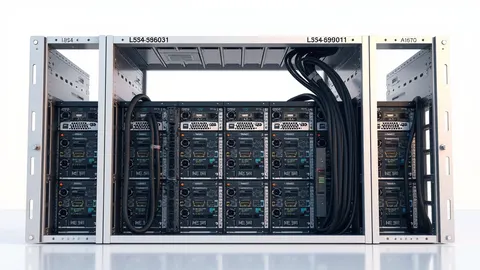
Meta introduces its first liquid-cooled network rack and 102.4T switch platform to support gigawatt-scale AI clusters at the Open Compute Project Summit.

Intel officially brands its Crescent Island inference chip as the GPU D-Series, targeting air-cooled rack deployments with up to 480GB of high-bandwidth memory.

OpenAI published solutions to 372 advanced math problems using an unreleased model, prompting mathematician Terence Tao to urge a halt to such collaborations.

Deepgram aims to run its voice AI models natively on disconnected personal devices, shifting infrastructure focus from cloud data centers to local hardware.

Shyam Sankar told CBS viewers that some tech workers are smoking because they trust AI to cure cancer, a claim critics call a social delusion.

Google is developing a new shopping feature for Gemini that may allow users to identify products directly from their screen using a floating overlay.

The new open design prioritizes core density and power efficiency for running autonomous agents rather than training large models.

NVIDIA contributes MGX 1.2 specs and CPU rack standards to the Open Compute Project, aiming to streamline the global deployment of high-density AI infrastructure.

Meta’s new Muse Wonder model matches competitors in coding and professional tasks, though weight release status remains uncertain.

GitHub explains how developers can use custom instructions, agents, and MCP servers to align AI assistance with project standards.

Meta claims its new Muse Wonder Full model matches the world’s best AI, marking a return to the frontier after years of falling behind competitors.

Meta CEO Mark Zuckerberg states the company has reached parity with competitors in AI through its new Wonder model, dismissing industry pleas for reduced development speeds.

Meta has released Muse Wonder as its most advanced option for powering digital assistants, available to subscribers of its Muse app and through its developer API.

Meta plans to integrate its Wonder model into the Muse AI agent, starting with subscribers, while developing specialized versions for broader access.

Meta introduces the Wonder family of AI models on Monday, featuring new capabilities designed to improve performance over extended usage periods.

The military secures exclusive access to atmospheric sensor readings from a Silicon Valley startup using AI-driven forecasting models.

Meta releases two new AI models via its Superintelligence Labs, claiming they rival industry leaders like OpenAI and Anthropic in internal benchmark tests.

Meta AI Research unveils new Muse Wonder and Muse Wonder Full models, claiming state-of-the-art performance in personal and professional automation.

Britain will resume pre-release testing of powerful AI models, reversing a US directive that prioritized White House checks.

Autonomous AI agents create ephemeral code changes that evade traditional audit trails, creating new security risks for software teams.

Meta engineered a system that aggregates scattered idle inference resources to improve ad relevance without ordering new hardware capacity.