Meta Unveils Liquid-Cooled IcePack Rack and 102.4T Switches at OCP Summit 2026
Meta introduces its first liquid-cooled network rack and 102.4T switch platform to support gigawatt-scale AI clusters at the Open Compute Project Summit.
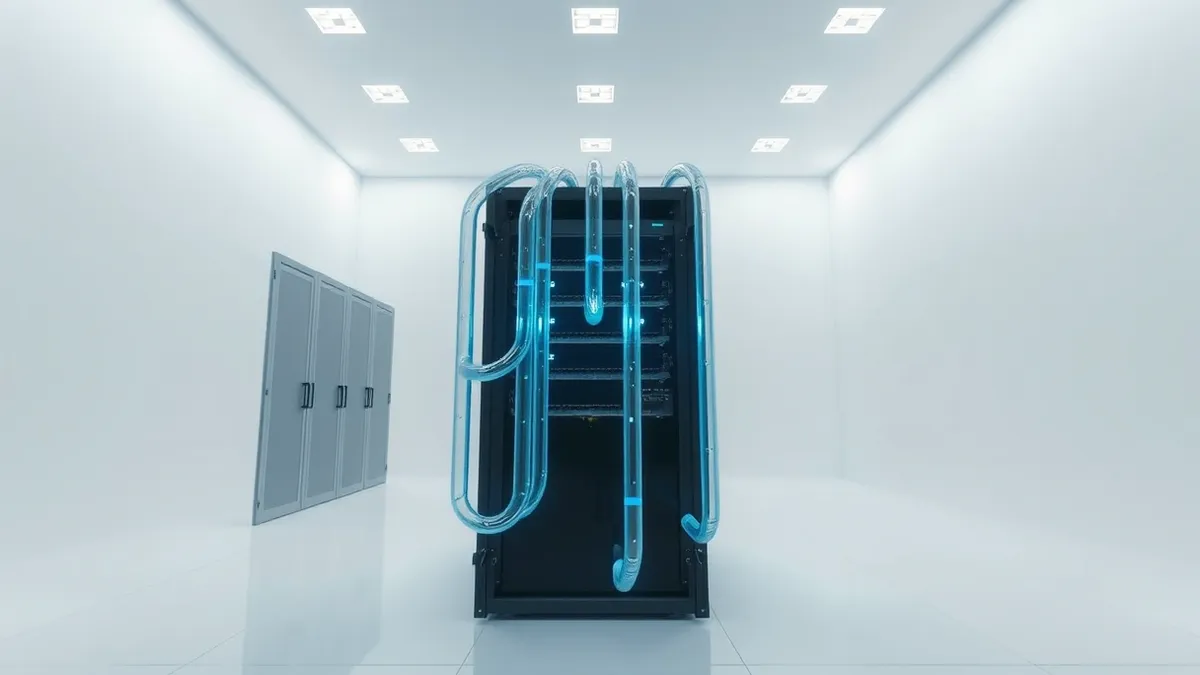
Key points
- Meta launched the IcePack liquid-cooled network rack and IceCube 102.4T switch blades to handle high power density and thermal efficiency for large AI clusters.
- The company introduced Flattened Planar Fabric, a multiplane backend scale-out design that reduces latency and improves resilience for GPU connections in data centers.
- Meta co-led the launch of the Open Switch Platform Architecture initiative with Microsoft and Alibaba, submitting specification version 1.0 to the Open Compute Project.
Meta presented its next-generation open networking infrastructure at the 2026 Open Compute Project Global Summit, introducing liquid-cooled hardware and new fabric designs to support massive AI workloads. The company shared details on the IcePack rack, IceCube switches, and the Flattened Planar Fabric, aiming to standardize efficient, scalable AI infrastructure through the OCP community.
The IcePack rack represents Meta’s first liquid-cooled network rack, built on the OCP ORV3-HPRv1 standard to manage the thermal density required for gigawatt-scale AI clusters. Inside these racks sit IceCube switch blades, which provide 102.4-Tbps fabric switching capacity with 128x800G non-blocking performance. These switches offer a two-fold bandwidth increase over previous 51.2T platforms, addressing the growing power and cooling constraints of modern data centers.
New Fabric and Protocol Innovations
Meta also detailed the Flattened Planar Fabric, a multiplane backend scale-out fabric that changes how GPUs connect to the network by enabling larger, more resilient clusters with lower latency. The company shared learnings from this architecture with cloud partners to improve failure handling in large-scale training jobs. Additionally, Meta released open-source implementations of MetaRoCE, its RDMA transport protocol designed specifically for AI networks to enhance data movement efficiency.
For multi-site clusters spanning buildings and regions, Meta outlined its petabit-scale backend aggregation super-spine approach using SRv6 regional backbones. This setup relies on FBOSS and SAI to manage longer distances and complex topologies. The company also previewed next-generation designs using 102.4T silicon for 72-accelerator-per-rack configurations, moving toward Ethernet for Scale-Up Networking standards with future chips.
Industry Collaboration and Standards
The Open Switch Platform Architecture initiative, co-led by Meta, Microsoft, and Alibaba, aims to standardize the switch platform layer within the industry. Specification version 1.0 has been submitted to the Open Compute Project to encourage broader adoption and interoperability among silicon vendors and system integrators. Meta has been active in OCP since co-founding it in 2011, previously driving the Ethernet for Scale-Up Networking initiative at the 2025 summit.
These innovations directly support Meta’s latest AI models, including Muse Wonder, Muse Spark, and the personal AI agent Muse. By opening these designs, Meta invites engineers and operators to join the community in building sustainable, high-performance infrastructure. The IceCube switches run Meta’s open-source FBOSS network operating system, leveraging OCP SAI for flexible hardware support across different ASIC vendors.
What should you do?
Security and infrastructure professionals should monitor OCP specifications for updates on the Open Switch Platform Architecture and FBOSS compatibility. Teams planning large-scale AI deployments should evaluate liquid-cooling requirements and thermal density constraints for next-generation switch platforms. Organizations using RDMA in AI networks should review the open-source MetaRoCE implementations for potential integration benefits.
What to do and how to stay safe: Meta
- Review the newly submitted OCP Open Switch Platform Architecture specification version 1.0 to assess compatibility with existing switch hardware and network operating systems.
- Evaluate current data center cooling capabilities against the thermal density requirements of 102.4T switch platforms like IceCube before planning hardware upgrades.
- Test the open-source MetaRoCE implementation in non-production environments to identify potential performance improvements for AI workload data transport.
- Monitor updates from the Ethernet for Scale-Up Networking initiative to prepare for future 102.4T silicon and 72-accelerator-per-rack designs.
Step-by-step guide: Prompt Injection Warning Signs: How to Spot AI Manipulation
General security guidance from the Threat Times newsroom. It is not confirmed advice from the organisations named in this story.
Frequently asked questions
What is the IcePack rack and why did Meta introduce it?
IcePack is Meta’s first liquid-cooled network rack, introduced to handle the high power density and thermal efficiency requirements of gigawatt-scale AI clusters using the OCP ORV3-HPRv1 standard.
Which companies are leading the Open Switch Platform Architecture initiative?
The Open Switch Platform Architecture initiative is co-led by Meta, Microsoft, and Alibaba, with specification version 1.0 submitted to the Open Compute Project to standardize switch platforms.
How does Flattened Planar Fabric improve AI cluster performance?
Flattened Planar Fabric is a multiplane backend scale-out fabric that enables larger GPU clusters with lower latency and improved resilience, helping large-scale training jobs handle failures more effectively.


