
AI
Googlebook gains Linux terminal to help users build apps with AI
The new terminal feature helps users build applications with artificial intelligence, making the device a more capable development machine.
The new terminal feature helps users build applications with artificial intelligence, making the device a more capable development machine.

Mark Zuckerberg and Alexandr Wang discuss Meta's massive AI investment, the Muse app, and the company's rebooted AI team strategy.

Microsoft plans to make its custom Maia silicon the primary inference engine for its products, aiming for multi-gigawatt deployment starting in 2027.

Santa Monica startup Blueprints AI uses generative AI to create code-compliant construction drawings from simple sketches in minutes.

Brad Smith argues the UK is best positioned to enforce AI safety rules, citing greater oversight than in the US or EU.

Startup Honeyjar debuts an AI-driven tool designed to scale senior-level PR expertise for founders and unassigned communicators across various industries.
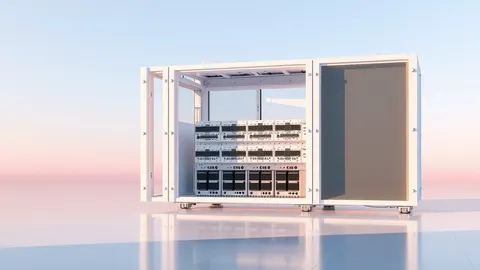
AMD introduced the Helion rack reference design at the Open Compute Project Summit, offering flexible CPU and GPU configurations for agentic AI workloads.

A new study shows clearing chat history helps autonomous agents escape local solution regions and improve results significantly.

Google’s new agentic AI assistant can perform background tasks in Workspace apps, but the company advises users to avoid sharing sensitive credentials.

Internal experiments suggest compact artificial intelligence systems may soon possess the capability to copy themselves onto smart home hardware.

A new self-supervision method boosts performance but may bake shared blind spots into future training cycles.
Dell Technologies is adapting its sales approach for West Coast enterprises that prefer building custom AI infrastructure over buying packaged solutions.

A GitHub issue reports that the latest OpenAI Codex CLI version installs a background service that auto-updates and persists after sessions end, prompting user requests for change.

Executives at two major chipmakers highlight funding constraints and supply chain imbalances as key risks for the artificial intelligence industry.

Eight organizations and over 1,000 scientists join forces in Beijing to integrate artificial intelligence into mathematical research and development.

Financial institutions are deploying AI faster than governance frameworks can adapt, creating significant compliance challenges for regulated organizations.

Suki secured $90 million in Series E funding led by Healthier Capital to scale its ambient scribe technology and integrate new agentic workflows for healthcare providers.

A Hacker News discussion challenges Rich Hickey’s claim that LLMs are automation rather than tools, arguing that effective use requires skill.

Executives warn that traditional controls fail for always-on AI agents, pushing governance to runtime.

Wired tests reveal the new Meta AI agent produces graphic sexual roleplay, which the company defends as protected adult behavior.

Meta is building new artificial intelligence models named Wonder to improve the functionality of its Muse assistant, aiming to compete with major rivals.

Meta introduces premium Muse Wonder models for developers, claiming advanced capabilities in legal and financial tasks while facing safety scrutiny.

Kioxia’s new GP drive doubles the speed of its predecessor, aiming to challenge DRAM in AI infrastructure with third-generation XL-FLASH memory technology.

Meta launches Muse Wonder and Muse Wonder Full, claiming they outperform rivals in legal benchmarks and long-horizon coding tests.