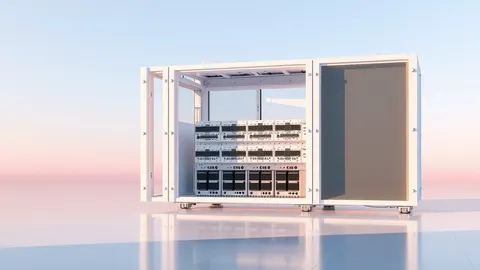
AMD unveils Helion rack blueprint for CPU-heavy AI agent workloads
The new open design prioritizes core density and power efficiency for running autonomous agents rather than training large models.
Key points
- The CPU-only Helion rack supports up to 32,768 cores using 128 sockets of the Zen 6 Venice chip.
- Partner systems based on the blueprint are scheduled to arrive in November.
- The design includes a token router to direct model calls between local open-source models and cloud-based frontier models.
AMD has published Helion, an open rack blueprint designed specifically for running AI agents rather than training large models. According to The Next Web, the CPU-only version of the rack can hold up to 32,768 cores, marking a significant shift toward inference-heavy infrastructure.
The design was presented at the Open Compute Project summit in San Jose, The Register reported. AMD plans to contribute the specification to the Open Compute Project, though partner systems are not expected until November. The blueprint offers two configurations: a CPU-only version for hyperscale operators and a mixed CPU and GPU version for enterprise customers.
Technical specifications and design
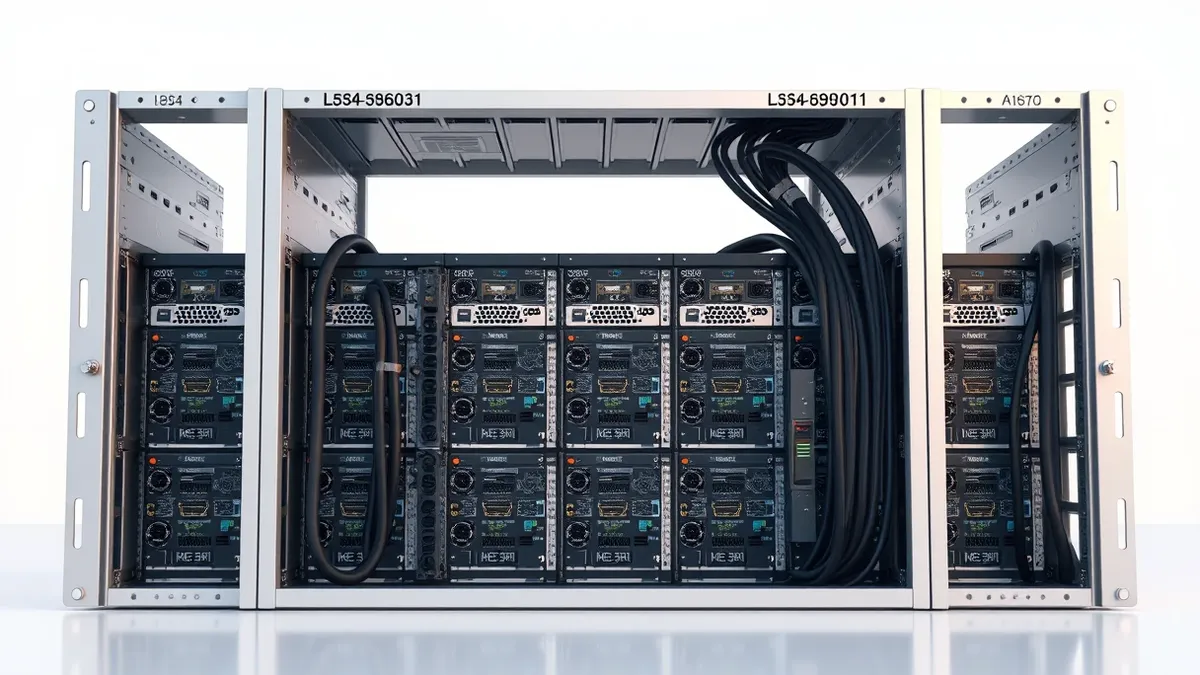
The CPU-only rack configuration tops out at 32,768 cores by utilizing 128 sockets of AMD’s 256-core Venice chip, which is built on the Zen 6 architecture. These processors are available in 400W dense or 600W balanced blade form factors. This high core count is intended to maximize the number of agents that can run within a specific power envelope.
The mixed rack configuration contains fewer graphical processing units than typical training rigs. It holds a maximum of 16 Instinct MI350P accelerators, distributed across two eight-GPU servers. AMD states that these servers run independently, with no scale-up fabric connecting them. This distinguishes Helion from AMD’s Helios rack, which carries 72 MI455X parts and 31 terabytes of HBM4 for training workloads.
Power efficiency and market context
A key component of the enterprise rack is a token router, which directs agents’ model calls either to frontier models in the cloud or to open-source models running locally within the rack. Dan McNamara, who runs compute and enterprise AI at AMD, said the goal is to allow partners to make efficient use of available power. Matt Kimball at Moor Insights and Strategy noted in a field note that the primary objective is packing as many agents as possible into every watt.
Power availability remains a critical constraint for data center operators. Denmark’s grid operator paused new connections in March, with approximately 60GW of projects queued against a peak demand of nearly 7GW. In the European Union, Brussels adopted a Cloud and AI Development Act in June, aiming to at least triple the bloc’s data center capacity within seven years.
A survey of 300 data center decision-makers in the UK, Ireland, and the Nordics identified power availability as the leading obstacle to delivering sovereign capacity. Sovereign AI operators are among the target audience for Helion’s power-efficient design. However, AMD has not yet named any European system builders among its partners, nor has it published pricing for the racks.
What should you do?
Security and technology professionals should monitor the release of partner systems in November to assess hardware compatibility. Organizations relying on sovereign AI should evaluate how local model routing impacts data residency requirements. Teams should review current power budgets to determine if high-core-count inference racks fit within existing utility constraints.
What to do and how to stay safe: AMD
- Audit current data center power capacity to ensure it can support high-density inference workloads without exceeding utility limits.
- Review network architecture to support the token routing requirements between local open-source models and cloud-based frontier models.
- Evaluate security policies for mixed CPU and GPU environments, particularly regarding independent server operations without scale-up fabrics.
- Monitor Open Compute Project updates for the final specification details before committing to hardware procurement plans.
Step-by-step guide: Prompt Injection Warning Signs: How to Spot AI Manipulation
General security guidance from the Threat Times newsroom. It is not confirmed advice from the organisations named in this story.
Frequently asked questions
When will systems based on the Helion blueprint be available?
Partner systems are scheduled to be released in November.
Does the Helion rack use GPUs for training large models?
No, the Helion rack is designed for running AI agents, while the Helios rack is used for training models.
How many cores can the CPU-only Helion rack support?
The CPU-only version supports up to 32,768 cores using 128 sockets of the Zen 6 Venice chip.