HPE to launch fourth-gen space computer to Moon on Astrolab rover this year
Hewlett Packard Enterprise is sending its Spaceborne Computer 4 to the lunar south pole aboard a rover launching later this year.
Key points
- HPE’s Spaceborne Computer 4 will conduct AI and HPC experiments on the Moon.
- The system includes mirrored Kioxia SSDs totaling 1 TB of storage capacity.
- The specific processor silicon remains undisclosed due to mission risk concerns.
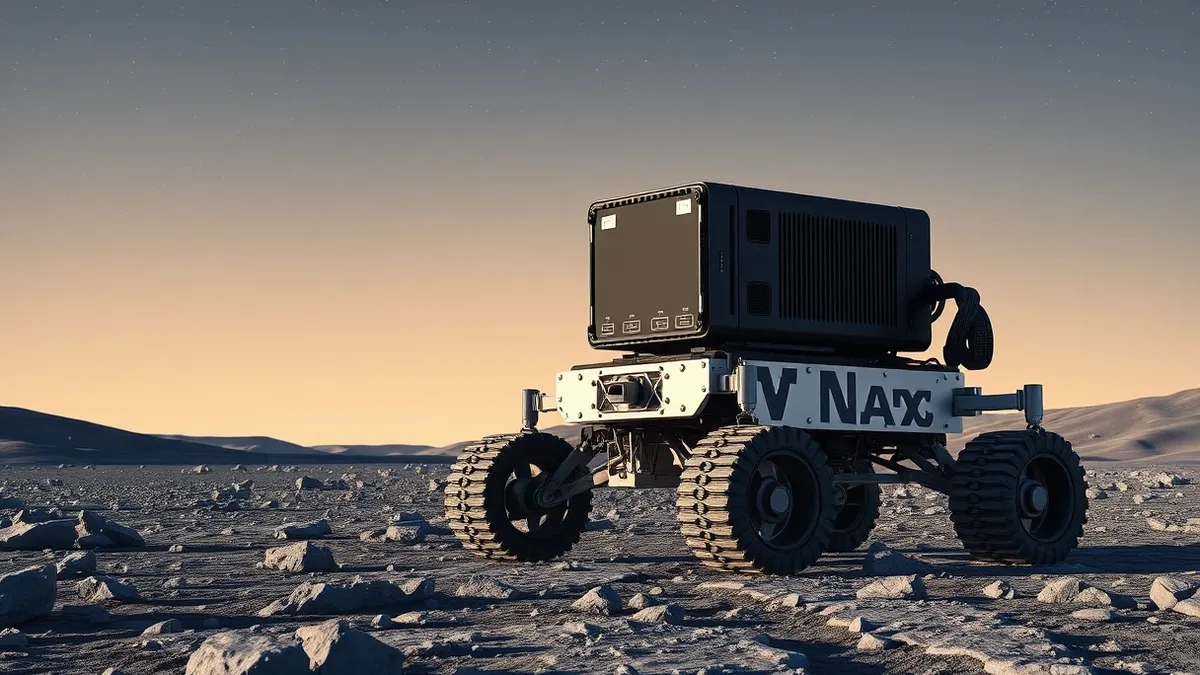
Hewlett Packard Enterprise will deploy its fourth-generation Spaceborne Computer to the lunar surface later this year. The system will travel aboard Astrolab’s Flex Lunar Innovation Platform rover as part of a mission to the Moon’s south pole.
The rover is scheduled for deployment by Voyager Technologies’ Griffin-1 lander under NASA’s Commercial Lunar Payload Services program. According to The Register, the landing is planned for before the end of the year. This mission marks a shift from orbital testing to surface-based compute operations.
Hardware specifications and design constraints
The Spaceborne Computer 4, referred to as SBC4, will support artificial intelligence and high-performance computing tasks during a year-long mission. The physical system measures approximately five by ten inches and is about one inch thick. This compact form factor allows it to fit within the rover’s limited payload space.
Power and thermal management are critical constraints for the lunar rover. The vehicle’s radiators have a limited capacity to dissipate heat generated by the compute platform. Consequently, the system must operate within strict energy budgets while performing its experimental workload on the lunar surface.
Undisclosed processing technology
The specific silicon powering the SBC4 remains unconfirmed by HPE. According to The Register, the secrecy stems from the high-risk nature of the mission. HPE’s compute partner prefers to avoid brand association if the hardware fails during the launch or operation phases.
Known components include a low-power central processing unit and a graphics processor. The storage subsystem features a pair of mirrored Kioxia solid-state drives. These drives provide a total capacity of one terabyte for data collection and processing tasks.
Mission context and objectives
HPE has previously built orbital compute platforms for the International Space Station. This lunar mission represents an expansion of its space computing portfolio beyond Earth orbit. The FLIP rover will serve as a testbed for various emerging technologies alongside the computer.
The Register notes that the system could potentially utilize hardware from vendors like Nvidia or AMD. However, the exact architecture will only be known once the system powers up on the Moon. The mission aims to validate AI capabilities in a harsh extraterrestrial environment.
What should you do?
Security professionals should monitor the official launch schedules and telemetry data for the Griffin-1 lander. Organizations involved in space computing should review their risk management strategies for high-value hardware. Teams should prepare for potential communications delays inherent in lunar operations.
What to do and how to stay safe: Hewlett Packard Enterprise
- Monitor official NASA and HPE channels for launch confirmation and mission updates.
- Review existing risk assessment protocols for high-value hardware in space missions.
- Prepare contingency plans for communication delays during lunar surface operations.
- Verify data integrity procedures for systems using mirrored storage in extreme environments.
Step-by-step guide: Prompt Injection Warning Signs: How to Spot AI Manipulation
General security guidance from the Threat Times newsroom. It is not confirmed advice from the organisations named in this story.
Frequently asked questions
When is the HPE Spaceborne Computer 4 launching to the Moon?
The mission is scheduled for later this year, with deployment planned before the end of the year.
What is the storage capacity of the Spaceborne Computer 4?
The system includes mirrored Kioxia SSDs that provide a total of 1 TB of storage capacity.
Why has HPE not disclosed the processor used in SBC4?
The partner prefers secrecy because mission failure could negatively impact their brand reputation.