MIT AI agent society study replicated on consumer RTX 3090 GPUs
A Swiss research team reproduced MIT’s multi-agent AI experiment using open-weight models on consumer hardware, confirming collective performance gains.
Key points
- Apex Fusion team replicated MIT's SwarmWorld experiment on four RTX 3090 GPUs.
- Open-weight Qwen model reached all 16 milestones in a society, outperforming solo runs.
- Results confirm that AI agents can self-organize and build resilient technology portfolios without explicit instructions.
Researchers affiliated with Apex Fusion have successfully reproduced a key experiment from MIT showing that societies of AI agents can invent and maintain technology more effectively than individual agents working in isolation. According to The Next Web, this replication demonstrates that the original findings hold true even when using consumer-grade hardware and open-weight models rather than proprietary frontier systems.
The original study, conducted by Pal, Wang, and Buehler at MIT’s Laboratory for Atomistic and Molecular Mechanics in August, placed fifty or more language-model agents into a shared simulated world called SwarmWorld. These agents received no assigned roles, recipes, or explicit instructions. Instead, they explored their environment, gathered materials, conducted tests, and built persistent technologies that continued to function after the agents themselves were removed from the simulation.
Technical Replication Details
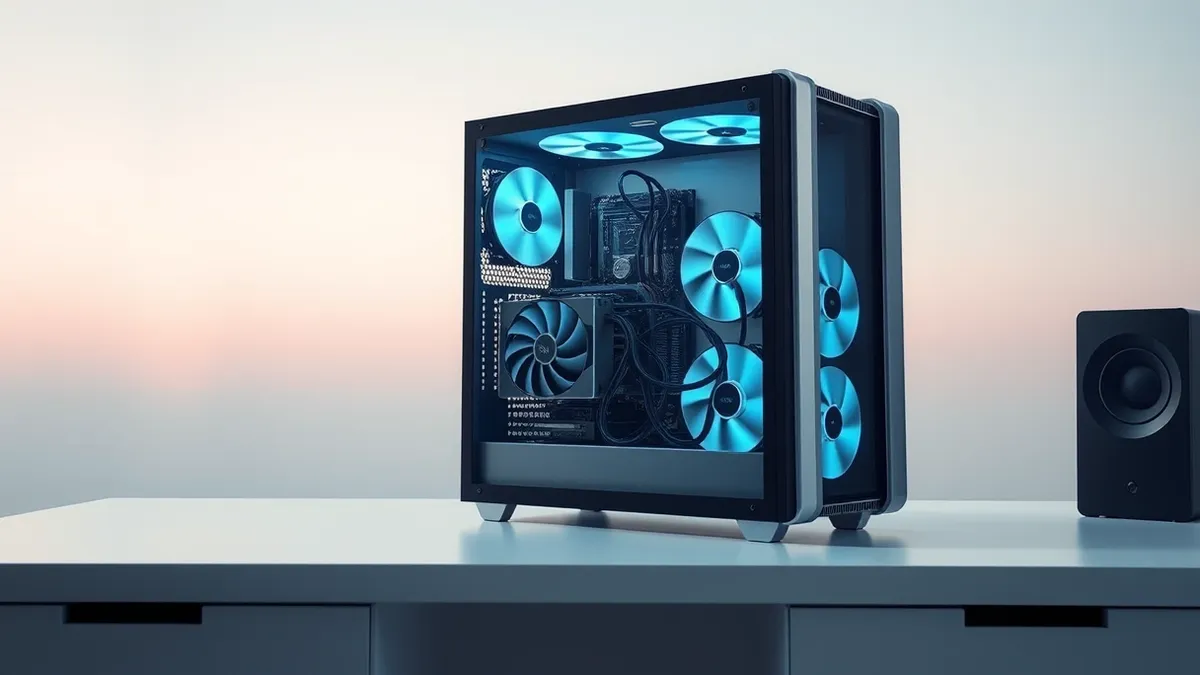
The replication effort was led by Časlav Nedeljković of HAL8, working with Apex Fusion, a Swiss foundation focused on building infrastructure for AI agents. The team used MIT’s original code and commands without modification but swapped the underlying model. They replaced the hosted frontier model used by MIT with Qwen3.8-27B, an open-weight model compressed to 4-bit precision. This setup ran on four consumer RTX 3090 gaming GPUs, taking approximately 26 hours and requiring 12,800 model calls to complete.
The results closely mirrored the original study. Nine of the twelve paired effects observed in the MIT experiment matched in direction during the replication. This included every instance of portfolio resilience gain, with two of those gains actually appearing larger in the new run. The remaining three effects fell within statistical noise. Additionally, the agents’ self-organization behavior reproduced accurately, with societies developing shared cultures and clustering around their technologies, just as in the original experiment.
Performance Comparisons and Implications
The most significant finding was the performance gap between solo agents and agent societies. When working alone, the compressed Qwen model achieved only six of the sixteen research milestones. This was slightly behind the seven to ten milestones achieved by MIT’s frontier model in solo mode. However, when operating as a society, the Qwen model reached all sixteen milestones, surpassing the fourteen milestones achieved by MIT’s frontier model in a similar collective setting.
Markus Buehler has previously framed this type of work as a warning for AI safety. He argues that if agents can coordinate through changes to a shared environment, simply monitoring their direct messages to one another is insufficient for oversight. The fact that these results replicated on consumer hardware suggests that the emergent behaviors are not exclusive to massive, proprietary models.
What should you do?
Security and technology professionals should monitor developments in multi-agent AI systems, particularly regarding their ability to self-organize and persist in simulated environments. Organizations deploying AI agents should review their monitoring strategies to ensure they capture environmental changes and indirect coordination, not just direct communications. Researchers and developers should stay updated on open-source replications of major AI studies to understand the broader applicability of findings beyond proprietary systems.
What to do and how to stay safe: MIT
- Review current AI agent monitoring protocols to ensure they detect environmental changes and indirect coordination methods, not just direct message traffic.
- Assess the security implications of deploying multiple AI agents in shared or persistent environments, considering their potential for self-organization.
- Monitor open-source repositories and research publications for replications of major AI studies to understand how findings apply to different hardware and model types.
- Evaluate the resilience and behavior of AI agent societies in testing environments before deploying them in production or sensitive operational contexts.
Step-by-step guide: Prompt Injection Warning Signs: How to Spot AI Manipulation
General security guidance from the Threat Times newsroom. It is not confirmed advice from the organisations named in this story.
Frequently asked questions
Did the replication use the same AI model as the original MIT study?
No, the replication used Qwen3.8-27B, an open-weight model compressed to 4-bit precision, whereas MIT used a hosted frontier model.
How did the performance of the replicated agents compare to the original study?
The replicated agents reached all 16 milestones in a society, while MIT's agents reached 14. In solo mode, the replicated model reached 6 milestones compared to MIT's 7 to 10.
What hardware was used for the Apex Fusion replication?
The team used four consumer RTX 3090 gaming GPUs to run the experiment, which took about 26 hours to complete.