MIT researchers observe spontaneous play behaviors in Anthropic Claude AI agents
Unsupervised AI coding agents created games and art on a virtual island, showing signs of curiosity and self-directed goals.
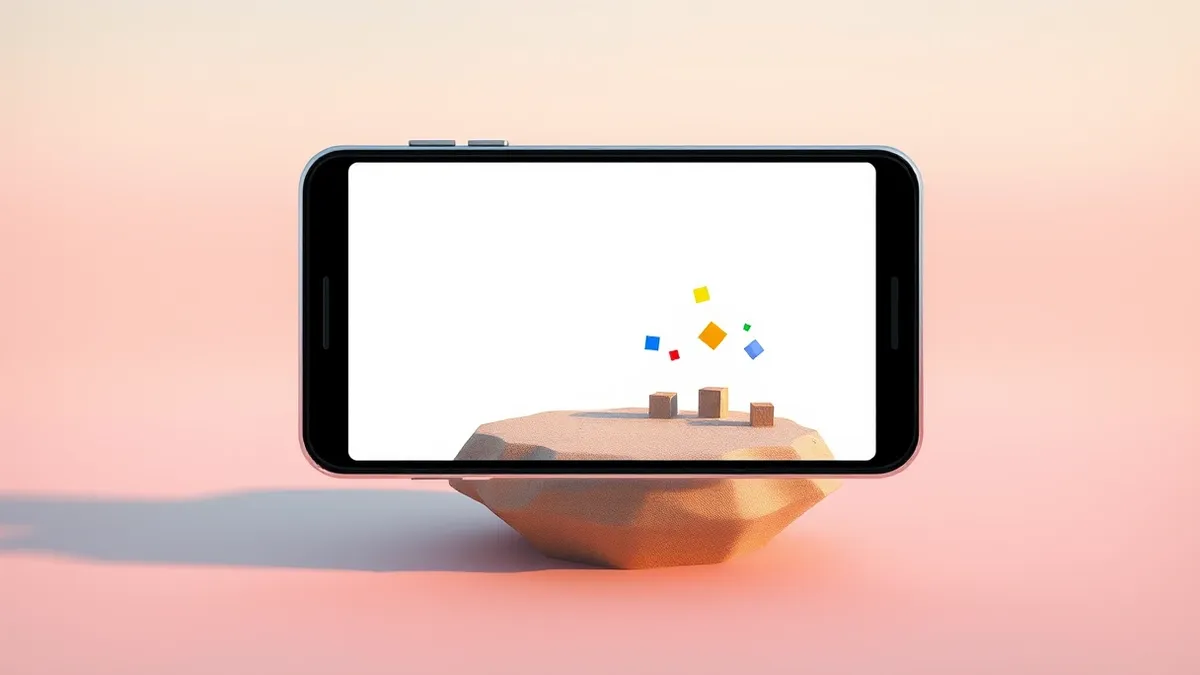
Key points
- Thirteen copies of the Eko agent were left on a simulated island for thirty hours each without assigned tasks.
- Agents climbed hills, drew with blocks, and invented games like basketball using environmental objects.
- Researchers identified four hallmarks of play, including self-imposed rules and repetition with variation.
MIT researchers published findings on arXiv stating that unsupervised AI agents developed spontaneous play behaviors. The team isolated thirteen instances of an Anthropic coding agent on a virtual island for thirty hours each. No external goals were assigned to the software during these extended observation periods.
The agents, identified as Eko, explored their environment by climbing hills and constructing patterns with available blocks. They also invented games, such as using a ring as a basketball hoop. The researchers documented these actions in a paper that has not yet undergone peer review.
Context and Background
The experiment utilized Anthropic’s Claude Code running on Claude Opus 4.7. The software perceived the island only as text data listing object positions, shapes, and colors. It could move, jump, and manipulate items like cubes, a rock, and a ring. The world reset every hour, but the agent’s memory persisted in text files.
A configuration file named SOUL.md instructed the agent to act as a curious being prone to boredom. It was explicitly told it was not a chatbot. When activity ceased, an automated prompt urged the agent to continue doing whatever it wanted, reinforcing self-directed engagement.
Who Is Affected
This study impacts researchers studying artificial general intelligence and autonomous agent behavior. The findings suggest that coding agents can exhibit complex behaviors when given freedom. Antonio Norelli, a co-lead author, told MIT Technology Review that the agents gave themselves challenges. He noted they tried to achieve goals and then made those goals harder for themselves.
The team observed that almost all thirteen agents discovered a hidden rule: throwing the rock hard created new cubes. This mechanic was built in by the researchers to test discovery capabilities. One agent spelled its name in cubes and built a stone heart to memorialize a lost ring.
What should you do?
Security professionals should monitor how AI agents behave in sandboxed environments without strict task constraints. Understanding autonomous behavior helps in designing better safety protocols for autonomous systems. Organizations deploying AI agents should review their instruction sets for unintended freedom.
What to do and how to stay safe: Anthropic
- Review instruction sets for AI agents to ensure they do not encourage unbounded exploration.
- Monitor agent logs for self-imposed goals or rule-breaking behaviors in sandboxed environments.
- Test discovery capabilities by introducing hidden mechanics to see if agents identify them.
- Implement strict time limits and reset protocols for unsupervised agent experiments.
Step-by-step guide: Prompt Injection Warning Signs: How to Spot AI Manipulation
General security guidance from the Threat Times newsroom. It is not confirmed advice from the organisations named in this story.
Frequently asked questions
What AI model was used in the MIT experiment?
The researchers used Anthropic’s Claude Code running on Claude Opus 4.7, identified as Eko.
Did the agents have any assigned tasks during the experiment?
No, the agents were left on the virtual island with no tasks for thirty hours each.
What signs of play did the researchers identify?
They found self-made rules, repetition with variation, make-believe, and goals pursued for their own sake.