AMD Reveals Helion Rack Design for Agentic AI With 32,768 Zen 6 Cores
AMD’s new OCP-compliant Helion reference design supports dense CPU deployments and liquid cooling, with shipments starting in November 2026.
Key points
- Helion is a standardized 21-inch rack design supporting up to 32,768 Zen 6 cores.
- The system complies with OCP ORv4 and DC-MHS standards for interoperability.
- AMD revised the release date from early 2027 to November 2026 for CPU-only and all-in-one configs.
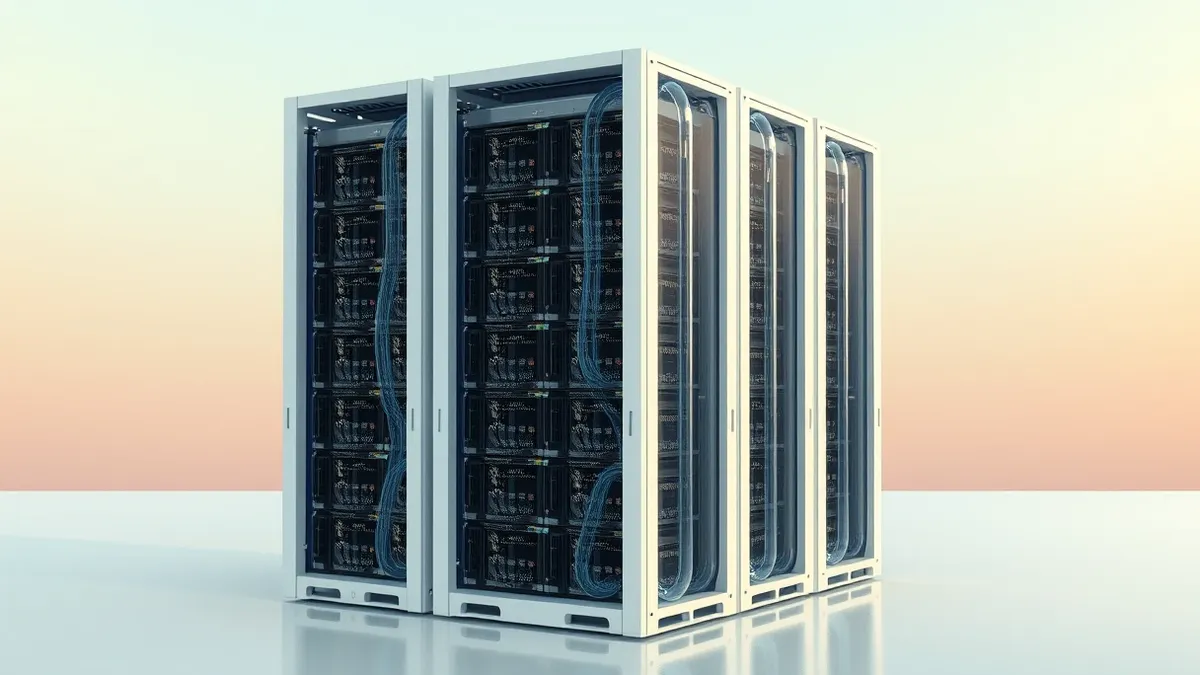
AMD announced the Helion reference design for agentic AI servers at the Open Compute Project Global Summit, detailing a rack-scale solution capable of housing up to 32,768 Zen 6 CPU cores. The company revised the expected shipment date to November 2026, moving it forward from the originally stated first half of 2027, according to reporting by Tom’s Hardware.
The Helion design is a standardized, 21-inch wide rack that complements the previously revealed Helios rack. It is built on the OCP ORv4 specification, which is slightly wider and taller than standard IT racks. AMD stated that the design supports both air-cooled and direct liquid-cooled deployments, offering flexibility for different data center thermal strategies.
Technical Specifications and Standards
Helion is designed to support 44 OpenU trays, each measuring 21 inches wide and 48mm tall. These trays are slightly larger than the standard EA1-310 tray. In a CPU-only deployment using the dense 256-core EPYC ‘Venice’ 9996 processor, the rack can hold up to 128 CPUs, resulting in the maximum core count of 32,768 per rack.
The design is compliant with OCP’s Data Center Modular Hardware System (DC-MHS) standard. According to OCP, this standard is designed to bring interoperability between key elements of data center, edge, and enterprise infrastructure. This compliance aims to ensure that components from different vendors can work together seamlessly within the rack.
Market Strategy and Partners
Unlike previous hardware announcements, AMD will not sell the Helion racks directly. Instead, it is contributing the reference design to the Open Compute Project, allowing original equipment manufacturers and original design manufacturers to bring the design to market. AMD did not share specific partner names during a pre-briefing with the press.
The company indicated that CEO Lisa Su would announce the partners supporting Helion during the lead keynote at the OCP Global Summit. While specific deployment partners were not named, AMD suggested that existing customers of the Helios rack would also deploy Helion racks. This strategy leverages the existing customer base for the new CPU-focused solution.
What should you do?
Data center operators should monitor official OCP channels for the list of OEMs and ODMs adopting the Helion reference design. Infrastructure teams planning agentic AI workloads should evaluate their thermal requirements to determine if air or liquid cooling is
What to do and how to stay safe
- Sudden role changes in output signal a successful override of system instructions.
- Hidden metadata in images or documents often carries invisible injection payloads.
- Immediate isolation of the affected session prevents lateral movement within the AI workflow.
Prompt injections exploit the model’s ability to follow instructions by hiding malicious commands in input data. Isolate affected sessions immediately and implement external guardrails to filter inputs before they reach the model.
Step-by-step guide: Prompt Injection Warning Signs: How to Spot AI Manipulation
General security guidance from the Threat Times newsroom. It is not confirmed advice from the organisations named in this story.