Microsoft unveils Maia 300 AI chip for 2027 deployment
The new accelerator targets inference workloads with significantly higher token throughput and improved energy efficiency for Azure infrastructure.
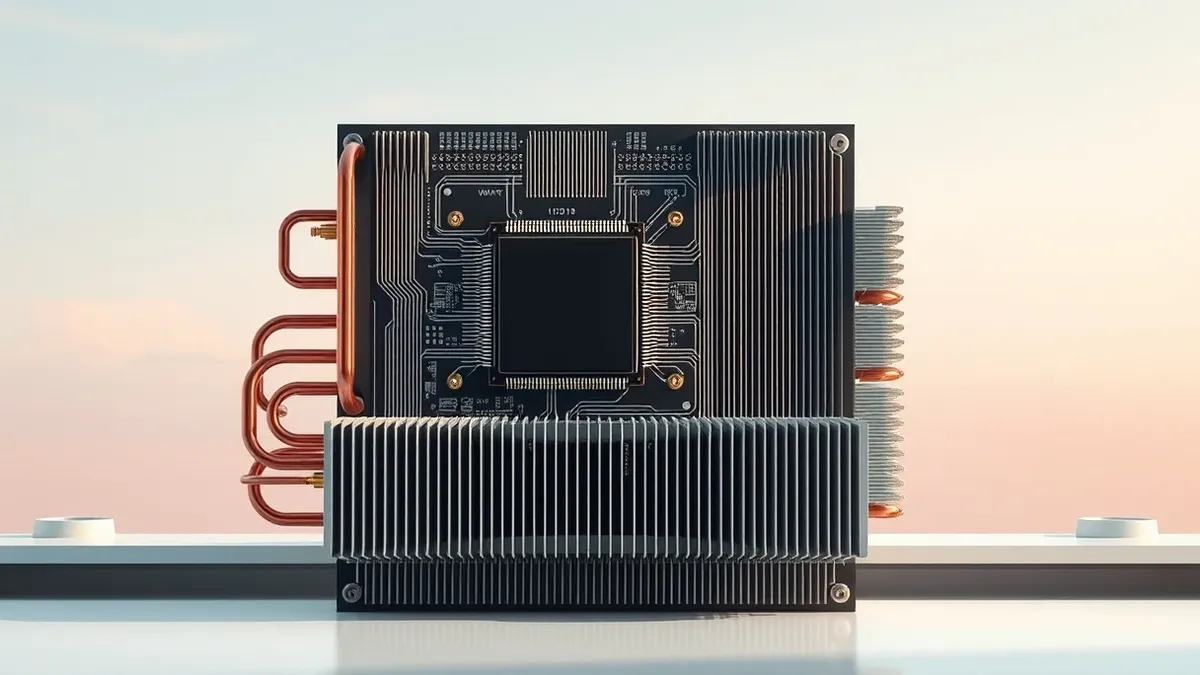
Key points
- Maia 300 deployment begins in 2027.
- The chip offers 40% more tokens per megawatt than leading GPU systems.
- It uses an inference-first architecture with HBM4 memory stacks.
Microsoft revealed the Maia 300 accelerator, positioning it as its most powerful artificial intelligence chip to date. The company plans to begin deploying the hardware in 2027 to support multi-gigawatt AI infrastructure within its Azure cloud platform.
The new accelerator delivers 40% more tokens per megawatt compared to leading GPU-based systems, according to TechRadar. Microsoft states that a single rack containing 96 Maia 300 units will provide up to seven times the token throughput of a Maia 200 rack. This significant increase in capacity targets long-context reasoning and sustained multi-step agent tasks.
Technical specifications and design
Maia 300 utilizes an inference-first architecture designed to minimize data movement and optimize computing resources. The chip features eight stacks of HBM4 memory, delivering a peak bandwidth of 18 terabytes per second within a 950-watt thermal design power. This memory-centric approach aims to keep data close to the processing units that require it.
The hardware employs a multi-chiplet structure that separates compute, memory controller, and input/output functions. Compute chiplets will be manufactured using TSMC’s N2P process. Microsoft also introduced support for low-precision formats, including an enhanced MXFP4 variant, to reduce memory demands and increase throughput without raising power consumption.
Impact on Microsoft services
Microsoft expects Maia 300 to improve performance across several key products, including Microsoft Teams, Copilot, and Cowork. The company says the chip will enhance agentic coding capabilities in GitHub and support large-scale model serving through Microsoft Foundry. These improvements target responsive conversational AI and efficient data generation for internal teams.
Networking is integrated into the system’s dataflow rather than operating as a separate layer. Specialized software can use on-chip SRAM as a scratchpad to ease pressure on HBM during demanding workloads. This design allows the system to run larger context windows while maintaining efficiency within the same power envelope.
What should you do?
Cloud architects and IT leaders should monitor Microsoft’s official announcements for detailed deployment timelines and regional availability. Organizations relying on Azure AI services should review their current infrastructure plans to align with the anticipated performance gains from Maia 300. Technical teams should evaluate how the new chip’s inference capabilities might impact their long-term workload strategies.
What to do and how to stay safe: Microsoft
- Monitor official Microsoft channels for confirmed deployment dates and regional availability of Maia 300.
- Review current Azure AI workload plans to identify opportunities for future efficiency gains.
- Evaluate how new inference capabilities might impact long-term infrastructure budgeting and scaling.
- Stay informed about updates to Microsoft Foundry and GitHub Copilot features leveraging the new hardware.
Step-by-step guide: Prompt Injection Warning Signs: How to Spot AI Manipulation
General security guidance from the Threat Times newsroom. It is not confirmed advice from the organisations named in this story.
Frequently asked questions
When will Maia 300 be available?
Microsoft plans to begin deploying Maia 300 in 2027.
How does Maia 300 compare to GPUs?
It delivers 40% more tokens per megawatt than leading GPU-based systems.
What products will benefit from Maia 300?
Microsoft Teams, Copilot, Cowork, GitHub, and Microsoft Foundry are expected to see improvements.


