Microsoft's Maia 300 chips offer 40% more tokens per megawatt, set to power AI by 2027
The tech giant unveiled its third-generation custom silicon, aiming to power its AI services with gigawatt-scale deployments by 2027.
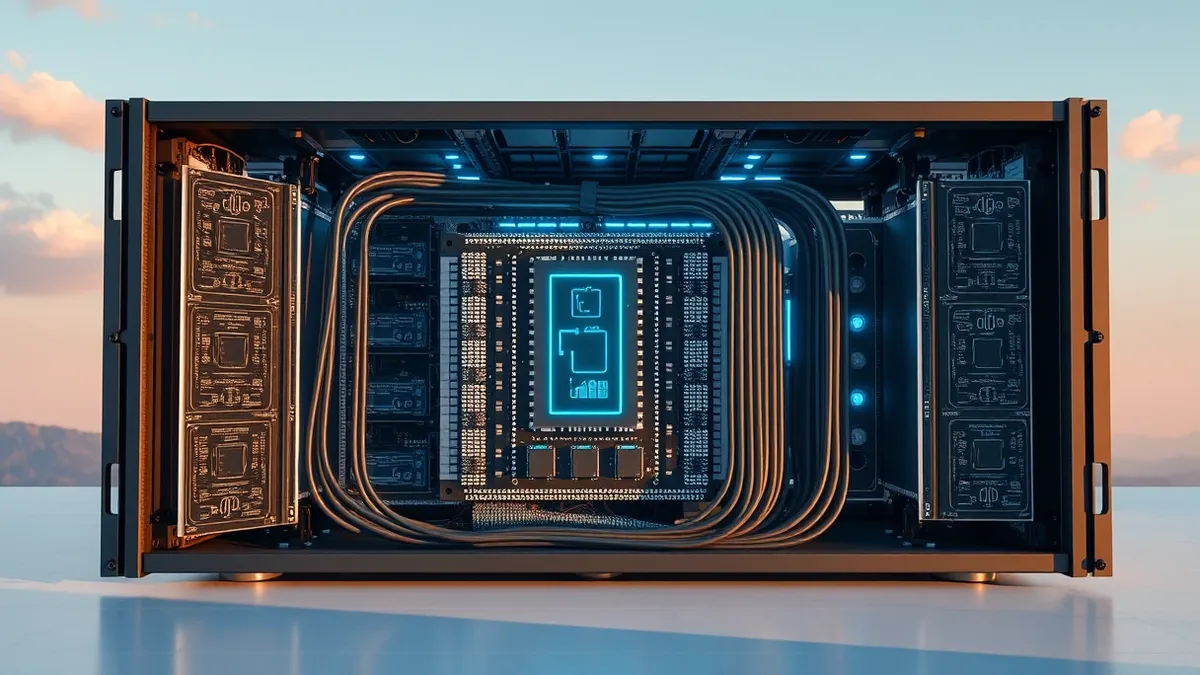
Key points
- Microsoft will make Maia chips its primary AI system starting in 2027.
- The Maia 300 delivers 40% more tokens per megawatt than top GPU systems.
- Each rack holds 96 chips and draws approximately 167 kilowatts of power.
Microsoft announced on Monday that it will transition its artificial intelligence services to run primarily on its own custom Maia chips beginning in 2027. The company revealed this strategic shift alongside the launch of the Maia 300, which represents the third generation of its dedicated AI silicon. This move signals a significant step toward reducing reliance on third-party hardware providers for core infrastructure.
The firm plans to deploy these systems at a scale measured in gigawatts starting next year. According to Microsoft, this capacity could involve more than one million Maia 300 chips by 2027. The hardware is specifically engineered for inference tasks, which involve executing trained AI models rather than training them. Microsoft stated that the chip targets long conversations, reasoning capabilities, and AI agents performing multi-step tasks.
Technical specifications and efficiency
Microsoft claims that the Maia 300 generates 40% more tokens per megawatt of power compared to top GPU systems, though it did not specify which systems were used for this comparison. A full rack containing 96 chips delivers up to seven times the output of the previous Maia 200 generation. Each rack draws approximately 167 kilowatts of electricity. For context, Reuters reported that Nvidia’s latest GB300 racks hold 72 GPUs and draw about 142 kilowatts.
Internally, Microsoft has divided the chip into smaller components known as chiplets for computing, memory, and data transfer. The computing sections utilize TSMC’s N2P process technology. Each individual chip includes eight stacks of HBM4 memory. Rani Borkar, who leads Azure hardware systems and infrastructure at Microsoft, told Reuters that the design optimizes intelligence per watt, dollar, and byte of memory across the entire system.
Current usage and industry context
The preceding Maia 200 chip is already operational within Microsoft’s ecosystem. It currently supports Microsoft Copilot and runs OpenAI models alongside Microsoft’s own MAI models. Microsoft stated that the Maia 200 will also support GitHub Copilot and Microsoft Foundry by the end of this year. This deployment follows a broader trend among cloud giants and AI firms seeking to reduce dependence on Nvidia. Google and Amazon have developed their own AI chips, while OpenAI has partnered with Broadcom to build custom silicon.
Microsoft has been actively securing manufacturing capacity to support this expansion. In August, The Information reported that Microsoft was in discussions with TSMC to produce more than 300,000 Maia 300 chips for the 2027 target. The company plans to provide additional details about the chip’s capabilities and integration at its Ignite conference in San Francisco next month. This strategic pivot highlights the growing competition in custom AI hardware among major technology providers.
What should you do?
Security and technology professionals should monitor Microsoft’s Ignite conference next month for detailed technical specifications regarding the Maia 300. Teams relying on Azure AI services should track the transition timeline from current hardware to the new Maia-based infrastructure. Organizations should assess their current GPU dependencies and evaluate how this shift might impact future procurement strategies. Watch for updates on how the new chip architecture affects latency and throughput for inference workloads.
What to do and how to stay safe: Microsoft
- Monitor official Microsoft announcements for specific deployment timelines of the Maia 300 in Azure services.
- Evaluate current GPU dependencies in your AI workflows to anticipate potential infrastructure changes.
- Review vendor contracts for AI services to understand how hardware transitions may affect pricing or performance.
- Stay informed about industry trends in custom AI silicon to adjust long-term technology roadmaps.
General security guidance from the Threat Times newsroom. It is not confirmed advice from the organisations named in this story.
Frequently asked questions
When will Microsoft start using Maia chips as its primary AI system?
Microsoft plans to make its Maia chips the primary system for running AI in its products starting in 2027.
How does the Maia 300 compare to GPU systems in efficiency?
Microsoft states that the Maia 300 generates 40% more tokens per megawatt of power than top GPU systems.
What is the power consumption of a full Maia 300 rack?
Each rack holds 96 chips and draws about 167 kilowatts of power.


