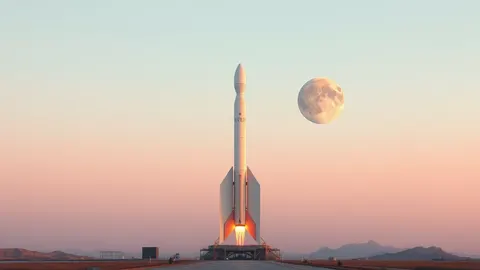
JAXA Launches MMX Mission to Return Samples from Mars Moon Phobos Today
Japan’s Mars Moons eXploration mission launches today to collect and return material from Phobos, aiming to solve lunar origin mysteries.

Key points
- JAXA launches the MMX spacecraft today at 3:41 p.m. ET from Tanegashima Space Center.
- The mission aims to be the first to return samples from the Martian system to Earth.
- Scientists hope the sample will reveal whether Phobos is an asteroid or impact debris.
The Japan Aerospace Exploration Agency launches its Martian Moons eXploration mission today at 3:41 p.m. ET. This first-of-its-kind endeavor sends a spacecraft to survey Mars’s moons, collect a sample of Phobos, and return it to Earth for analysis, according to Gizmodo.
JAXA broadcasts the launch livestream starting at 2:45 p.m. ET from the Tanegashima Space Center. The agency uses an H3 rocket for the ascent. If the mission succeeds, it becomes the first to return home from Mars orbit and the first to bring back samples from the Martian system, per the outlet.
Scientific Objectives and Lunar Origins
Scientists debate whether Phobos and Deimos are ancient asteroids captured by gravity or remains of a massive impact on Mars. The MMX mission aims to resolve this question by analyzing the physical composition of the moons, which have remained largely unexplored despite nearly three decades of rover activity on the Red Planet’s surface.
Kiyoshi Kuramoto, a planetary scientist at Hokkaid University and leader of the mission’s international team, told Science that the mission provides insight into Mars itself. He noted that one percent of the material retrieved from Phobos could originate from Mars, making it a unique opportunity to study the planet indirectly.
Strategic Importance for Planetary Science
NASA effectively canceled its Mars Sample Return mission in January, leaving dozens of rock cores collected by the Perseverance rover in limbo. Consequently, the MMX sample offers new hope for planetary scientists seeking to understand the history and past habitability of the Martian system, according to Gizmodo.
Kris Zacny, vice president of exploration systems at Honeybee Robotics, told Science that the mission is not just about Phobos. Honeybee Robotics built one of the sample extractors for the spacecraft. Zacny stated that the mission covers both Phobos and Mars, as the moons are likely dusted with material blasted off the Red Planet.
What should you do?
Security professionals and technology readers should monitor official JAXA channels for launch updates and potential broadcast disruptions. While this is a space exploration event, tracking official agency communications ensures accurate information flow during high-profile technical operations.
What to do and how to stay safe: JAXA
- Monitor official JAXA social media and website for real-time launch status updates.
- Verify information about the mission through reputable scientific outlets like Science or Gizmodo.
- Check for any cybersecurity advisories related to government agency websites during high-traffic events.
- Review organizational protocols for handling sensitive data if working with aerospace contractors.
Step-by-step guide: Mobile Device Security: How to Protect Data Beyond Passwords
General security guidance from the Threat Times newsroom. It is not confirmed advice from the organisations named in this story.
Frequently asked questions
When does the MMX mission launch?
The mission launches today at 3:41 p.m. ET, with livestreaming beginning at 2:45 p.m. ET.
Why is the MMX mission significant?
It aims to be the first mission to return samples from the Martian system to Earth.
What is the scientific goal of collecting Phobos samples?
Scientists want to determine if Phobos is an asteroid or impact debris and gain insights into Mars.