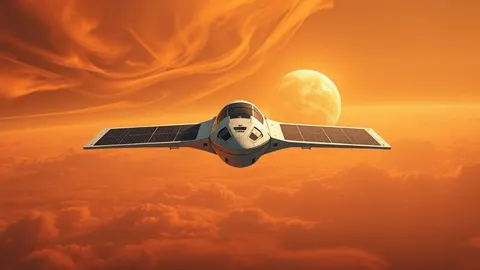
NASA Accelerates DAVINCI Venus Mission Launch to December 2030, Shortening Schedule
NASA has advanced the launch schedule for its DAVINCI probe by one year, signaling renewed momentum for planetary exploration of Venus after prior budget setbacks.
Key points
- NASA’s DAVINCI mission is now scheduled to launch in December 2030, a year earlier than the previous plan.
- The VERITAS orbiter will follow with a launch in November 2032 to map the Venusian surface using radar.
- Budget cuts previously delayed these missions and forced NASA to withdraw from a partnership with the European Space Agency.
NASA has advanced the launch date for its Deep Atmosphere Venus Investigation of Noble gases, Chemistry, and Imaging (DAVINCI) mission to December 2030. This schedule change represents a one-year acceleration from the previous plan, according to reports from Ars Technica. The update signals a stabilization of the agency’s Venus exploration efforts after a period of uncertainty caused by budget constraints and programmatic delays that had previously imperiled the mission’s timeline.
The DAVINCI probe is designed to descend through the Venusian atmosphere with the aid of a parachute. It will capture the first direct images of the planet’s surface since 1982. Following this atmospheric entry, the Venus Emissivity, Radio science, InSAR, Topography, And Spectroscopy (VERITAS) mission is set to launch in November 2032. VERITAS will operate as an orbiter, mapping the surface of Venus using radar technology from space to provide detailed topographical data.
International and Private Sector Activities
The revitalized US schedule aligns with broader international efforts to explore Venus. The European Space Agency is currently constructing the Envision orbiter, which is targeted for launch in 2032. This mission complements the American efforts by adding another perspective to the growing armada of probes heading toward the planet. Additionally, private sector activity may begin earlier than the government missions. Rocket Lab aims to launch a privately funded probe as early as late 2027.
This private probe will search for signs of organic material in the high-altitude clouds of Venus. The inclusion of commercial entities alongside major space agencies indicates a diversifying approach to planetary science. Jim Garvin, a planetary scientist at NASA’s Goddard Space Flight Center and principal investigator for DAVINCI, noted the positive developments. He stated that the team is staffing up and accelerating their work, reflecting the improved outlook for the missions.
Historical Context and Strategic Priorities
Venus exploration had lost significant momentum compared to other planetary bodies. Mars has dominated the spotlight for decades and remains the primary focus for long-term human spaceflight goals. Meanwhile, the study of comets, asteroids, and the icy moons of Jupiter and Saturn attracted substantial funding and scientific interest due to their potential to hold ingredients for life. These targets often overshadowed Venus in agency planning and public attention.
Despite this shift, Venus remains the planet closest to Earth, making it the easiest world for a spacecraft to reach. Its proximity offers logistical advantages for mission design, even if landing on its surface remains technically challenging. The recent scheduling updates suggest a renewed appreciation for these logistical benefits. Scientists at the Venus Exploration Analysis Group (VEXAG) meeting struck an optimistic tone, indicating that the field is recovering from previous setbacks.
What should you do?
Security professionals and technology teams should monitor NASA’s public communications for any changes in mission timelines that could affect downstream data processing or public engagement strategies. Organizations involved in planetary data analysis should prepare for the influx of new imagery and radar data expected from the DAVINCI and VERITAS missions. Tracking the progress of international partners like the European Space Agency is also essential for coordinating data standards and sharing research findings.
What to do and how to stay safe: NASA
- Monitor official NASA press releases for confirmed launch dates and any further schedule adjustments to the DAVINCI and VERITAS missions.
- Review data handling protocols to ensure readiness for processing high-resolution radar and atmospheric imagery from Venus.
- Track developments in private sector launches, such as Rocket Lab’s probe, for potential collaborative data opportunities.
- Stay informed about international mission updates from the European Space Agency’s Envision project to align research efforts.
Step-by-step guide: Mobile Device Security: How to Protect Data Beyond Passwords
General security guidance from the Threat Times newsroom. It is not confirmed advice from the organisations named in this story.
Frequently asked questions
When is NASA’s DAVINCI mission scheduled to launch?
The DAVINCI mission is scheduled to launch in December 2030, which is one year earlier than the previous plan.
What is the primary goal of the VERITAS mission?
VERITAS will map the surface of Venus using radar technology from orbit to provide detailed topographical data.
Did budget cuts affect NASA’s Venus missions?
Yes, budget cuts previously imperiled one mission, delayed another, and forced NASA to withdraw from a partnership with Europe for the Envision orbiter.