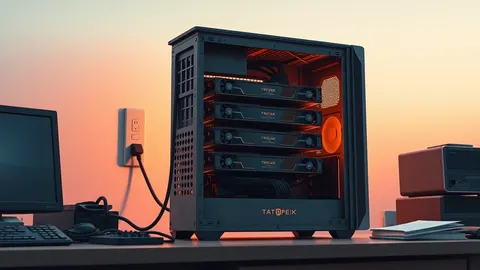
Nvidia opens Vera Rubin rack designs to speed AI factory scaling
Nvidia contributed Vera Rubin rack blueprints to the Open Compute Project to help manufacturers deploy agentic AI infrastructure faster.
Key points
- Nvidia contributed Vera Rubin rack and compute tray designs to the Open Compute Project via its MGX architecture.
- The company announced these partnerships and open-source contributions at the Open Compute Project Global Summit in San Jose.
- Nvidia claims its Vera CPUs deliver twice the performance of the previous Grace generation on several workload benchmarks.
Nvidia Corp. announced new partnerships and open-source contributions at the Open Compute Project Global Summit in San Jose today. The company aims to address manufacturing bottlenecks for agentic artificial intelligence infrastructure by sharing hardware designs with the broader industry community.
At the core of the announcement, Nvidia contributed key Vera Rubin rack and compute tray designs to the Open Compute Project through its Nvidia MGX architecture. According to SiliconANGLE, this move provides system builders with common blueprints for developing future rack layouts, networking designs, power systems, and cooling solutions for AI factories.
Hardware Design and Performance
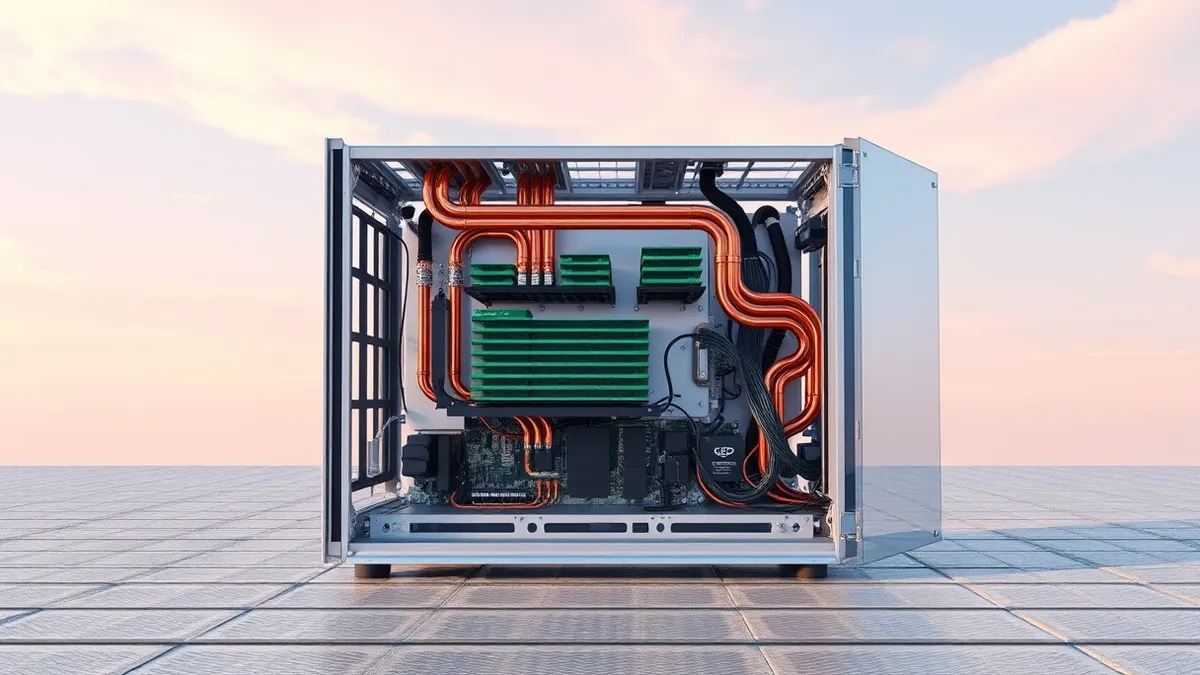
Through MGX 1.2, Nvidia is providing open components that allow engineers to quickly scale and bind-mate liquid cooling with interoperable, rack-level interconnect infrastructure. These additions support high-power AI systems by adding modularity for liquid-cooled fanless I/O bays and standardized power delivery. The goal is to streamline both manufacturing processes and field installation for complex hardware setups.
The racks feature the Vera central processing unit rack design, extending the Nvidia MGX architecture beyond accelerated computing to handle intense agentic AI tasks. Nvidia states that its Vera CPUs deliver approximately twice the performance of its previous Grace GPU generation on several workload benchmarks.
The Role of CPUs in AI
While the industry often focuses on graphics processing units for AI training and inference, CPUs play a critical orchestration role in large-scale deployments. According to SiliconANGLE, CPUs handle behind-the-scenes work such as dividing networking tasks, moving data, sandboxing execution, and crunching bits while GPUs perform parallel execution.
Joe DeLaere, Nvidia’s AI Infrastructure Solutions Lead, noted that agents need to execute code, process data, and run evaluations between model calls. He stated that without CPUs handling data-flow logistics and coordinating the application layer, the AI system quickly falls apart, similar to an army without a supply line.
Nvidia also reported a 1.8-times improvement on Terminal-Bench, a metric that measures practical agent tasks involving code containers. This performance gain highlights the importance of CPU capabilities in supporting the broader agentic AI workload requirements.
What should you do?
Infrastructure planners and system builders should review the newly available open-source blueprints to assess compatibility with existing manufacturing and deployment pipelines. Organizations building AI factories should evaluate how liquid cooling and standardized power designs can streamline their installation processes.
What to do and how to stay safe: Nvidia
- Review the open Vera Rubin rack designs to determine if they align with your current AI factory manufacturing and deployment strategies.
- Assess the integration of MGX 1.2 components for liquid cooling and rack-level interconnects to improve scalability in high-power systems.
- Evaluate the performance implications of Vera CPUs versus previous generations for your specific agentic AI orchestration and data-processing workloads.
- Monitor updates from the Open Compute Project for further contributions that may standardize power and cooling infrastructure for AI deployments.
Step-by-step guide: Prompt Injection Warning Signs: How to Spot AI Manipulation
General security guidance from the Threat Times newsroom. It is not confirmed advice from the organisations named in this story.
Frequently asked questions
What specific hardware designs did Nvidia contribute to the Open Compute Project?
Nvidia contributed key Vera Rubin rack and compute tray designs through its Nvidia MGX architecture to the Open Compute Project.
How does Nvidia describe the performance of its Vera CPUs compared to previous generations?
Nvidia claims its Vera CPUs deliver around twice the performance of its previous Grace GPU generation on several workload benchmarks.
Why are CPUs important in agentic AI infrastructure according to Nvidia?
CPUs handle orchestration tasks like executing code, processing data, and running evaluations between model calls, which are essential for system stability.