Germany Signs Joint AI Declaration With NVIDIA To Boost Industrial Sector
German officials and NVIDIA formalized a partnership to integrate artificial intelligence into manufacturing, aiming to establish a leading industrial ecosystem in Europe.
Key points
- Germany and NVIDIA signed a Joint Declaration of Intent at the Invest in Germany Summit in Berlin.
- The agreement focuses on developing physical AI models to support manufacturing and automotive industries.
- Chancellor Friedrich Merz emphasized leveraging data from the Mittelstand to drive widespread AI adoption.
German Chancellor Friedrich Merz and NVIDIA CEO Jensen Huang participated in a summit in Berlin where government officials signed a Joint Declaration of Intent with the chipmaker. The agreement aims to merge traditional German engineering expertise with advanced artificial intelligence technologies to strengthen the nation’s industrial sector.
The signing ceremony took place at the Invest in Germany Summit. Participants included Chancellor Merz, the Federal Ministry for Economic Affairs and Energy, and the Federal Ministry for Research, Technology and Space. According to the NVIDIA blog, the declaration establishes a formal initiative to advance cutting-edge AI models for physical AI applications within the country.
Strategic Focus on Industrial AI
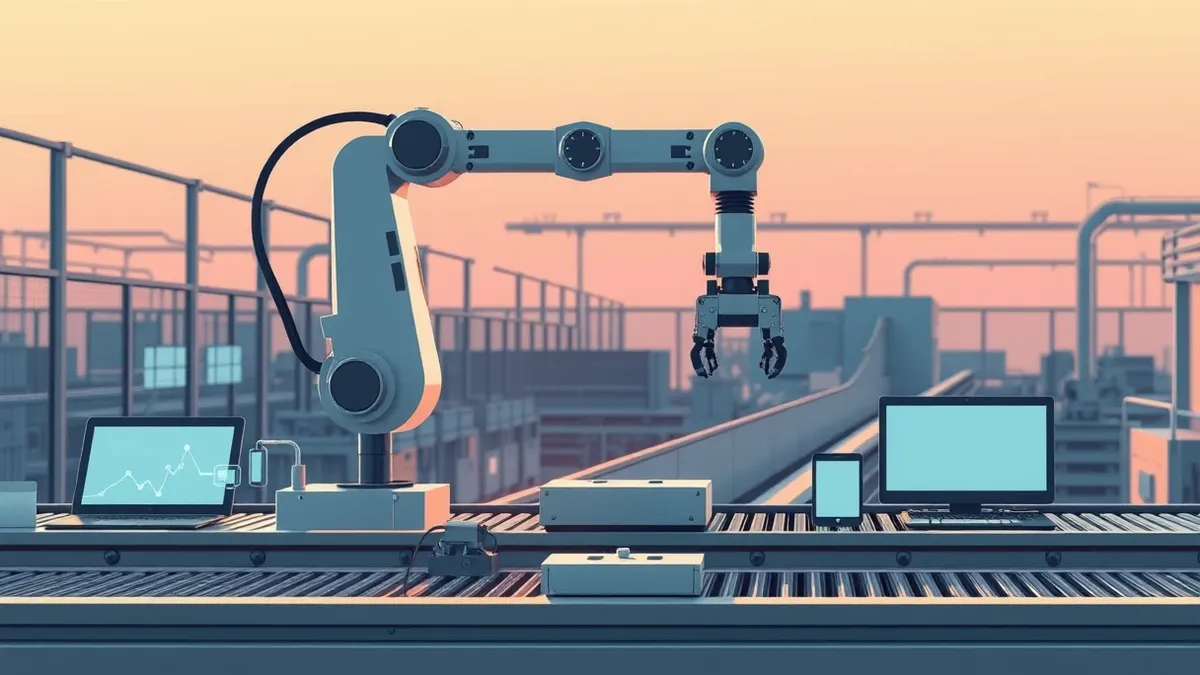
The partnership expands NVIDIA’s collaboration with Germany’s Industry 4.0 Platform, a group comprising representatives from politics, industry, research, and trade associations. This formalization supports the federal government’s stated goal to systematically bring industrial AI into widespread use. The objective is to establish a state-of-the-art industrial AI ecosystem in Europe, leveraging Germany’s existing strengths in manufacturing and automotive design.
Jensen Huang traced NVIDIA’s long-standing relationship with German industry, noting origins in gaming systems and workstations in the early 2000s. He highlighted current partnerships in autonomous vehicle development and digital twins for manufacturing. Huang described the current moment as a new industrial revolution, urging German leaders to re-engineer the economy by integrating these technologies effectively.
Role of the Mittelstand
Chancellor Merz identified the Mittelstand, Germany’s network of small and medium-sized businesses, as a critical advantage for national AI adoption. He called on leaders of these enterprises to open their doors to AI and utilize existing company data. Merz stated that integrating AI into manufacturers, machinery producers, and automotive suppliers is a great opportunity for global leadership.
Huang agreed, praising the world-class expertise found in both large and small German manufacturing companies. He emphasized that AI will augment existing capabilities rather than replace them, serving as a new instrument for workers. Both leaders agreed that Germany’s expertise with physical technologies, when combined with AI, serves as a powerful accelerator for the national economy.
Merz expressed optimism that Germany could become one of the most successful economies in the world through this integration. He envisioned regular reunions with Huang to assess progress. As Threat Times reported on October 18, 2026, industry executives predict that only a handful of AI cloud providers will survive despite support from vendors like NVIDIA.
What should you do?
Organizations should review their data infrastructure to ensure it is ready for AI integration. Leaders in manufacturing and automotive sectors should assess how physical AI models could apply to their specific workflows. Companies should monitor government initiatives and industry platforms for updates on compliance and collaboration opportunities. Stakeholders should evaluate their current vendor relationships to align with broader national industrial strategies.
What to do and how to stay safe: NVIDIA
- Audit existing data repositories to determine readiness for AI model training and integration.
- Evaluate current manufacturing or operational workflows for opportunities to implement digital twins or physical AI.
- Monitor announcements from the Federal Ministry for Economic Affairs and Energy regarding Industry 4.0 Platform initiatives.
- Review vendor contracts and partnerships to ensure alignment with emerging national industrial AI standards.
Step-by-step guide: Prompt Injection Warning Signs: How to Spot AI Manipulation
General security guidance from the Threat Times newsroom. It is not confirmed advice from the organisations named in this story.
Frequently asked questions
What is the main goal of the declaration signed by Germany and NVIDIA?
The agreement aims to advance cutting-edge AI models for physical AI and establish a state-of-the-art industrial AI ecosystem in Europe.
Which government bodies participated in signing the declaration?
Chancellor Friedrich Merz, the Federal Ministry for Economic Affairs and Energy, and the Federal Ministry for Research, Technology and Space signed the document.
How does Jensen Huang view the impact of AI on German workers?
Huang stated that AI will augment the capabilities of German workers and cannot replace their knowledge, serving instead as a new instrument.