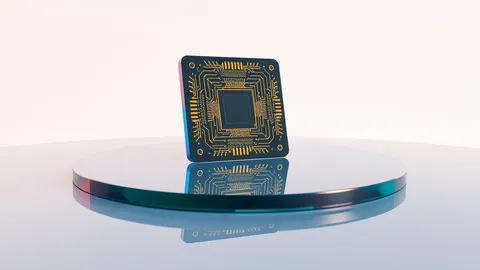
Jim Keller’s Tenstorrent raises $1.5B Series E to challenge Nvidia with RISC-V
Toronto-based AI chip maker Tenstorrent secured $1.5 billion in late-stage funding, reaching a $6.2 billion valuation as it expands its open-compute ecosystem.
Key points
- Tenstorrent raised $1.5 billion in a Series E round led by Trace Capital and Innovation X.
- The company’s valuation has reached $6.2 billion following this latest investment.
- Founder Jim Keller’s startup offers RISC-V-based hardware as an alternative to Nvidia GPUs.
Artificial intelligence hardware startup Tenstorrent Inc. announced today that it has closed a $1.5 billion Series E funding round. This late-stage capital injection is intended to expand the company’s open compute ecosystem and position its products as viable alternatives to graphics processing units from Nvidia Corp.
The financing round was jointly led by Trace Capital and Innovation X, according to a report by SiliconANGLE. Existing and new investors participated in the deal, including Protagonist, Morgan Stanley, Fidelity Management & Research Co., ARK Invest, and T. Rowe Price. This investment brings Tenstorrent’s total valuation to $6.2 billion.
Leadership and Technology Strategy
Tenstorrent is based in Toronto and is led by Chief Executive Jim Keller, a figure widely recognized as a legend in the semiconductor industry. Keller previously helped design groundbreaking processors for major technology companies, including Intel Corp., Advanced Micro Devices Inc., Apple Inc., and Tesla Inc.
The startup initially focused solely on chip design but has since pivoted to offer complete AI compute platforms. These systems are powered by specialized Tensix Neo accelerators and Ascalon central processing units. Both components are based on the open-standard RISC-V instruction set, which Tenstorrent claims allows for extreme scalability and energy efficiency.
Hardware Portfolio and Market Adoption
Tenstorrent currently sells a portfolio of AI compute platforms, including Galaxy servers, TT-QuietBox workstations, and Blackhole cards for laptops. The company states that these devices are designed to deliver top-tier performance for AI workloads without excessive power consumption, thereby keeping operational costs low.
The Galaxy Tenstorrent servers are the company’s best-selling products. These enterprise-class systems can coordinate with others to form massive superclusters for training and running advanced frontier models. According to Tenstorrent, Virtu Financial Inc. uses these servers to power on-premises AI trading agents.
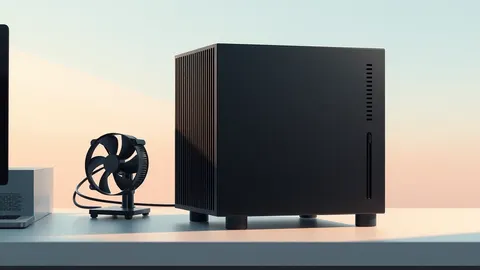
Data center colocation provider Equinix Inc. also makes the Galaxy servers available to enterprises. For developers requiring immense local compute power, Tenstorrent offers the TT-QuietBox, a liquid-cooled desktop AI workstation. These systems are powered by Blackhole cards, which are scalable PCIe boards featuring massive RISC-V cores and GDDR6 memory for high-performance AI processing in a compact form factor.
What should you do?
Organizations evaluating AI hardware infrastructure should assess whether open-standard RISC-V architectures meet their specific performance and compatibility requirements. CTOs and infrastructure managers should review Tenstorrent’s technical documentation to understand how its Tensix Neo accelerators integrate with existing data center environments. Teams relying on Nvidia-specific software stacks should verify compatibility before committing to alternative hardware vendors.
What to do and how to stay safe: Tenstorrent
- Evaluate whether your current AI software stack supports RISC-V-based processors before purchasing new hardware.
- Review Tenstorrent’s technical specifications for the Galaxy servers and TT-QuietBox to ensure they meet your compute density needs.
- Contact vendors like Equinix to determine availability and deployment timelines for Tenstorrent hardware in your region.
- Monitor industry reports for performance benchmarks comparing RISC-V accelerators against established GPU solutions.
Step-by-step guide: Mobile Device Security: How to Protect Data Beyond Passwords
General security guidance from the Threat Times newsroom. It is not confirmed advice from the organisations named in this story.
Frequently asked questions
How much funding did Tenstorrent raise in its latest round?
Tenstorrent raised $1.5 billion in a Series E funding round that was jointly led by Trace Capital and Innovation X.
Who is the CEO of Tenstorrent?
The chief executive of Tenstorrent is Jim Keller, a well-known semiconductor industry figure who previously worked at Intel, AMD, Apple, and Tesla.
What types of hardware does Tenstorrent sell?
Tenstorrent sells Galaxy servers, TT-QuietBox workstations, and Blackhole cards for laptops, all powered by RISC-V-based processors.