European Space Agency offers NASA a partnership deal on LISA mission project
The European Space Agency is seeking to finalize a cooperation agreement with NASA for the LISA gravitational wave observatory project.
Key points
- The European Space Agency views the LISA mission as a strong opportunity for US collaboration.
- Ars Technica reports that the ESA is actively promoting the partnership as a favorable deal.
- The initiative highlights a shift in how international space cooperation is being pitched.
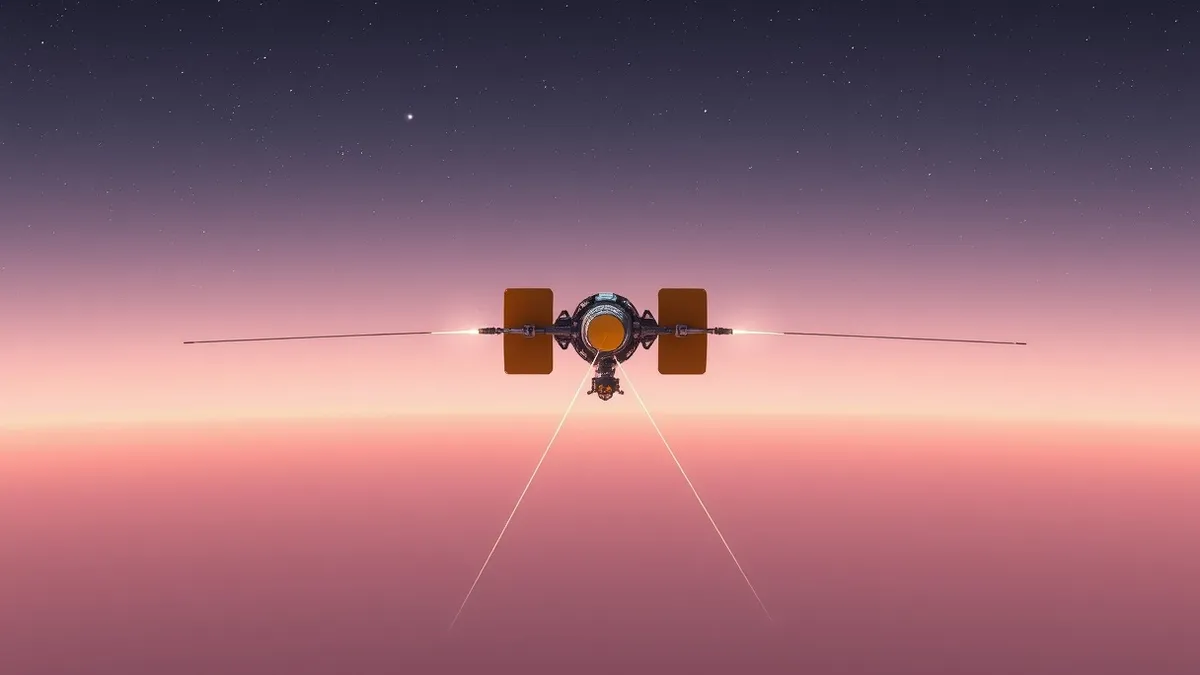
The European Space Agency is currently engaging with NASA to secure a partnership for the Laser Interferometer Space Antenna, commonly known as LISA. According to Ars Technica, the ESA is positioning this collaboration as a significant opportunity for the United States to join the mission.
The push for cooperation comes at a time when international space initiatives are increasingly framed around mutual benefit and strategic alignment. Ars Technica reports that the European Space Agency believes the current climate favors such deals, stating that the LISA project represents a "very good deal for the US." This characterization suggests that the ESA is emphasizing the value proposition for American participation, potentially to overcome bureaucratic or funding hurdles that have previously delayed joint ventures.
Context and Background
The LISA mission is a high-profile scientific endeavor designed to detect and measure gravitational waves. Gravitational waves are ripples in the fabric of spacetime caused by some of the most violent and energetic processes in the Universe. Detecting these waves allows scientists to observe cosmic events that are invisible to traditional telescopes, such as the merger of black holes.
Historically, space exploration has been a domain of intense international cooperation, but also of complex negotiation. Missions involving multiple agencies often face delays due to differing budget cycles, political priorities, and technical standards. The current emphasis on "good deals" indicates a strategic approach by the ESA to streamline these negotiations by highlighting the tangible benefits for partners like NASA.
According to the report from Ars Technica, the era of space exploration is characterized by a growing interest in securing advantageous partnerships. The ESA’s outreach reflects this trend, aiming to present LISA not just as a scientific instrument, but as a strategic asset for the US space program.
Who Is Affected
The primary entities affected by this development are NASA and the European Space Agency. For NASA, the decision to join or decline the LISA partnership will influence its future trajectory in astrophysics and gravitational wave research. A successful collaboration would integrate US technology and expertise into a major European-led mission, fostering shared scientific achievements.
For the broader scientific community, the progress of LISA is significant. The mission promises to open a new window into the universe, allowing researchers to study the early universe and the nature of gravity itself. Delays in partnership agreements can impact the timeline of these discoveries, making the current diplomatic efforts critical for the global research agenda.
What should you do?
Security and technology professionals should monitor official announcements from NASA and the ESA regarding the formalization of this partnership. While this is primarily a diplomatic and scientific development, it may have implications for cybersecurity policies governing international data sharing and satellite communications. Professionals involved in space infrastructure or government contracting should watch for updates on funding allocations and technical requirements associated with the mission.
What to do and how to stay safe: NASA
- Monitor official channels of NASA and the European Space Agency for formal statements regarding the LISA partnership agreement.
- Review current security protocols for international data exchange, as joint space missions often involve sharing sensitive technical and operational data.
- Assess your organization’s involvement in space-related projects to understand if any supply chain or communication systems may be impacted by new international collaborations.
- Stay informed about changes in US space policy that may affect how agencies like NASA engage in international partnerships.
General security guidance from the Threat Times newsroom. It is not confirmed advice from the organisations named in this story.
Frequently asked questions
What is the LISA mission?
LISA is a Laser Interferometer Space Antenna project designed to detect gravitational waves, representing a major scientific collaboration between space agencies.
Why is the ESA calling it a good deal for the US?
According to Ars Technica, the ESA believes the current era favors partnerships and views LISA as a particularly advantageous opportunity for the United States to participate.
Has the partnership been finalized?
The source material indicates that the ESA is currently offering the deal and seeking cooperation, but does not confirm that a final agreement has been signed.