Endurance Energy Tests Subsea Geothermal Plant at Axial Seamount
Seattle startup generated brief net-positive electricity using an underwater volcano in a proof-of-concept test.
Key points
- Endurance Energy deployed a prototype power plant at the Axial Seamount in September.
- The system generated less than 10 seconds of net-positive electricity during the test.
- The project aims to provide renewable energy alternatives to Pacific island nations.
Seattle-based startup Endurance Energy completed a three-week test of a subsea geothermal power plant in September, according to a report by Ars Technica. The demonstration took place near an active underwater volcano at the Axial Seamount in the northeast Pacific Ocean, marking the first such attempt globally.
The 3-ton prototype generated less than 10 seconds of net-positive electricity during the trial. While the duration was brief, the test demonstrated the technical feasibility of extracting renewable energy from underwater geothermal sources. The deployment occurred at a depth of approximately 5,000 feet, or 1,524 meters, below the ocean surface.
Technical Execution and Challenges
The operation required specialized equipment to function at extreme depths. According to Ars Technica, the team used a subsea lander drill deployed from the ship Ocean Guardian, which is operated by Stabbert Maritime. The drill created two holes in the seafloor to access hydrothermal resources.
Both drilled holes began venting hot hydrothermal fluid with temperatures reaching about 500 degrees Fahrenheit, or 260 degrees Celsius. The Endurance Energy team cased and cemented the second hole before installing a valve to establish a functional well. This setup allowed them to channel the heat for energy generation.
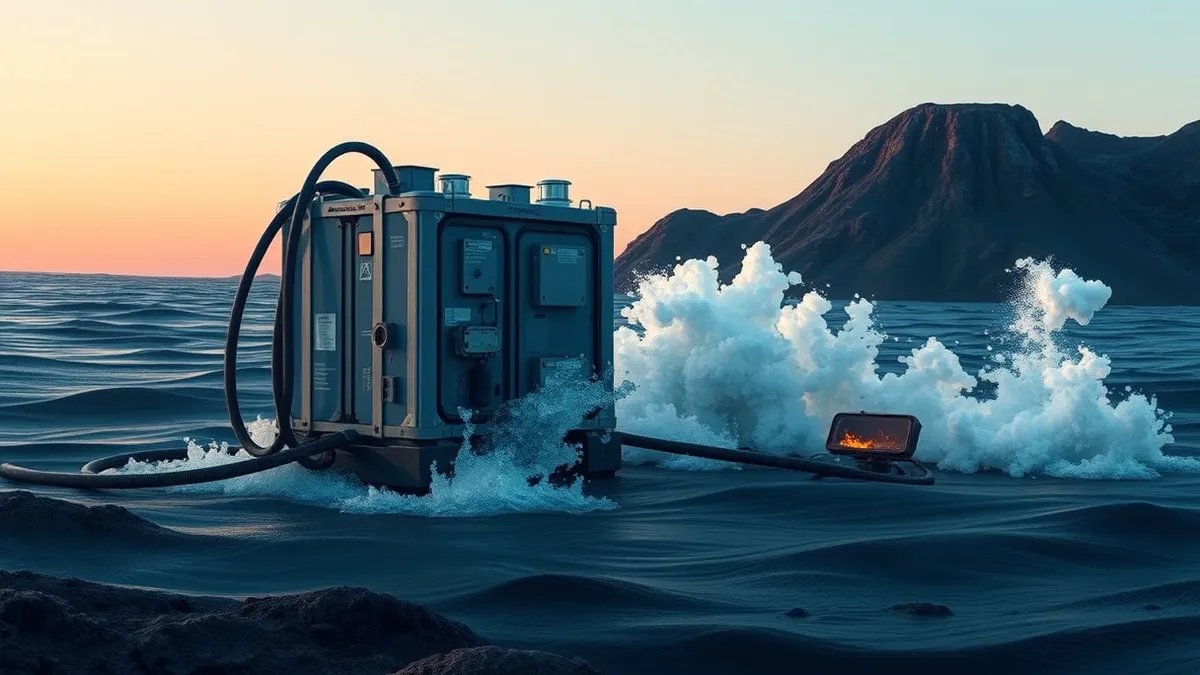
The company then deployed its 100-kilowatt power plant, named Adélie. The device is designed to vaporize incoming hydrothermal fluid to spin a turbine and drive an electric generator. To connect the power plant to the newly drilled well, the team utilized Canada’s remotely operated submersible ROPOS for assistance.
Economic Feasibility and Market Goals
Endurance Energy aims to commercialize this technology for Pacific island nations and other customers seeking alternatives to importing expensive fossil fuels. The deep ocean environment offers specific advantages for this system design.
Andrew Redd, founder and CEO of Endurance Energy, noted in an email to Ars that the deep ocean provides unlimited cold seawater for cooling. He added that the weight of the water keeps the system and the well pressurized, allowing for more compact plant designs compared to surface installations.
However, experts caution about the economic viability of such projects. Roland Horne, a professor of energy science and engineering at Stanford University, stated in an email to Ars that while the technology is likely feasible, it would undoubtedly be more expensive than land-based geothermal projects.
Land-based geothermal efforts face different challenges than seafloor operations. According to Ars Technica, the unique difficulties of underwater installation and operation can lead to higher costs. Endurance Energy must now demonstrate consistent underwater operations to prove the approach is cost-effective.
What should you do?
Security and technology professionals monitoring emerging energy infrastructure should track the development of subsea power systems. These systems introduce new physical and digital attack surfaces in remote, high-value environments.
What to do and how to stay safe: Endurance Energy
- Monitor vendor announcements for updates on the commercialization timeline of subsea geothermal technology.
- Review physical security requirements for remote underwater infrastructure deployments in your region.
- Assess the supply chain risks associated with specialized subsea drilling and power generation equipment.
- Stay informed about regulatory changes regarding deep-sea resource extraction and environmental impact assessments.
Step-by-step guide: Mobile Device Security: How to Protect Data Beyond Passwords
General security guidance from the Threat Times newsroom. It is not confirmed advice from the organisations named in this story.
Frequently asked questions
How much electricity did the prototype generate?
The prototype generated less than 10 seconds of net-positive electricity during the September test.
Where did the test take place?
The test occurred at the Axial Seamount in the northeast Pacific Ocean, about 5,000 feet deep.
Who operates the ship used in the deployment?
The ship Ocean Guardian, used to deploy the drill, is operated by Stabbert Maritime.