ASUS Googlebook 14 review: Hands-on with Google's new premium Android laptop
Windows Central tests the $1,299 ASUS Googlebook 14, finding a lightweight magnesium chassis and OLED display that challenges Windows dominance.
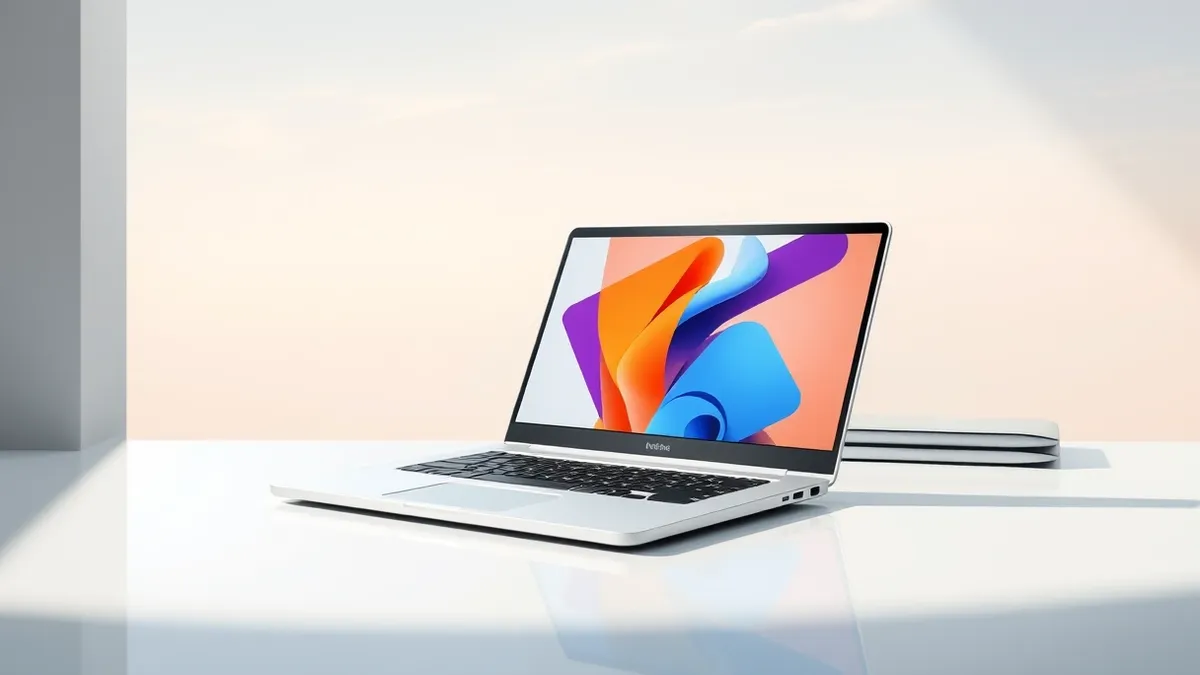
Key points
- The ASUS Googlebook 14 weighs approximately 0.97 kg and costs $1,299.
- It features a 16:10 OLED panel with 450 nits brightness and 100% DCI-P3 coverage.
- Google partners with OEMs like ASUS, Acer, and Dell for these Android-based devices.
Windows Central Senior Editor Ben Wilson spent 24 hours testing the ASUS Googlebook 14, providing early insights into Google’s premium laptop initiative. The review highlights the device's physical build quality and display performance for users considering a shift from Windows to Android.
The ASUS Googlebook 14 is priced at $1,299 and aims to serve as a premium counterpart to budget Chromebooks. According to Windows Central, Google announced these "Googlebooks" in September as new Android-based offerings that do not replace existing Chromebook lines but rather expand the market.
Hardware and Design Details
The laptop chassis uses a magnesium-aluminum alloy that ASUS distinguishes from its Zenbook Ceraluminum, though the materials feel similar. Wilson measured the device at approximately 0.97 kg (2.13 lbs), which is slightly lighter than ASUS’s claimed starting weight of 0.99 kg (2.18 lbs).
The display is a 16:10 OLED panel rated for up to 450 nits of brightness. It covers 100% of the DCI-P3 color gamut, making it suitable for creative work. Wilson noted the screen has a matte finish and he almost wants to avoid touching it to prevent fingerprints.
Input and Connectivity
The keyboard features chiclet keys with 1.5mm of travel, providing a deep and responsive typing experience. The 6-inch haptic touchpad supports left-clicking anywhere on its surface and responds convincingly to pressure. The device retains USB-A ports, which Wilson commended for maintaining compatibility with older peripherals.
Market Context and Adoption
Google is not manufacturing first-party devices for this initiative. Instead, it has partnered with major OEMs including Acer, ASUS, Dell, HP, and Lenovo to build the hardware. Wilson expressed skepticism about general public adoption, citing concerns over app compatibility and feature sets compared to Windows.
The reviewer compared the potential adoption challenges to those faced by Windows on ARM devices. Despite Qualcomm’s Snapdragon X2 efforts improving performance, Wilson noted that some consumers still view alternative architectures as inferior to traditional Windows experiences.
What should you do?
Readers interested in the ASUS Googlebook 14 should verify specific software requirements for their workflow, as the device runs Android rather than Windows or Chrome OS. Professionals should assess whether the OLED display and lightweight chassis justify the $1,299 price point compared to existing Zenbook models.
What to do and how to stay safe: ASUS
- Verify that essential business applications are available and fully functional on the Android operating system before purchasing.
- Compare the total cost of ownership against equivalent Windows laptops, considering potential licensing or subscription differences.
- Check if the device’s USB-A and other ports meet your specific peripheral connectivity needs for daily tasks.
- Monitor upcoming reviews for long-term battery life and thermal performance data under sustained workloads.
General security guidance from the Threat Times newsroom. It is not confirmed advice from the organisations named in this story.
Frequently asked questions
Who manufactures the ASUS Googlebook 14?
ASUS manufactures the hardware, while Google provides the Android operating system and branding for the Googlebook initiative.
What is the weight of the ASUS Googlebook 14?
ASUS claims it starts at 0.99 kg, but Windows Central measured a sample at approximately 0.97 kg.
Does the Googlebook 14 have an OLED screen?
Yes, it features a 16:10 OLED panel with 450 nits brightness and 100% DCI-P3 color gamut coverage.