Apple integrates flexible graphite cooling pipes directly into iPhone Duo hinge
Apple engineers used the iPhone Duo hinge for thermal management, adding a second display engine to the A20 Pro chip for simultaneous screen operation.
Key points
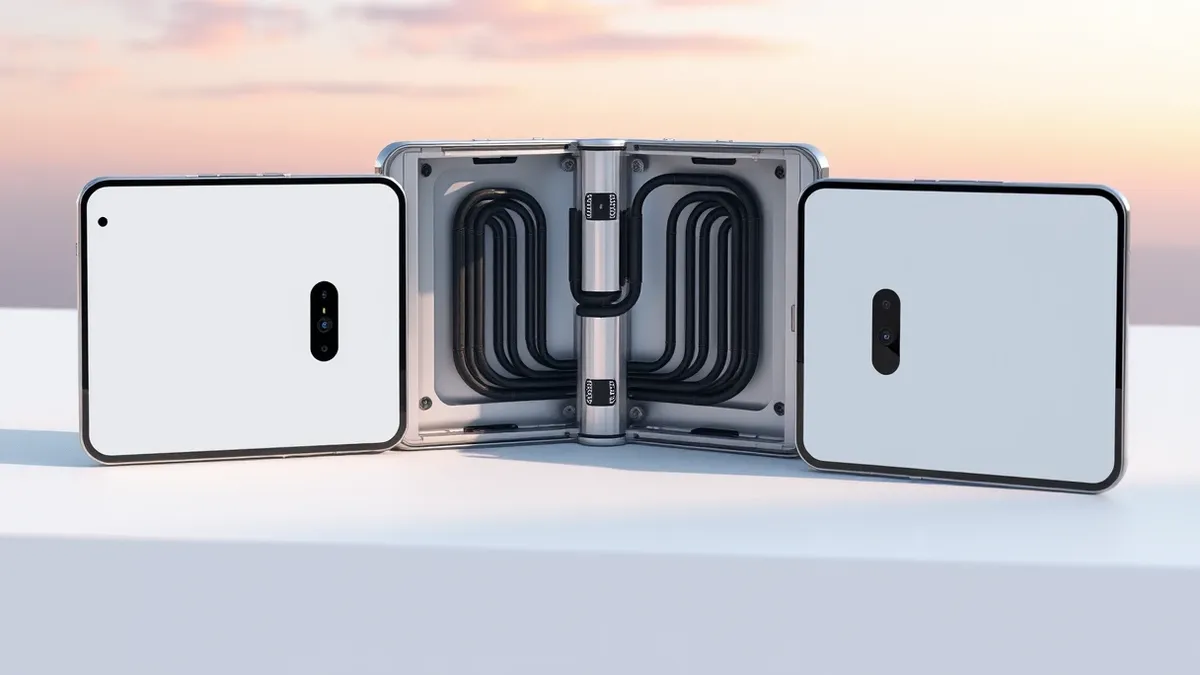
- The iPhone Duo uses a flexible graphite pipe within its hinge to dissipate heat from the A20 Pro chip.
- A new material called metal over foam creates a compliant thermal link between the silicon and the vapor chamber.
- The device’s processor includes a second display engine to handle simultaneous operation of inner and outer screens.
Apple has detailed the thermal engineering strategies used in the upcoming iPhone Duo, revealing that the device’s hinge plays an active role in heat dissipation. According to a report by 9to5Mac, the company integrated a flexible graphite pipe into the hinge mechanism to manage temperatures. This design choice addresses the specific cooling challenges posed by the folding form factor, which can double in thickness when closed.
The A20 Pro system on a chip powers the iPhone Duo alongside the iPhone 18 Pro and iPhone 18 Pro Max. This processor is Apple’s first iPhone silicon built on a 2 nanometer process, following its earlier debut in the Mac mini. The iPhone Duo variant of the A20 Pro includes specific modifications, such as a second display engine. This addition allows the device to run both the inner and outer displays simultaneously while maintaining performance.
Thermal Design Innovations
Banafsheh Barabadi, Apple’s senior manager of thermal product design, described the hinge cooling solution as one of the most technically challenging aspects of the device’s design. She noted that the team spent months developing the material properties required for the system. The goal was to create a direct thermal coupling that also met strict mechanical requirements for a folding device.
Apple introduced a new material referred to as metal over foam to bridge the gap between the A20 Pro and the vapor chamber. Barabadi stated that this material creates a mechanically compliant coupling that is highly effective at removing heat. iFixit previously examined this material during a teardown of the iPhone 18 Pro, confirming its presence in the hardware stack. The design ensures that heat is efficiently transferred away from the processor despite the complex geometry of the foldable device.
Processor Capabilities and Display Support
Dan Murray, Apple’s vice president of silicon engineering, explained that the iPhone Duo requires additional capabilities beyond those needed for the standard iPhone 18 models. The A20 Pro variant for the Duo includes increased CPU and GPU performance to ensure a smooth user experience across the dual screens. This performance boost supports the simultaneous operation of the inner and outer displays without lag or stuttering.
Murray also highlighted that the inner display supports placing the FaceTime camera behind the screen. This feature requires precise coordination between the display engine and the camera hardware. The combination of enhanced processing power and specialized display control allows Apple to maintain a seamless interface regardless of whether the device is folded or unfolded.
What should you do?
Security and technology professionals should monitor official Apple channels for the final specifications of the iPhone Duo upon its release. Reviewing the thermal design may be relevant for enterprise deployment in environments with strict heat regulations. Professionals should also note the 2 nanometer process node used in the A20 Pro, as this may impact power efficiency benchmarks for fleet management.
What to do and how to stay safe: Apple
- Monitor official Apple announcements for the release date and final thermal specifications of the iPhone Duo.
- Review enterprise device policies to determine if the folding form factor and thermal output meet organizational safety standards.
- Track independent teardown reports from sources like iFixit for detailed hardware layouts and potential physical security concerns.
- Assess the impact of the 2 nanometer A20 Pro chip on battery life expectations for mobile device management strategies.
General security guidance from the Threat Times newsroom. It is not confirmed advice from the organisations named in this story.
Frequently asked questions
Does the iPhone Duo use a new chip?
Yes, the iPhone Duo uses the A20 Pro chip, which is built on a 2 nanometer process and includes a second display engine.
How does the iPhone Duo manage heat in the hinge?
Apple integrated a flexible graphite pipe into the hinge and used a new metal over foam material to transfer heat to the vapor chamber.
Is the A20 Pro chip used in other devices?
Yes, the A20 Pro also powers the iPhone 18 Pro and iPhone 18 Pro Max, though the Duo variant has specific display modifications.