Amazon Operates Over 1 Million Robots in Warehouses Globally
The e-commerce giant uses more than 1 million robots for daily deliveries while employing 1.5 million humans, according to its 2025 annual report.
Key points
- Amazon operates more than 1 million robots in warehouses worldwide.
- The company employs over 1.5 million human workers, making it the second-largest corporate employer.
- Executives claim robots handle high-risk tasks, while experts warn of increased pace and proximity risks.
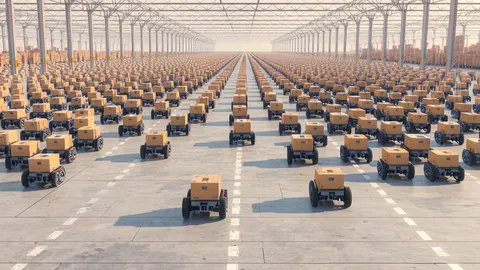
Amazon operates more than 1 million robots in its warehouses around the clock, according to a report by Ars Technica. The company uses this massive robotic fleet to facilitate tens of millions of same-day and one-day package deliveries every day. Amazon plans to significantly expand this fleet in coming years by establishing new factories to produce increasingly capable robot workers.
Despite this heavy investment in automation, Amazon remains the second-largest corporate employer in the world. Its 2025 annual report lists more than 1.5 million full-time and part-time human workers. Company executives state that the growing robot fleet eases the burden on human staff by taking on the toughest fulfillment center tasks. These are the tasks that carry the greatest risks of physical fatigue and injury for human employees.
Automation Dynamics and Work Pace
Labor advocacy groups and independent researchers suggest that warehouse automation driven by AI is not entirely beneficial for human workers. Brian Greenwood, a professor of business at George Mason University, told Ars Technica that traditional automation usually occurred away from workers. He noted that collaborative robots change this dynamic because they are physically proximate to humans.
Greenwood explained that these robots also have the ability to dictate the pace of work. This shift contrasts with historical automation trends where high-risk tasks were removed from workers in a way that was not physically close. The rise of collaborative robots places humans and machines in direct, continuous interaction during fulfillment processes.
Impact on Human Workforce
Robotics and AI are well suited to the relentless pace required inside e-commerce fulfillment centers. Amazon’s promise of speedy deliveries for its 200 million Prime subscribers requires hundreds of thousands of human employees to assemble orders quickly. These orders often combine a dizzying array of products, demanding rapid movement and coordination from staff working alongside automated systems.
Much of the work in these centers involves tasks described as dull, dirty, and dangerous. The US Occupational Safety and Health Administration reports that the injury and illness rate for workers in the US warehouse sector is typically more than double the average across all industries. This high risk profile has historically driven interest in automating these specific roles.
What should you do?
Security and technology professionals monitoring the intersection of AI and physical infrastructure should watch for updates on safety protocols in collaborative robotics. Organizations deploying similar automation should review their risk assessments regarding human-robot interaction. Monitoring regulatory guidance from agencies like OSHA on warehouse safety remains essential for compliance.
What to do and how to stay safe: Amazon
- Review internal safety protocols for any environments where humans work closely with automated systems or collaborative robots.
- Monitor reports from labor advocacy groups and independent researchers regarding the impact of AI-driven automation on worker safety and pace.
- Stay updated on injury and illness rate statistics from the US Occupational Safety and Health Administration for relevant industry sectors.
- Evaluate how automation dictates work pace in your operations and ensure human factors are considered in system design.
General security guidance from the Threat Times newsroom. It is not confirmed advice from the organisations named in this story.
Frequently asked questions
How many robots does Amazon currently operate?
Amazon operates more than 1 million robots in warehouses around the world, according to Ars Technica.
Is Amazon reducing its human workforce due to automation?
No, Amazon remains the second-largest corporate employer with more than 1.5 million human workers, per its 2025 annual report.
What are the concerns about collaborative robots in warehouses?
Experts warn that collaborative robots are physically proximate to workers and can dictate the pace of work, changing traditional automation dynamics.