SIM Swapping Myths Debunked: Why Standard Security Fails
SIM swapping bypasses traditional network defenses by exploiting human trust at the carrier level, rendering technical perimeters ineffective against social manipulation.
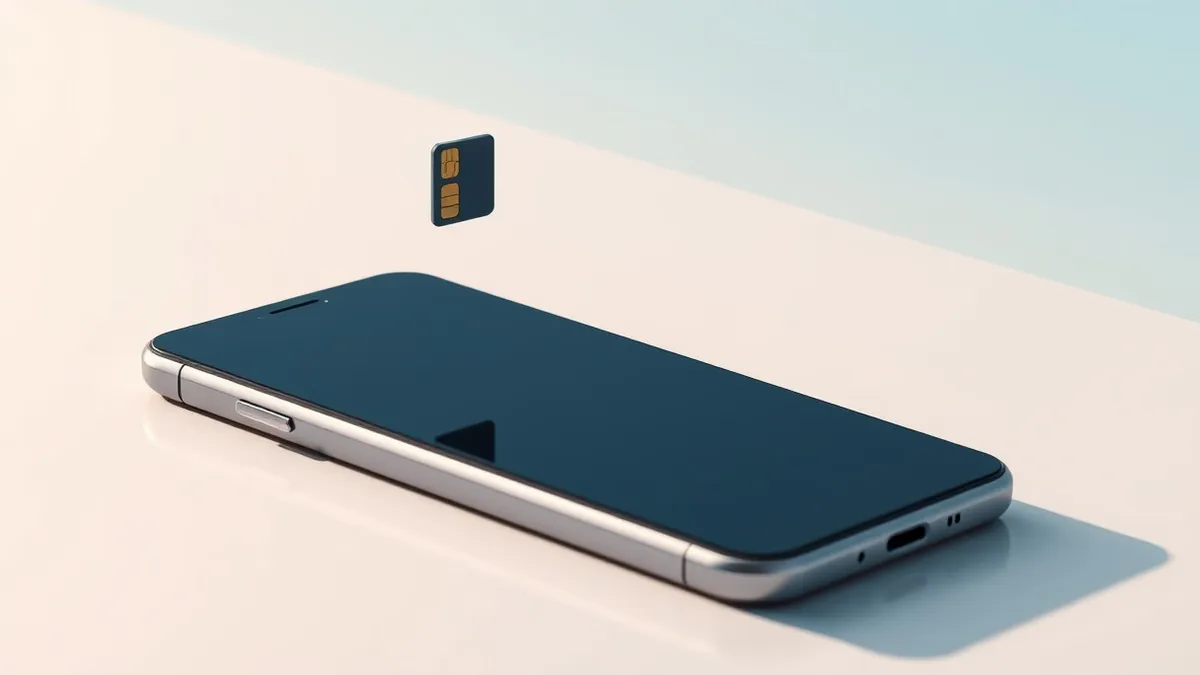
SIM swapping is not a technical hack but a social engineering attack against mobile carriers. It bypasses two-factor authentication by redirecting your phone number to an attacker’s SIM card. Relying solely on SMS for verification leaves accounts vulnerable regardless of firewall strength or password complexity.
Myth: SIM swapping is a technical hack of your phone
Reality: The attack never touches your device’s software or hardware. Your phone remains secure, connected, and functional until the carrier manually disconnects your SIM card. The vulnerability exists in the administrative process used by mobile network operators to transfer phone numbers. Attackers do not exploit a zero-day vulnerability in your operating system. They exploit the lack of rigorous identity verification at the carrier’s customer support desk. This distinction matters because installing antivirus software or updating your OS does not mitigate this specific risk. The attack vector is human interaction, not code execution.
The attacker calls the carrier, claims to have lost their phone, and requests that service be moved to a new SIM card. If the attacker provides enough convincing personal details, the carrier complies. Your phone loses signal instantly. The attacker’s new SIM card begins receiving your text messages and calls. This redirection allows them to intercept one-time passwords sent to your number. The mechanism is entirely administrative. It relies on the carrier prioritizing customer convenience over security verification.
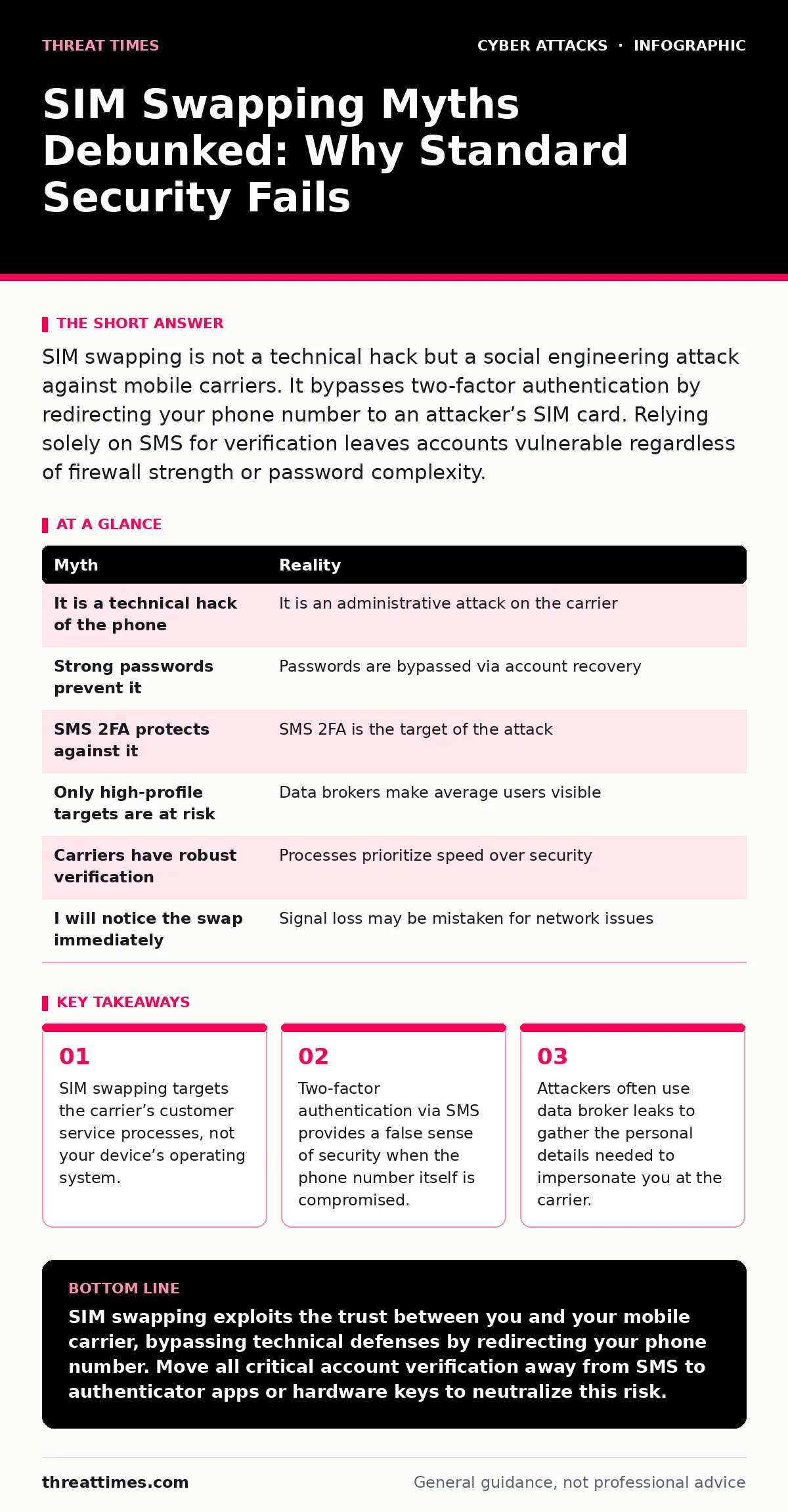
Myth: Strong passwords protect me from SIM swapping
Reality: Password strength is irrelevant once the attacker controls your phone number. Most online services use that number for account recovery or two-factor authentication. If an attacker can intercept the verification code sent to your SIM, they can reset your password regardless of its complexity. A twenty-character password with symbols offers no defense if the attacker bypasses the password prompt entirely. They trigger a "forgot password" flow, which sends a code to your phone. The attacker enters that code and gains access. This creates a single point of failure in your identity management strategy.
The assumption here is that authentication is a single step. In reality, it is a chain. The phone number acts as a master key for resetting other credentials. When you rely on SMS for verification, you are trusting the security of the mobile network’s administrative processes. That trust is misplaced. The password protects the account, but the SIM swap protects the attacker’s ability to bypass the password. You must decouple your identity verification from your phone number to reduce this risk.
Myth: Two-factor authentication makes SIM swapping impossible
Reality: SMS-based two-factor authentication is the primary target of SIM swapping. It is not a defense against it. When you enable SMS 2FA, you are explicitly telling services to send access codes to your phone number. If that number is ported to an attacker, the codes go to them. This creates a dangerous illusion of security. You believe you are protected because you see the "2FA" badge on your account settings. In practice, you have handed the attacker a direct line into your accounts. The only effective 2FA methods are those that do not rely on the phone number for delivery.
Application-based authenticators or hardware security keys remain safe during a SIM swap. These methods rely on a secret key stored on your device or a separate physical token. The attacker cannot intercept a push notification to an app if your phone is disconnected from the network. They cannot replicate a hardware key without physical possession. Moving away from SMS verification is the only way to neutralize the SIM swap threat to your accounts. This shift requires changing settings across multiple services, which is often overlooked.
Myth: Only high-profile targets are at risk
Reality: Attackers use automated tools to check phone numbers against data broker databases. They look for anyone with valuable cryptocurrency wallets or high-limit bank accounts. You do not need to be a CEO or a celebrity to be targeted. If your personal data has been exposed in past breaches, you are visible to these attackers. They cross-reference your phone number with email addresses, home addresses, and other identifiers. This allows them to answer the carrier’s security questions with high accuracy. The barrier to entry for attackers is low, and the potential payout is high.
This democratization of risk means that average users are frequently targeted. The attacker’s goal is to find accounts with liquid assets. Cryptocurrency exchanges are particularly vulnerable because they often rely on SMS for withdrawal confirmations. Once the attacker controls the SIM, they can initiate transfers. The speed of the attack matters. The longer it takes for you to notice the loss of signal, the more damage they can do. You are a target if you have digital assets and a phone number.
Myth: Carriers have robust verification processes
Reality: Carrier security processes are often designed for speed and customer satisfaction, not fraud prevention. Agents are trained to resolve issues quickly. They may accept partial identification or rely on PINs that are easy to guess or find in old documents. The incentive structure for carriers does not always prioritize deep identity verification. If an attacker provides a plausible story and some correct data, the agent is likely to proceed. This human element is the weakest link in the chain.
Some carriers offer SIM swap protection, such as requiring a unique PIN for any number changes. However, this is not universal. Many users never set this PIN because they are not prompted to do so. Even when set, the PIN can be guessed if it is simple. The burden of security often falls on the customer to proactively harden their account with the carrier. Without this extra layer, the carrier’s default process is insufficient against a determined social engineer.
Myth: I will notice the swap immediately
Reality: You may not notice the swap if you are not actively using your phone. The signal will drop, but if you are in a location with poor coverage, you might assume it is a network issue. Attackers often time their swaps to coincide with periods when you are likely to be offline or distracted. By the time you realize your phone is disconnected, the attacker may have already drained your accounts. The delay in detection is a critical factor in the success of the attack.
Imagine you are traveling or in a meeting with your phone on silent. The signal disappears. You assume it is a temporary glitch. Meanwhile, the attacker is resetting passwords on your email and banking accounts. The lack of immediate alerting mechanisms means you are flying blind. Carriers do not always notify you of a SIM change via email or other channels. You must monitor your connection status actively. Relying on passive observation is a dangerous strategy.
Myth: Firewalls and network security stop SIM swapping
Reality: Firewalls protect your local network from external traffic. They do not protect your identity at the carrier level. SIM swapping is an attack on the authentication layer, not the network layer. Your firewall cannot prevent the carrier from redirecting your phone number. It cannot stop the attacker from calling customer service. This is a common misconception among technical professionals who focus on perimeter defense. The attack bypasses the perimeter entirely.
This is similar to how social engineering bypasses technical controls by manipulating human behavior. The attacker is not trying to breach your server. They are trying to breach your identity. Understanding this distinction is vital for designing a defense strategy. You cannot firewall your way out of a SIM swap. You must address the root cause: the reliance on phone numbers for identity verification. This requires a shift in how you manage your digital identity.
| Myth | Reality |
|---|---|
| It is a technical hack of the phone | It is an administrative attack on the carrier |
| Strong passwords prevent it | Passwords are bypassed via account recovery |
| SMS 2FA protects against it | SMS 2FA is the target of the attack |
| Only high-profile targets are at risk | Data brokers make average users visible |
| Carriers have robust verification | Processes prioritize speed over security |
| I will notice the swap immediately | Signal loss may be mistaken for network issues |
Key takeaways
- SIM swapping targets the carrier’s customer service processes, not your device’s operating system.
- Two-factor authentication via SMS provides a false sense of security when the phone number itself is compromised.
- Attackers often use data broker leaks to gather the personal details needed to impersonate you at the carrier.
SIM swapping exploits the trust between you and your mobile carrier, bypassing technical defenses by redirecting your phone number. Move all critical account verification away from SMS to authenticator apps or hardware keys to neutralize this risk.
Frequently asked questions
How do I know if my SIM has been swapped?
Your phone will lose all cellular service and Wi-Fi calling may fail. You will not receive calls or texts. If you see "No Service" in a area with good coverage, contact your carrier immediately.
Can I reverse a SIM swap once it happens?
You must contact your carrier’s fraud department immediately. They can restore your original SIM card, but the attacker may have already accessed your accounts. Speed is critical to minimizing damage.
Is porting my number to a new carrier safe?
Number porting is a legitimate process that shares the same vulnerability as SIM swaps. Attackers can initiate an unauthorized port-out. Use a port-out PIN with your carrier to prevent unauthorized transfers.
Does using a burner phone help?
It can limit exposure if the burner number is not linked to critical accounts. However, if you use it for 2FA, it is still vulnerable. The security depends on how the number is used, not the type of phone.
How this guide was produced: written by the Threat Times editorial team with AI assistance, checked against the public references listed below, and reviewed when the facts change. See our editorial policy or report an error.