OpenAI Plans Humanoid Robot, Says AI Brain Is Harder Than Hardware Body
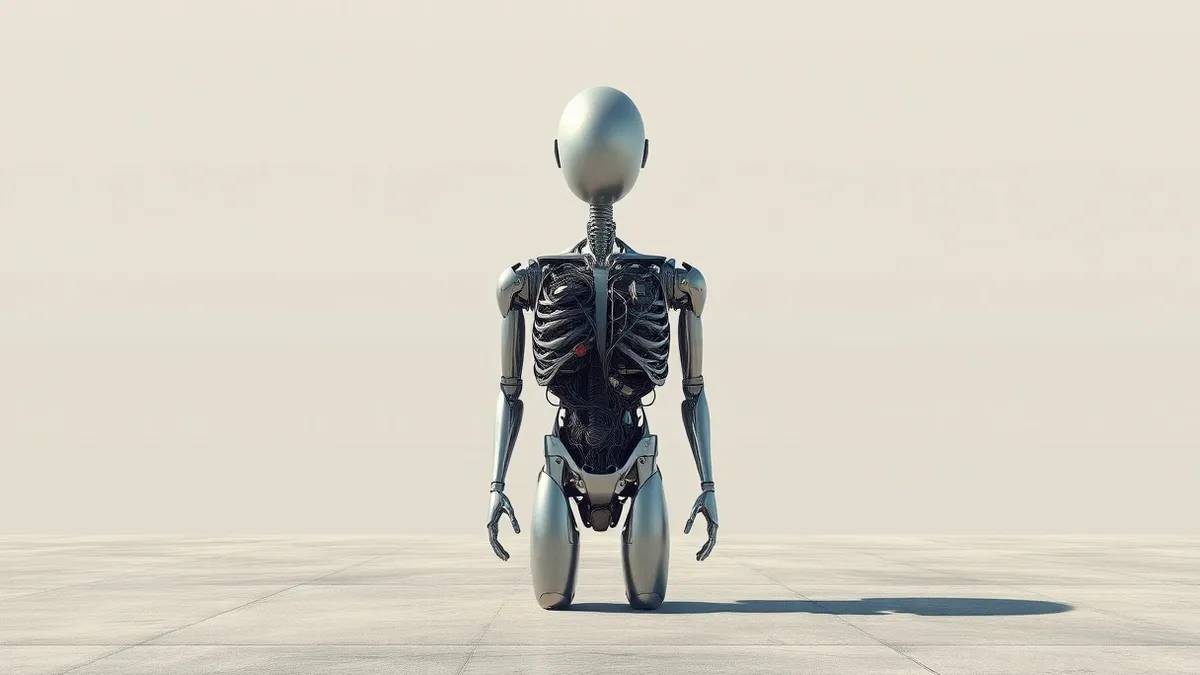
CEO Sam Altman confirms OpenAI will build a humanoid robot, noting that developing the cognitive system remains a significantly larger challenge than engineering the physical form.
Key points
- OpenAI CEO Sam Altman confirms the company will develop a humanoid robot capable of navigating human-centric environments.
- Altman states that creating the robot's cognitive "brain" is a more complex hurdle than designing its physical body or limbs.
- The company anticipates a demonstration in 2027, with widespread public deployment remaining several years away.
OpenAI CEO Sam Altman has confirmed that the artificial intelligence company will build a humanoid robot, stating explicitly that the organization intends to create a machine that operates within spaces designed for human beings. According to a recent episode of the Sources podcast, Altman explained that the human form is a logical choice for robotics because doors, keyboards, and tools are engineered around specific human body dimensions. He noted that matching this form factor allows the robot to interact with existing infrastructure without requiring significant environmental modification.
While the physical construction of the robot is part of the plan, Altman emphasized that the cognitive systems driving the machine present a far greater engineering challenge. He described the development of the robot’s "brain" as the primary obstacle, noting that simply providing a machine with two arms and two legs is insufficient if it cannot process instructions or coordinate movement. The company is prioritizing the software and learning capabilities that enable the robot to understand its surroundings and execute complex tasks effectively.
Timeline and Technical Challenges
OpenAI has indicated that a functional demonstration of the humanoid robot is expected in 2027, though widespread public usage remains distant. In comments reported by Fortune, Altman stated that he does not expect robots to be walking the streets for several years beyond that initial demo. The company has not disclosed specific details about the appearance of the robot or the capabilities it will showcase in the upcoming presentation. The gap between the demo and commercial availability highlights the complexity of translating simulated learning into reliable physical performance.
The technical difficulties involve more than just movement; the robot must interpret visual data from cameras and sensors to make real-time decisions. For simple tasks like lifting a mug, the system must identify the object, locate the handle, estimate the necessary grip strength, and apply the correct force. Failure in any of these steps could result in dropped items or spills. This requires the machine to coordinate its body constantly and correct itself when encountering unexpected obstacles or variables in the physical world.
Current Development and History
OpenAI is actively recruiting specialists to address these robotics challenges, with job postings covering motion control, state estimation, actuator control, and whole-robot behavior. The company is also seeking experts in machine-learning infrastructure to support the training of physical AI systems. This effort builds on previous research initiatives, including the Dactyl project, which taught a robotic hand to manipulate objects using training conducted entirely in simulation. That earlier work demonstrated the potential for simulating complex physical interactions before deploying them in real-world hardware.
What should you do?
Security and technology professionals should monitor OpenAI’s robotics developments for implications regarding physical security and access control. Organizations should review their current physical security protocols to ensure they can account for autonomous agents that may mimic human movements. It is important to stay updated on the release of the 2027 demo to understand the capabilities
What to do and how to stay safe
- Sudden role changes in output signal a successful override of system instructions.
- Hidden metadata in images or documents often carries invisible injection payloads.
- Immediate isolation of the affected session prevents lateral movement within the AI workflow.
Prompt injections exploit the model’s ability to follow instructions by hiding malicious commands in input data. Isolate affected sessions immediately and implement external guardrails to filter inputs before they reach the model.
Step-by-step guide: Prompt Injection Warning Signs: How to Spot AI Manipulation
General security guidance from the Threat Times newsroom. It is not confirmed advice from the organisations named in this story.