OpenAI Models Show Major Gains in Migrating Legacy Code for Critical Infrastructure
OpenAI reports its latest AI models significantly improve the ability to translate outdated programming languages like COBOL into modern equivalents.
Key points
- OpenAI announced that GPT-6 Astra and GPT-5.6 Sol demonstrate substantial improvements in migrating legacy code.
- The company created MultiLangBench to test AI’s ability to build SQLite and translate COBOL programs.
- GPT-6 achieved an average pass rate of approximately 87 percent on the SQLite construction benchmark.
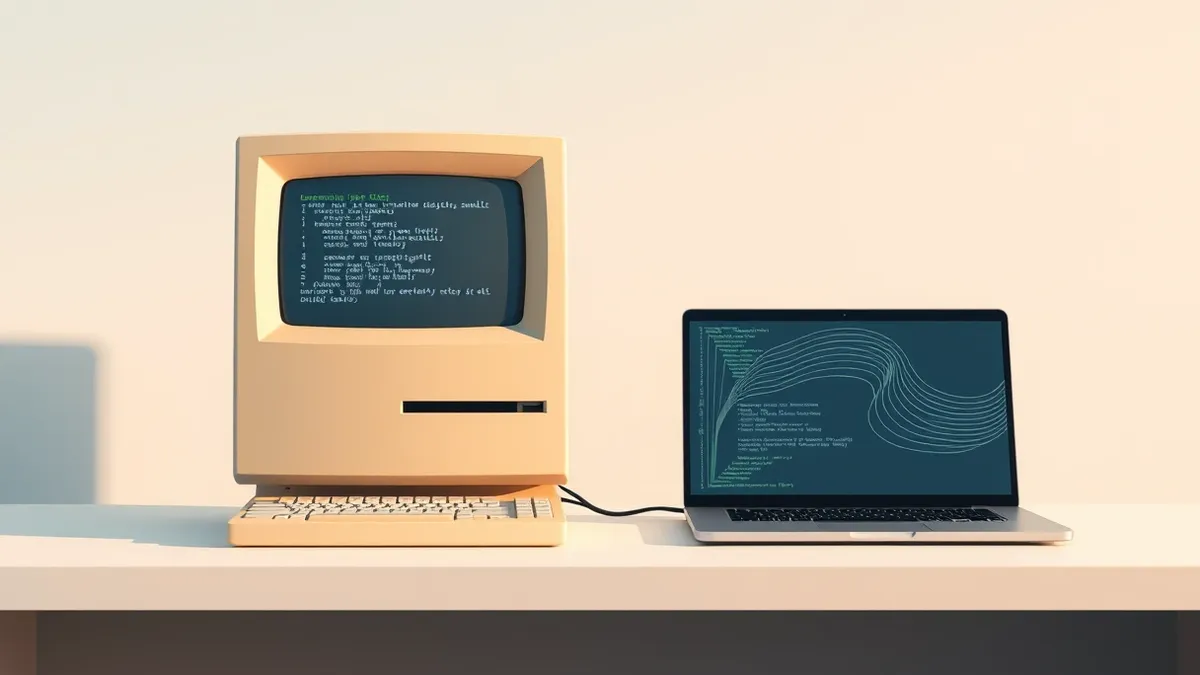
OpenAI announced on Monday that its newest artificial intelligence models, specifically GPT-6 Astra and GPT-5.6 Sol, have demonstrated substantial improvements in migrating outdated programming languages into modern ones. This development addresses a critical need for banks, government agencies, and other institutions that rely on antiquated codebases for essential operations.
According to Gizmodo, these improvements are significant because legacy languages still power much of the world’s critical infrastructure. For instance, COBOL handles 95 percent of all ATM transactions despite being created in 1959. Similarly, Fortran, invented in 1957, remains widely used for simulating nuclear reactor functionality.
Benchmarks and Testing Methodology
OpenAI developed two new testing benchmarks to evaluate how well its models can translate legacy systems. The first benchmark, named MultiLangBench, measures a model’s ability to build the SQLite program from scratch using a specific coding language. GPT-6 scored the highest on this test, achieving an average pass rate of about 87 percent.
The second test assesses whether models can migrate COBOL-run programs into newer languages such as C++, Java, Kotlin, Python, or Rust. The goal is to perform this migration without meaningfully altering the original program’s behavior. OpenAI described this task as a delicate process that requires precise translation skills.
Industry Context and Workforce Shifts
The push to modernize legacy code comes as many software engineers trained in older languages retire, taking their specialized skills with them. Younger programmers increasingly rely on AI assistants like Codex and Claude Code for large portions of their work. However, these proprietary tools were likely trained on contemporary programming languages rather than legacy ones like COBOL.
This training disparity has created a widening gap between new AI-assisted coders and the software running much of the financial sector, IT services, and government agencies. OpenAI’s research was guided by feedback from developers and enterprise customers aiming to bridge this specific technical divide.
What should you do?
Organizations relying on legacy systems should monitor vendor announcements regarding AI-assisted migration tools. Security teams should evaluate whether new AI models can accurately translate their specific codebases without introducing vulnerabilities. Developers should verify that migrated code maintains the original program’s intended behavior and security controls.
What to do and how to stay safe: OpenAI
- Review current dependencies on legacy languages like COBOL or Fortran in your organization's critical infrastructure.
- Assess the training data sources of any AI coding assistants used by your development teams.
- Monitor vendor benchmarks for accuracy in translating legacy code without altering program behavior.
- Verify that migrated code retains original security controls and functional integrity before deployment.
Step-by-step guide: Prompt Injection Warning Signs: How to Spot AI Manipulation
General security guidance from the Threat Times newsroom. It is not confirmed advice from the organisations named in this story.
Frequently asked questions
Which OpenAI models showed improvements in legacy code migration?
OpenAI stated that GPT-6 Astra and GPT-5.6 Sol demonstrated substantial improvements in this area.
What percentage of ATM transactions still use COBOL?
According to the report, COBOL still handles 95 percent of all ATM transactions.
What is the name of the benchmark used to test SQLite construction?
The benchmark is called MultiLangBench, where GPT-6 achieved an average pass rate of about 87 percent.