Intel Details D270 Data Center GPU Specs With 480 GB LPDDR5X Memory
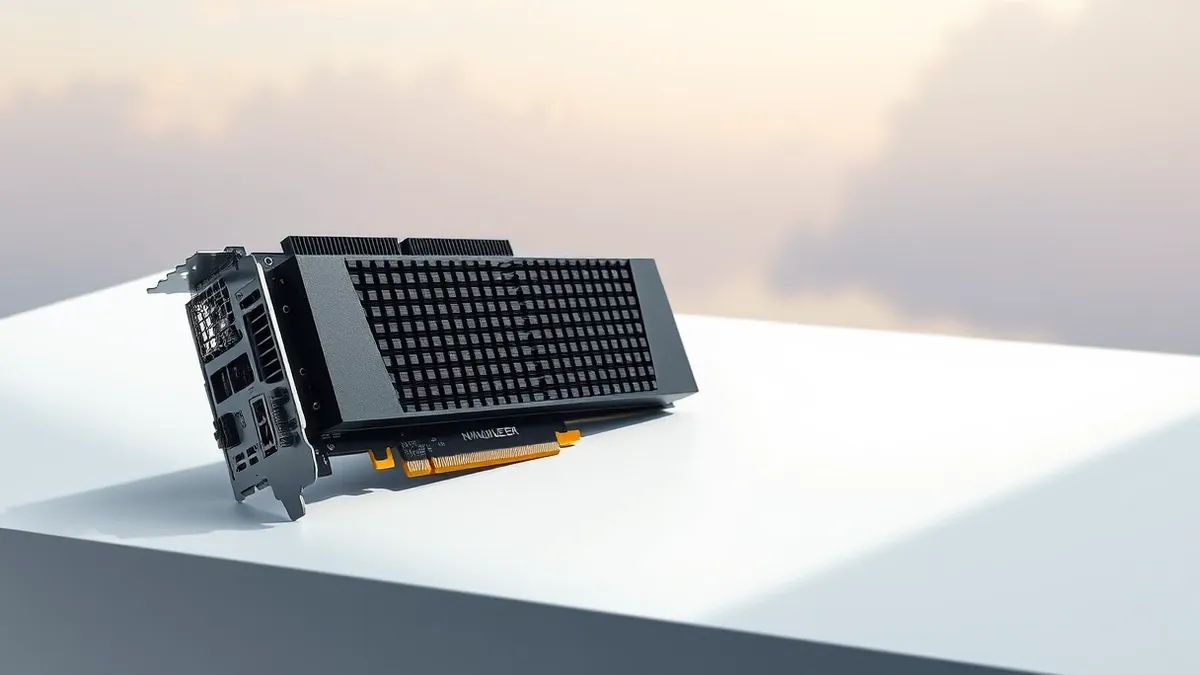
Intel has published technical specifications for its D270 discrete GPU, highlighting a high-capacity memory configuration aimed at AI accelerator workloads in data centers.
Key points
- Intel released details for the D270 data center GPU on its product website.
- The accelerator features up to 480 GB of LPDDR5X memory.
- The hardware is classified as a discrete GPU for AI and data center use.
Intel has published technical specifications for its D270 discrete GPU on its official product website. The company lists the hardware as a data center accelerator designed for artificial intelligence workloads. The announcement provides specific memory capacity figures for this new component in the D-series lineup.
The D270 model supports up to 480 GB of LPDDR5X memory according to the Intel product page. This memory configuration is highlighted as a key feature for the accelerator. The hardware is part of Intel's discrete GPU portfolio for enterprise environments. No pricing or release date was included in the product details provided on the site.
Product Context and Classification
The D270 falls under Intel's discrete GPU category for data center applications. The product page categorizes it specifically as an AI accelerator. This positioning suggests a focus on high-throughput computing tasks rather than general graphics rendering. The use of LPDDR5X memory indicates a design optimized for bandwidth and capacity within server constraints.
Intel's D-series GPUs are targeted at enterprise and cloud infrastructure providers. The D270 represents a specific tier within this broader family of products. The specification sheet does not list other models or comparative performance metrics against previous generations. The focus remains on the memory capacity and the AI accelerator designation for this particular unit.
Who Is Affected
Data center operators and cloud service providers are the primary audience for this hardware. Organizations deploying large-scale AI models may consider this accelerator for their infrastructure. The high memory capacity is relevant for workloads that require significant data residency on the GPU. System integrators building custom server solutions will also review these specifications for compatibility.
Security professionals should note that new hardware introductions often bring new firmware and driver surfaces. While no vulnerabilities were mentioned in the product listing, the deployment of new accelerators requires standard security assessments. IT procurement teams will evaluate the D270 against existing vendor contracts and technical requirements.
What should you do?
Monitor Intel's official channels for further documentation regarding driver support and security features. Review your current infrastructure requirements to determine if the memory capacity aligns with your workload needs. Verify compatibility with existing server platforms before considering integration into production environments.
What to do and how to stay safe: Intel
- Check Intel's official product page for updated documentation and driver release schedules.
- Evaluate current AI workload memory requirements against the 480 GB capacity offered.
- Verify server platform compatibility with the D270 discrete GPU before procurement.
- Monitor security advisories for new firmware vulnerabilities associated with the D-series.
Step-by-step guide: Prompt Injection Warning Signs: How to Spot AI Manipulation
General security guidance from the Threat Times newsroom. It is not confirmed advice from the organisations named in this story.
Frequently asked questions
How much memory does the Intel D270 GPU have?
The Intel D270 supports up to 480 GB of LPDDR5X memory according to the product specifications.
What type of hardware is the Intel D270?
It is a discrete GPU designed as an AI accelerator for data center environments.
Is there a CVE or security vulnerability associated with this release?
No security vulnerabilities or CVEs were mentioned in the source material regarding this product launch.