CERN and Mistral sign intent to build foundation model for high-energy physics
CERN and Mistral have signed a statement of intent to develop a Large Physics Model trained on Large Hadron Collider data to accelerate scientific discovery.
Key points
- CERN and Mistral signed a strategic partnership agreement to develop foundation models for scientific discovery.
- The collaboration aims to create a Large Physics Model trained on billions of simulated proton-proton collisions.
- The model seeks to replace specialized algorithm chains with a single system capable of handling multiple reconstruction tasks.
CERN and Mistral have signed a statement of intent to establish a long-term strategic partnership focused on developing foundation models for scientific discovery, according to a report on the Hacker News front page. The European Laboratory for Particle Physics and the European AI developer are combining their resources to advance artificial intelligence applications in science.
The partnership leverages CERN’s expertise in fundamental physics, scientific data, and large-scale computing alongside Mistral’s leadership in training large-scale models. While the initial focus remains on high-energy physics, the collaboration aims to produce AI approaches that could serve the broader scientific community. This effort is designed to strengthen Europe’s scientific and technological capabilities through shared resources and combined technical capabilities.
Technical Scope and Objectives
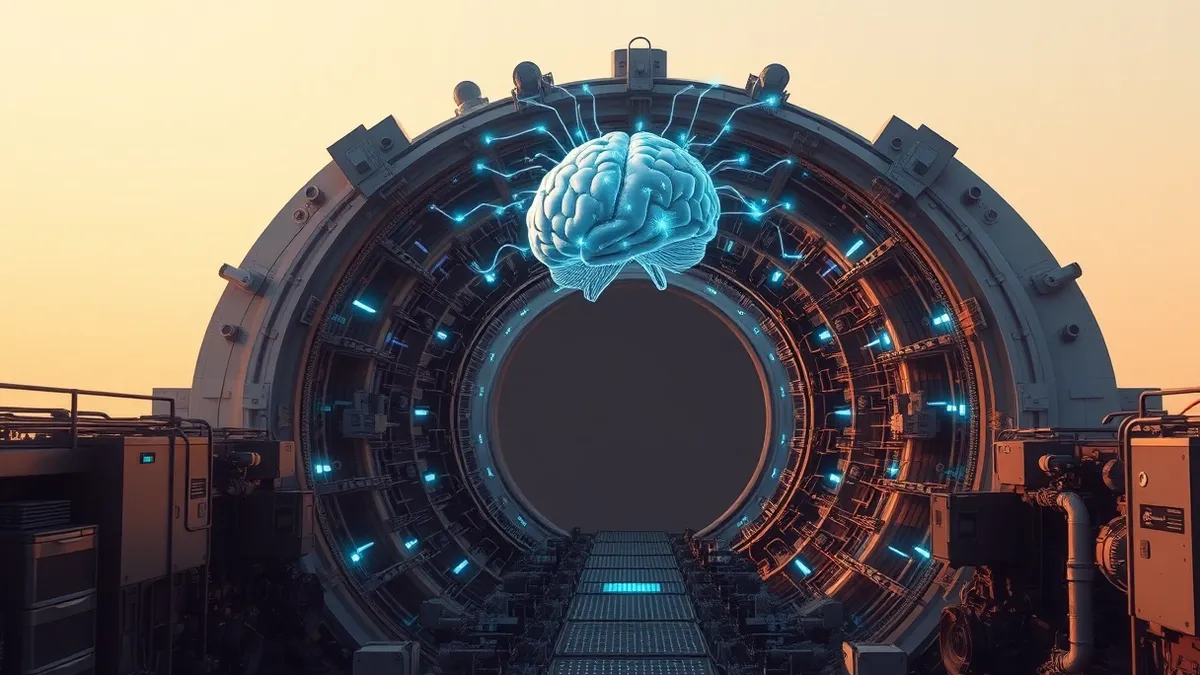
At the center of this collaboration is the development of a single pretrained Large Physics Model, which is intended to be the first foundation model for collider physics. According to the announcement, this model will be trained on billions of simulated proton-proton collisions recorded at CERN’s Large Hadron Collider. The LHC remains the world’s largest and most powerful particle accelerator, providing the necessary data volume for such extensive model training.
The model is designed to support multiple distinct tasks within a single framework. These tasks include reconstructing particle collisions, identifying specific particles, flagging unexpected signals, and evaluating future detector designs. This multi-task capability represents a shift from current methods, which rely on a chain of specialized algorithms that progressively transform detector signals into usable physics objects.
Impact on Physics Analysis
Current reconstruction processes in high-energy physics depend on sequential specialized algorithms to transform raw detector signals into particles and other objects used for analysis. Machine learning has long improved performance across these specialized tasks, but foundation models offer the potential to learn across the entire reconstruction chain. This approach could streamline the analysis process by supporting multiple tasks within one unified model rather than relying on disjointed algorithmic steps.
Enrica Porcari, CERN’s Chief Information Officer, stated that high-energy physics provides a unique environment for developing and testing artificial intelligence with exceptional rigour. She noted that the partnership with Mistral aims to advance AI capabilities that can serve the entire physics community and be shared openly. This emphasis on sharing suggests the resulting tools may have broader applicability beyond CERN’s immediate research needs.
Data Scale and Infrastructure
CERN manages one of the world’s largest volumes of scientific data, which underpins the feasibility of training such large models. According to the source material, the laboratory has stored around one exabyte of experimental data from the Large Hadron Collider to date. One exabyte equals one million terabytes, representing a massive dataset that requires significant computational resources to process and analyze effectively.
The scale of this data storage highlights the infrastructure challenges involved in modern physics research. By partnering with Mistral, CERN aims to utilize advanced model training techniques to extract more value from this existing data. This collaboration allows for the application of cutting-edge AI methods to historical and ongoing experimental data without requiring immediate new data collection efforts.
What should you do?
Security and technology professionals should monitor developments in AI for science to understand emerging data handling practices. Organizations working with large scientific datasets should review their data governance policies to ensure compliance with sharing agreements. Researchers should stay informed about new foundation models that may impact their field’s standard analytical tools.
What to do and how to stay safe: CERN
- Monitor official announcements from CERN and Mistral for updates on model release timelines and technical specifications.
- Review internal data governance policies to ensure they align with emerging standards for sharing scientific data with AI partners.
- Evaluate current machine learning workflows to identify tasks that could potentially be consolidated into foundation models.
- Stay informed about developments in high-energy physics AI tools that may offer new methods for data reconstruction and analysis.
Step-by-step guide: Prompt Injection Warning Signs: How to Spot AI Manipulation
General security guidance from the Threat Times newsroom. It is not confirmed advice from the organisations named in this story.
Frequently asked questions
What is the primary goal of the CERN and Mistral partnership?
The partnership aims to develop foundation models for scientific discovery, specifically starting with a Large Physics Model for collider physics.
What data will the Large Physics Model be trained on?
The model will be trained on billions of simulated proton-proton collisions from CERN’s Large Hadron Collider.
How does this model differ from current analysis methods?
Current methods use chains of specialized algorithms, while the new model aims to handle multiple tasks within a single unified system.