CERN and Mistral sign intent to build AI foundation model for collider physics
The European lab and French AI firm will train a model on simulated Large Hadron Collider data to help identify particles and reconstruct collisions.
Key points
- CERN and Mistral signed a statement of intent on 15 October to develop a Large Physics Model for high-energy physics.
- The model will be trained on simulated data from the Large Hadron Collider to replace chains of separate analysis tools.
- No budget, timeline, or specific technical milestones were disclosed for this long-term collaboration.
CERN and French artificial intelligence company Mistral signed a statement of intent on 15 October to collaborate on a new AI foundation model for particle physics. The European Organization for Nuclear Research described the initiative as the first of its kind for collider physics, aiming to streamline how scientists process data from the Large Hadron Collider.
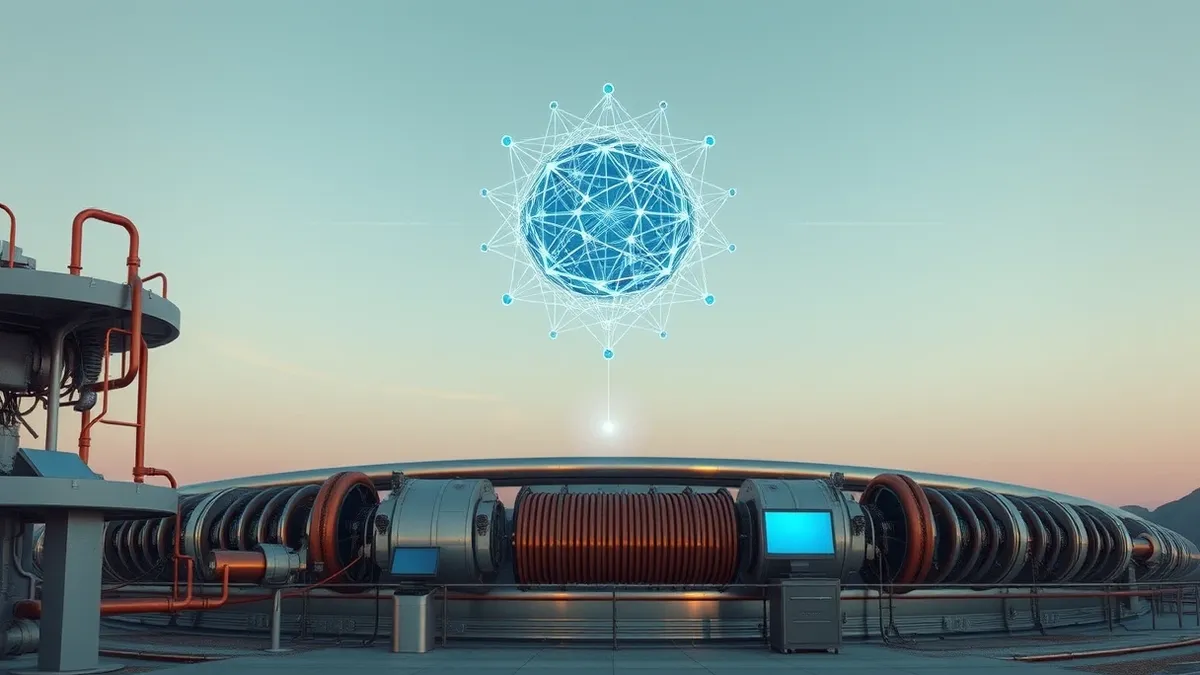
The partnership centers on a “Large Physics Model” that will be trained on billions of simulated proton collisions. According to CERN, this single model could learn the entire chain of data processing currently handled by separate tools. The goal is to help reconstruct particle collisions, identify specific particles, flag unusual signals, and test new detector designs with greater efficiency.
Context and Background
High-energy physics offers a rigorous environment for developing and testing artificial intelligence, said Enrica Porcari, CERN’s chief information officer. The lab has already stored approximately one exabyte of data from the Large Hadron Collider. This volume equals one million terabytes of raw detector signals and scientific measurements collected over years of operation.
The need for advanced processing tools is growing as collision rates increase. CERN expects the number of collisions to rise tenfold with an upgrade to the Large Hadron Collider scheduled to start around 2030. A unified AI model could help physicists manage this surge in data volume and complexity more effectively than current fragmented methods.
Who Is Affected
For Mistral, the agreement supports its expanding focus on science and engineering applications. The Paris-based firm acquired Emmi AI, a physics-focused startup, earlier this year and subsequently launched a product for industrial engineering. Johannes Brandstetter, Mistral’s vice president of AI for engineering and co-founder of Emmi AI, stated that the collaboration offers an opportunity to push the frontiers of high-energy physics.
The work will initially concentrate on particle physics, but both organizations indicated the models could eventually assist other scientific fields. The statement of intent outlines a long-term deal for AI in science, though neither party provided a budget or a specific timeline for the project’s completion.
What should you do?
Security professionals should monitor how this collaboration handles sensitive research data and proprietary AI training methodologies. As AI models become integral to scientific infrastructure, understanding the data governance frameworks used by major labs like CERN is crucial for risk assessment.
What to do and how to stay safe: CERN
- Review organizational policies on AI training data to ensure alignment with scientific data governance standards.
- Monitor vendor announcements for updates on AI integration in high-performance computing environments.
- Assess current data processing pipelines for potential vulnerabilities in third-party AI tool integration.
- Track developments in AI for science to anticipate shifts in technical infrastructure requirements.
Step-by-step guide: Prompt Injection Warning Signs: How to Spot AI Manipulation
General security guidance from the Threat Times newsroom. It is not confirmed advice from the organisations named in this story.
Frequently asked questions
What is the Large Physics Model?
It is a foundation model for collider physics being developed by CERN and Mistral, trained on simulated Large Hadron Collider data to help reconstruct and identify particles.
When did CERN and Mistral sign the agreement?
The two organizations signed the statement of intent on 15 October.
Will a timeline or budget be disclosed?
No budget or timeline was disclosed for the project at the time of the announcement.