UCLA researchers build $400 humanoid robot using old Android phones
University team creates PhoneBot, an open source robot that repurposes cheap smartphones for vision and walking control tasks.
Key points
- PhoneBot uses four Android smartphones to handle sensing, computing, and vision tasks.
- The robot costs approximately $400 in hardware, excluding the cost of the phones.
- Researchers tested devices ranging from a 2017 Honor 9 to $50 handsets.
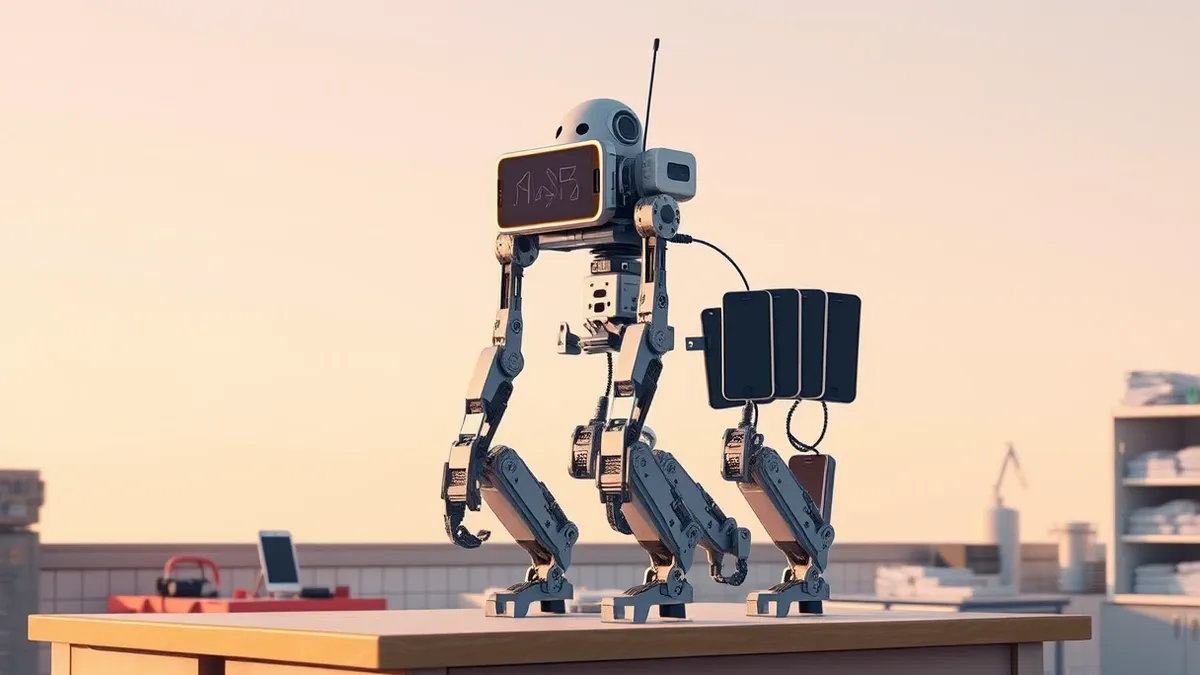
Researchers at the University of California, Los Angeles (UCLA), have developed PhoneBot, a compact humanoid robot that repurposes inexpensive smartphones for core functions. According to a report by TechRadar, the open source platform uses existing phone hardware for sensing, computing, and walking control, avoiding the need for dedicated, expensive components.
The robotic hardware costs approximately $400, excluding the smartphones themselves, making it significantly cheaper than many existing small humanoid research systems. The robot stands 483 millimeters tall and weighs 1.8 kilograms. It utilizes thirteen servo motors to control its legs and rotating torso, enabling movement and balance.
Hardware and Control Mechanisms
PhoneBot relies on smartphone cameras to track people and inertial measurement units to supply motion information for balance. A separate onboard computer handles motor communications, translating wireless commands from the smartphone into joint movements. This setup allows the camera to turn toward subjects without rotating the entire robot body, supporting vision-based interactions.
The system features six actuated joints per leg for hips, knees, and ankles, plus a joint for torso rotation. The smartphone runs locomotion policies through TensorFlow Lite, while the camera supports person detection and pose estimation. These perception functions enable the robot to navigate and interact with humans effectively.
Device Testing and Training
The research team tested four different Android phones to validate the platform's capabilities. This included an older Honor 9 released in 2017 and three inexpensive handsets costing between $50 and $80. All four devices supported the application's core functions, although certain features differed between the specific models used in the testing process.
Training focused on reinforcing stable walking behaviors through simulation. The team used reinforcement learning to reward desired movements while penalizing unstable posture and excessive motor loading. This approach helped balance the robot’s walking gait and reduced the overall hardware costs required for effective autonomous movement.
What should you do?
For robotics developers and makers interested in low-cost prototyping, this open source platform offers a viable alternative to expensive dedicated sensors. Reviewing the hardware specifications can help teams assess whether repurposed consumer electronics meet their specific sensing and computing requirements for custom projects.
What to do and how to stay safe: UCLA
- Review the open source documentation to understand the hardware integration requirements for Android devices.
- Assess whether your existing smartphone inventory meets the processing and sensor specifications needed for locomotion control.
- Monitor the research updates for any changes in supported Android versions or firmware requirements.
- Evaluate the cost savings compared to traditional dedicated sensor suites for your specific robotics project scope.
Step-by-step guide: Mobile Device Security: How to Protect Data Beyond Passwords
General security guidance from the Threat Times newsroom. It is not confirmed advice from the organisations named in this story.
Frequently asked questions
How much does the PhoneBot robot cost to build?
The robotic hardware costs approximately $400, excluding the cost of the Android smartphones used for control.
What smartphones were used to build PhoneBot?
Researchers used an older Honor 9 from 2017 and three inexpensive handsets costing between $50 and $80.
What functions do the smartphones perform in the robot?
The smartphones handle vision, sensing, computing, and walking control using their cameras and inertial measurement units.