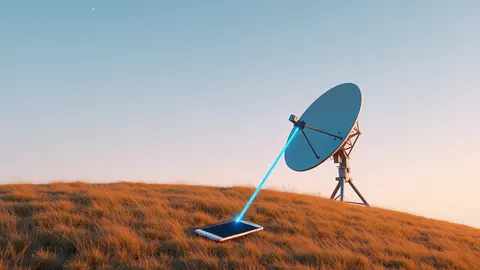
Starlink secures 800 MHz spectrum deal to expand indoor mobile coverage
SpaceX’s Starlink acquires nationwide 800 MHz spectrum rights, enabling direct-to-cell service that competes with major US carriers indoors.

Key points
- Starlink has secured nationwide 800 MHz spectrum rights to facilitate indoor mobile coverage.
- The acquisition supports Elon Musk’s strategy to compete directly with AT&T, T-Mobile, and Verizon.
- The 800 MHz band is critical for providing reliable cellular signals inside buildings and structures.
SpaceX’s Starlink division has finalized a deal to acquire nationwide 800 MHz spectrum, a move that significantly advances its direct-to-cell capabilities. According to a report by Ars Technica, this spectrum allocation is designed to help Starlink provide mobile coverage indoors, addressing a key limitation of previous satellite-based communication attempts.
The acquisition of this specific frequency band is central to Elon Musk’s broader plan to position Starlink as a direct competitor to major terrestrial wireless carriers. By securing rights to the 800 MHz spectrum, Starlink aims to deliver service that penetrates buildings and urban environments more effectively than higher-frequency satellite signals. This development marks a shift from Starlink’s traditional high-orbit user terminals to a model that interfaces directly with standard mobile devices, potentially bypassing the need for specialized hardware in certain use cases.
Strategic Competition with Major Carriers
The move places Starlink in direct competition with established telecommunications giants, specifically AT&T, T-Mobile, and Verizon. These carriers have long dominated the US mobile market, leveraging extensive terrestrial infrastructure to provide nationwide coverage. Starlink’s entry into the mobile space via spectrum acquisition challenges this dominance by offering an alternative connectivity model that relies on satellite infrastructure rather than ground-based cell towers.
According to Ars Technica, the primary advantage of the 800 MHz spectrum is its ability to provide coverage indoors. Lower frequency bands like 800 MHz travel farther and penetrate solid objects better than higher frequencies, which are often blocked by walls and roofs. This characteristic is essential for any service aiming to replace or supplement traditional cellular networks for everyday consumer use. Without this spectrum, Starlink’s direct-to-cell ambitions would likely remain limited to outdoor or open-area scenarios, reducing its appeal to the general public.
Implications for Connectivity and Infrastructure
The success of Starlink’s mobile initiative depends heavily on the effective utilization of the 800 MHz band. While satellite internet has traditionally required large dishes and clear line-of-sight to the sky, the integration of cellular-like services changes the dynamic for end-users. If Starlink can successfully broadcast via this spectrum, it could offer connectivity in rural or remote areas where terrestrial infrastructure is sparse or non-existent.
However, the competition with AT&T, T-Mobile, and Verizon is not merely about coverage but also about integration and reliability. Major carriers have invested billions in 5G and fiber-optic networks, providing high-speed data and low latency for urban and suburban users. Starlink must demonstrate that its satellite-based service can match or exceed the performance of these terrestrial networks, particularly in dense urban environments where signal interference is a significant challenge. The spectrum deal is a necessary step, but the technical execution of broadcasting mobile signals from low-earth orbit satellites remains a complex engineering hurdle.
What should you do?
Security and technology professionals should monitor developments regarding Starlink’s direct-to-cell service rollout. As new connectivity options emerge, understanding their security implications and integration with existing networks is crucial. Organizations relying on cellular connectivity for critical operations should evaluate whether satellite-based alternatives offer viable redundancy or if they introduce new vulnerabilities.
What to do and how to stay safe: Starlink
- Monitor official announcements from SpaceX and regulatory bodies regarding the rollout timeline and technical specifications of Starlink’s direct-to-cell service.
- Evaluate current cellular redundancy plans to determine if satellite-based mobile coverage could serve as a viable backup in areas with poor terrestrial infrastructure.
- Review security protocols for mobile devices that may connect to non-traditional cellular networks, ensuring that encryption and authentication standards are maintained.
- Stay informed about potential interoperability issues between Starlink’s service and existing carrier networks, particularly for devices that support multiple connectivity modes.
General security guidance from the Threat Times newsroom. It is not confirmed advice from the organisations named in this story.
Frequently asked questions
Which spectrum band did Starlink acquire for its mobile service?
Starlink acquired nationwide 800 MHz spectrum rights to enable indoor mobile coverage.
Which major carriers does Starlink aim to compete with using this spectrum?
According to Ars Technica, Starlink aims to compete with AT&T, T-Mobile, and Verizon.
Why is the 800 MHz spectrum important for Starlink’s direct-to-cell plan?
The 800 MHz band allows for better signal penetration indoors, which is essential for providing reliable mobile coverage in buildings and urban areas.