Scientists Identify Ancient Peat Reefs Supporting Marine Life in Mozambique
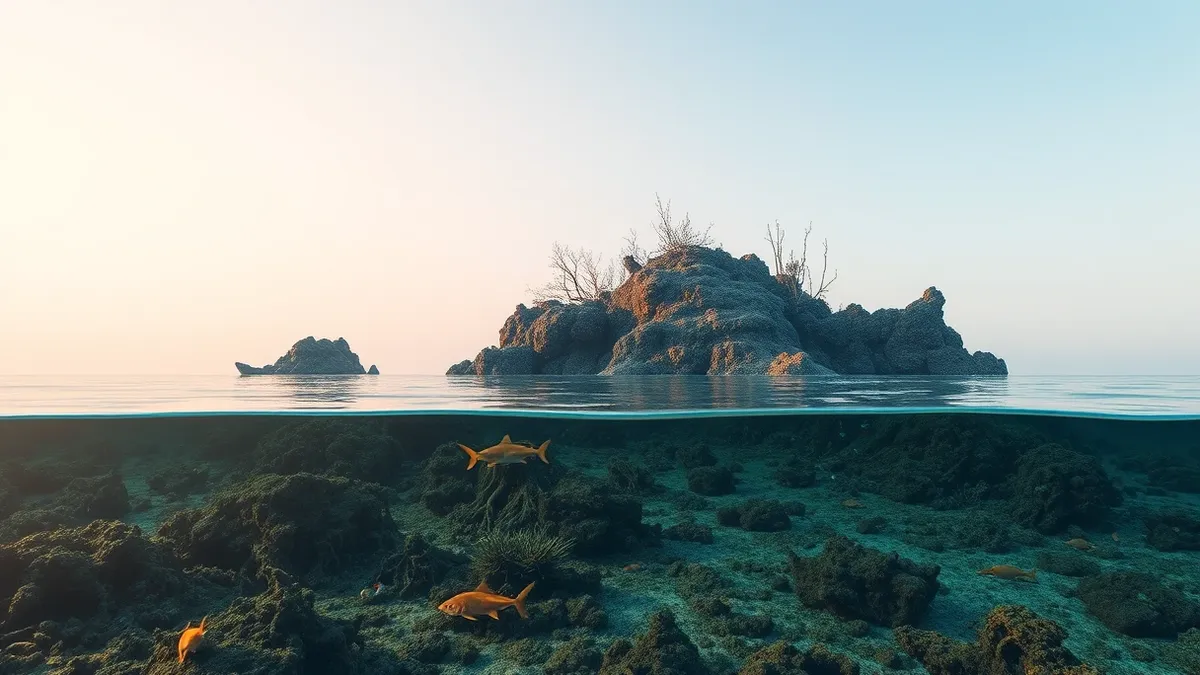
Researchers found submerged forest remains off Mozambique that act as vital habitats for fish and sharks, challenging coral-centric views.
Key points
- Peat reefs formed 3,000 to 5,000 years ago from submerged coastal forests.
- These structures support biodiversity comparable to living coral reefs nearby.
- Scientists suggest similar undiscovered reefs may exist in Asia and Africa.
Researchers from the Bazaruto Center for Scientific Studies have identified ancient peat reefs off the coast of Mozambique that support significant marine biodiversity. The findings, published in Scientific Reports, reveal that submerged forest remains serve as crucial habitats for various sea creatures. This discovery challenges the assumption that hard seabed structures must be coral to sustain complex ecosystems.
The reefs, located in the Bazaruto Archipelago, formed between 3,000 and 5,000 years ago when rising sea levels submerged coastal land. According to the study, these structures are primarily composed of compressed remains from ancient swamps and forests. The water washed away surface sediments, exposing layers of peat—a carbon-rich soil made from partially decomposed plants. This exposed peat creates rare, solid habitats in an area otherwise dominated by shifting sand.
Ecological Significance and Biodiversity
Mario Lebrato, chief scientist at BCSS and lead author, noted that the exposed peat layers allow marine life to settle, hide, and feed. The research team surveyed three peat reefs and one nearby true coral reef in the western Indian Ocean. They compared seabed cover, invertebrates, small fish, and larger animals such as sharks, rays, and turtles. Although the peat reefs contain no living coral, they host abundant seaweed and seagrass.
Each peat reef supported between 26 and 36 species of small fish, a diversity level comparable to the adjacent coral reef. The sites also serve as refuges for spiny lobsters, oysters, barnacles, and juvenile fish including young snappers and grunts. Dozens of small fish species, along with larger predators, were recorded on both reef types. Lebrato described the ancient forest floor as a nursery for reef fish, noting surprise at the volume of life supported by these deposits.
Potential for Global Discovery
The study suggests that species frequently move between the peat reefs and nearby coral reefs, indicating ecological connectivity. The authors propose that similar undiscovered peat reefs may exist along coastlines in Southeast Asia, the Caribbean, and West Africa. These hidden structures could represent significant, previously unrecognized carbon habitats. The findings highlight the importance of investigating non-coral seabed structures for their potential role in marine conservation and carbon storage.
What should you do?
Security professionals should monitor academic publications for emerging environmental data that may impact coastal infrastructure assessments. Organizations involved in marine conservation should review habitat definitions to include peat-based structures. Researchers should verify local geological history before assuming seabed composition. Stakeholders should consider carbon storage potential when evaluating coastal development projects.
What to do and how to stay safe: Bazaruto Center for Scientific Studies
- Review local geological surveys for historical sea-level rise data that may indicate submerged forest deposits.
- Consult marine biologists to assess whether non-coral structures in your region support significant biodiversity.
- Monitor scientific journals for new studies on peat reef formation and ecological value.
- Update environmental impact assessments to include potential carbon storage in submerged organic deposits.
Step-by-step guide: Mobile Device Security: How to Protect Data Beyond Passwords
General security guidance from the Threat Times newsroom. It is not confirmed advice from the organisations named in this story.
Frequently asked questions
Where were these peat reefs discovered?
The reefs were discovered in the shallow coastal waters of the Bazaruto Archipelago in Mozambique.
How old are the peat reefs?
The reefs formed between 3,000 and 5,000 years ago from submerged coastal forests and swamps.
Do peat reefs contain coral?
No, the peat reefs have no living corals, but they support similar biodiversity including fish, sharks, and rays.