Lehigh researchers build 150 kWh concrete thermal battery for data center heat reuse
Engineers created a concrete thermal storage prototype that withstands 500°C and converts server waste heat into usable energy for cooling or power.
Key points
- The prototype stores 150 kWh and endures temperatures up to 500 degrees Celsius.
- System efficiency exceeds 70 percent after a full charge and discharge cycle.
- The technology allows heat from servers to be upgraded for absorption chillers.
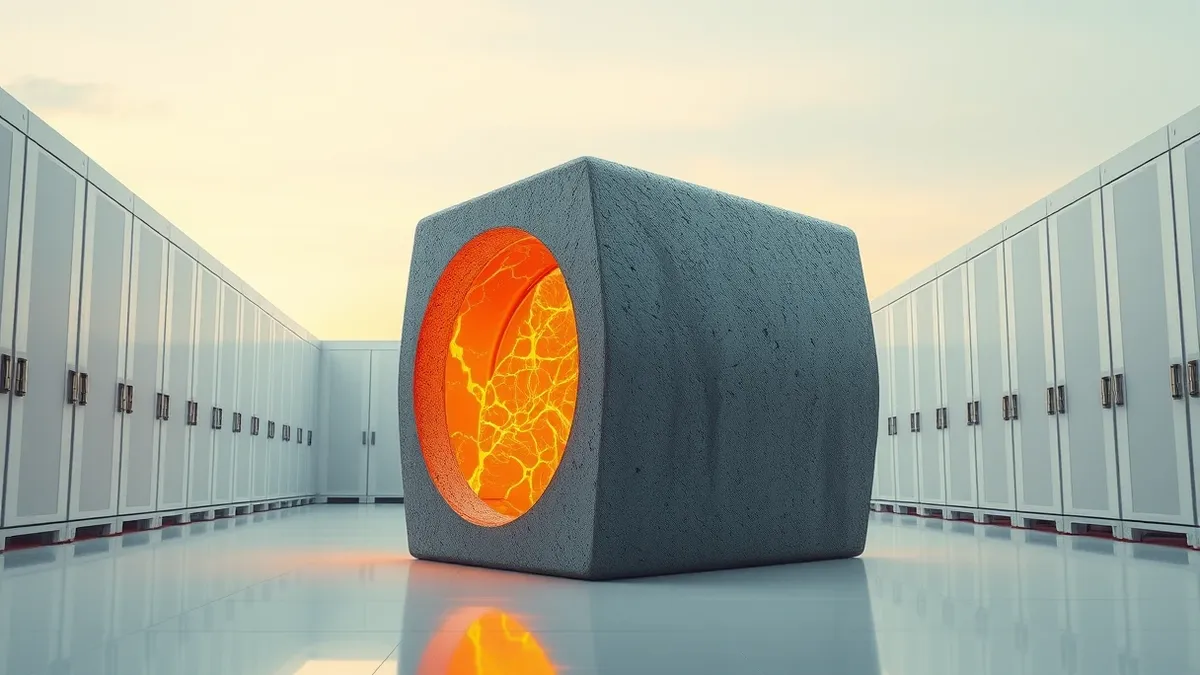
Engineering researchers at Lehigh University have developed a concrete thermal battery capable of storing 150 kilowatt-hours of energy. According to TechRadar, this prototype is designed to capture waste heat from data center computing equipment and release it for useful applications. The system addresses the challenge of managing excess thermal energy generated by high-performance servers.
The concrete structure can withstand operating temperatures reaching 500 degrees Celsius. This high-temperature tolerance allows the battery to support flexible power generation and high-temperature solar thermal applications. The prototype has been fabricated and is currently undergoing testing to validate its performance under real-world conditions.
Technical specifications and efficiency
The reported efficiency of the system exceeds 70 percent after a complete charging and discharging cycle. This metric indicates that substantial supplied energy remains recoverable after storage within the concrete matrix. The technology combines engineered cement materials with embedded thermosiphons that transfer heat through the storage medium.
These thermosiphons move thermal energy rapidly while maintaining relatively stable internal temperatures. This mechanism allows the stored heat to become available when demand patterns change. The design functions as a hybrid arrangement by combining different heat storage mechanisms within a single concrete-based structure.
Applications for data centers
For data center operators, the technology can upgrade recovered heat into a range between 120 and 220 degrees Celsius. This temperature range is suitable for supplying absorption chillers used for facility cooling. The stored heat could also support industrial operations, district heating, and drying processes.
The system can accept waste heat directly from servers or electricity, creating two distinct routes for charging the storage unit. This flexibility allows thermal storage to operate separately from the moment waste heat is produced. Such separation provides greater timing flexibility for facilities where computing loads fluctuate significantly.
What should you do?
Facilities managers should monitor developments in thermal storage technology as prototypes mature. Organizations with high-density computing loads may evaluate how waste heat recovery could offset cooling costs. Infrastructure planners should consider the potential for integrating concrete thermal batteries into future data center designs.
What to do and how to stay safe: Lehigh University
- Review current waste heat management strategies to identify inefficiencies in cooling systems.
- Monitor vendor announcements regarding commercial availability of concrete thermal storage units.
- Assess facility infrastructure for compatibility with high-temperature heat recovery applications.
- Track efficiency metrics of emerging thermal battery technologies against existing solutions.
Step-by-step guide: Mobile Device Security: How to Protect Data Beyond Passwords
General security guidance from the Threat Times newsroom. It is not confirmed advice from the organisations named in this story.
Frequently asked questions
How much energy can the new concrete battery store?
The prototype developed by Lehigh researchers has a storage capacity of 150 kilowatt-hours.
What is the maximum temperature the system can handle?
The concrete thermal battery can withstand temperatures reaching 500 degrees Celsius during operations.
How does this technology help data centers?
It captures waste heat from servers and upgrades it for use in absorption chillers or other thermal applications.