Graduates Attempt Guinness World Record with 3D-Printed Jet-Powered Model Aircraft
A team of graduates uses PETG and advanced engineering to build a remote-controlled jet aiming for Mach 0.8, challenging the current speed record for model aircraft.
Key points
- The aircraft is the first 3D-printed remote control model equipped with a jet turbine.
- Builders aim to reach Mach 0.8 to surpass the existing Guinness World Record.
- The project relies on PETG material and specific engineering techniques for structural integrity.
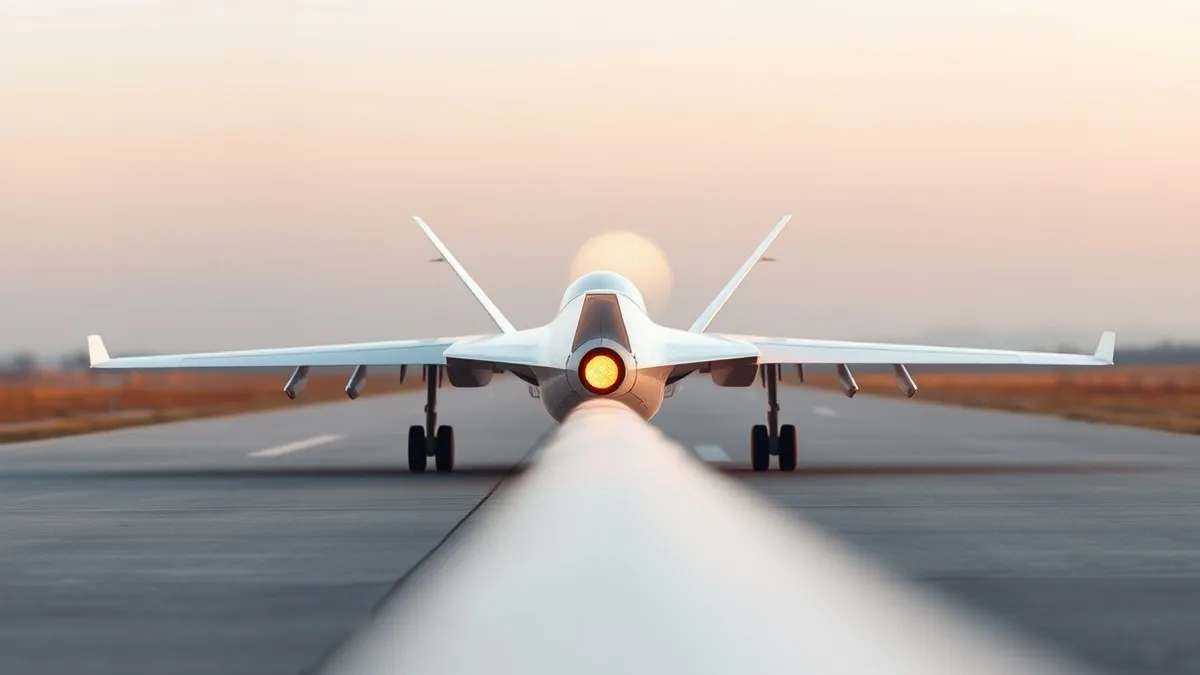
A team of graduates has launched a new remote-controlled aircraft designed to break the Guinness World Record for the fastest jet-powered model. According to Tom's Hardware, the vehicle represents the world’s first 3D-printed remote control aircraft to utilize a jet turbine engine for propulsion during flight.
The primary objective of this engineering project is to achieve a speed of Mach 0.8. This velocity target is necessary to surpass the current standing record held by other jet-powered model aircraft. The team intends to validate these performance metrics through controlled flight tests that demonstrate sustained high-speed capability.
Engineering and Material Design
The construction of the airframe relies heavily on PETG, a thermoplastic polymer commonly used in additive manufacturing. According to Tom's Hardware, the graduates selected this material for its balance of strength and flexibility under high-stress conditions. The design incorporates clever engineering solutions to manage the thermal and mechanical loads generated by the jet turbine during operation.
Standard 3D-printed components often struggle with the vibration and heat associated with jet propulsion. The team addressed these challenges by optimizing the layer orientation and structural geometry of the printed parts. This approach allows the lightweight model to withstand forces that would typically compromise less rigid materials or poorly designed assemblies.
Project Goals and Context
This attempt places the graduates in direct competition with established records in the model aviation community. The Guinness World Record for the fastest jet-powered model aircraft is a prestigious benchmark that requires verified documentation of speed and altitude. The team must ensure their flight data meets the strict verification standards required by the record-keeping organization.
The use of a jet turbine in a 3D-printed airframe marks a significant technical milestone. Previous record attempts often involved traditional materials like carbon fiber or aluminum to handle extreme speeds. By demonstrating that PETG can support such performance, the project highlights advancements in both additive manufacturing capabilities and aerodynamic design for small-scale aircraft.
What should you do?
Security and technology professionals should monitor developments in additive manufacturing for industrial applications. As 3D printing technology advances, organizations must assess how these capabilities impact supply chain security and intellectual property protection. Engineers should review material specifications when designing components for high-stress environments to ensure safety standards are met.
What to do and how to stay safe: 3D printing
- Review organizational policies regarding the use of 3D-printed components in critical systems to ensure they meet required safety and durability standards.
- Monitor industry reports on advancements in additive manufacturing materials, such as high-performance polymers, to stay informed about new engineering capabilities.
- Verify that any experimental or prototype hardware used in testing environments undergoes rigorous stress testing before deployment in sensitive operational contexts.
- Assess intellectual property risks associated with digital design files that could be replicated or modified without authorization using accessible printing technologies.
General security guidance from the Threat Times newsroom. It is not confirmed advice from the organisations named in this story.
Frequently asked questions
What material is used for the airframe of the record-breaking aircraft?
The aircraft is constructed using PETG, a thermoplastic polymer chosen for its engineering properties and suitability for 3D printing applications.
What speed is the team aiming to achieve with this model aircraft?
The graduates aim to reach Mach 0.8, which is the target speed required to beat the current Guinness World Record for fastest jet-powered model aircraft.
Is this the first time a 3D-printed aircraft has used a jet turbine?
Yes, according to Tom's Hardware, this is the world’s first 3D-printed remote control aircraft to take flight using a jet turbine engine.