Elgin Community College Covers Flock Cameras After Removal Request Denied
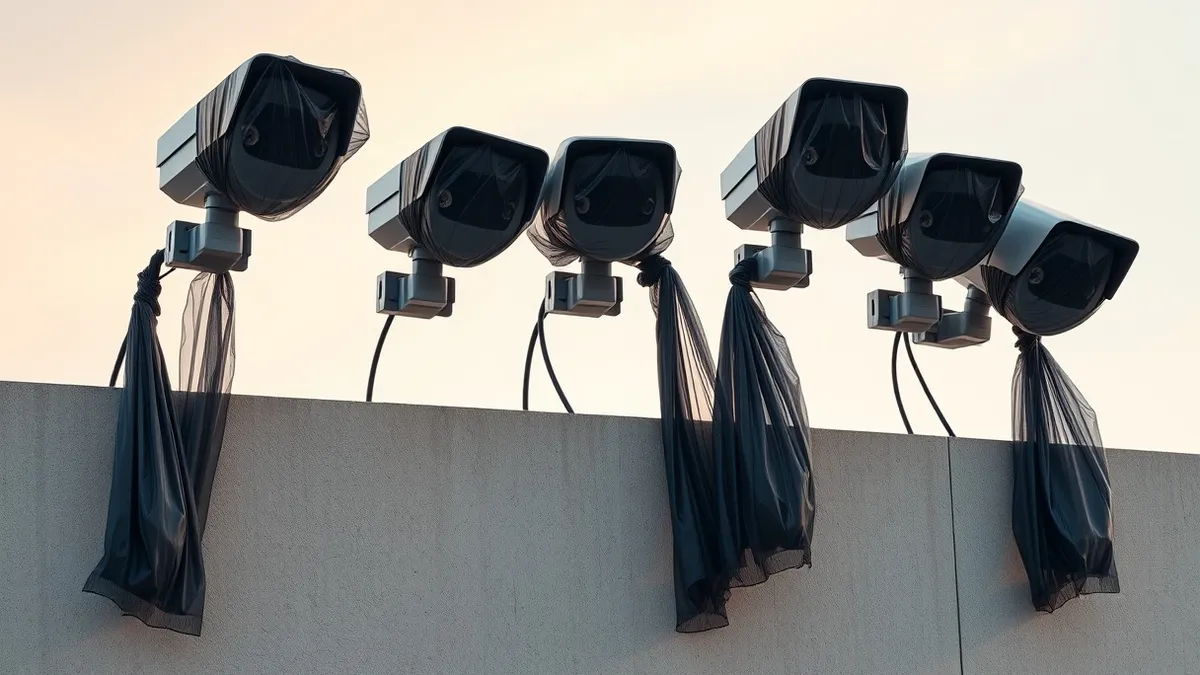
The college blocked lens access with trash bags after Flock refused to remove six safety cameras due to data sharing and security concerns.
Key points
- Elgin Community College requested removal of six Flock safety cameras in October 2025 after concerns about data sharing with Customs and Border Patrol.
- Flock rejected the removal request, citing no contract violation, and staff repeatedly removed coverings placed on the cameras by college employees.
- The standoff ended in April 2026 when the contract expired, allowing the college to finally have the cameras removed from campus.
Elgin Community College staff covered six Flock safety cameras with black trash bags and zip ties after the vendor refused to remove the devices. This physical blocking of the lenses occurred after the school administration formally requested the cameras be taken down in October 2025, according to reporting by The Verge and the Chicago Sun-Times.
The college had installed the six cameras in April 2025 to enhance student safety and security. However, by September 2025, school officials grew concerned that Flock was sharing data with Customs and Border Patrol. They also feared that camera feeds were not properly secured and that both law enforcement agencies and Flock employees were abusing access to the recorded data, according to the reports.
Contract Dispute and Physical Standoff
Elgin Community College President Peggy Heinrich stated that the school requested Flock remove the cameras in October 2025. Flock rejected this request, asserting that it had not violated its contract with the institution. The Chicago Sun-Times reported that school officials reached out again in December 2025. They offered to pay for the remaining five months of the contract term but still requested that the cameras be removed from the premises.
According to the Sun-Times, the college received no response to this December offer. Consequently, college staff began covering the cameras with black trash bags and zip ties to prevent them from capturing footage. Heinrich described a recurring cycle where staff would cover the devices, and workers in an unmarked vehicle, presumed to be Flock employees, would remove the coverings during service visits.
This back-and-forth continued for several months. Heinrich noted that the cycle of covering and uncovering persisted until April of the following year. At that point, the college’s contract with Flock expired. Following the expiration, Flock removed the cameras from Elgin Community College, ending the dispute over the surveillance equipment.
Who Is Affected
The primary parties involved in this incident are Elgin Community College and Flock, the vendor that supplied the safety cameras. The college administration, led by President Peggy Heinrich, sought to protect student privacy and data security by removing the devices. Flock maintained its right to keep the cameras operational under the existing contract terms.
The incident highlights potential risks for educational institutions using third-party safety monitoring systems. Concerns were raised about data sharing with federal agencies like Customs and Border Patrol, as well as unauthorized access by law enforcement and vendor employees. These issues prompted the college to take physical measures to block the cameras when contractual remedies failed.
What should you do?
Organizations should review vendor contracts for clauses regarding data sharing with third parties or government agencies. Ensure that surveillance systems have proper security controls to prevent unauthorized access by employees or external entities. Establish clear procedures for removing or disabling equipment when privacy concerns arise, including physical blocking methods if necessary. Monitor vendor compliance with data protection agreements and document all communications regarding removal requests.
What to do and how to stay safe: Flock
- Review vendor contracts to understand data sharing policies, especially with government agencies, before installing surveillance equipment.
- Implement strict access controls for camera feeds to prevent unauthorized viewing by vendor employees or law enforcement without proper authorization.
- Establish a clear process for disabling or removing surveillance devices if privacy concerns cannot be resolved through contractual negotiations.
- Document all communications with vendors regarding removal requests and data security concerns to support future legal or administrative actions.
General security guidance from the Threat Times newsroom. It is not confirmed advice from the organisations named in this story.
Frequently asked questions
Why did Elgin Community College want to remove the Flock cameras?
The college was concerned that Flock was sharing data with Customs and Border Patrol, that camera feeds were not properly secured, and that access was being abused by law enforcement and company employees.
Did Flock agree to remove the cameras after the request?
No, Flock rejected the removal request in October 2025, stating it had not violated its contract, and remained silent after a December 2025 offer to pay for the remaining contract term.
How did the college stop the cameras from recording?
College staff covered the cameras with black trash bags and zip ties, though Flock workers repeatedly removed these coverings until the contract expired in April 2026.