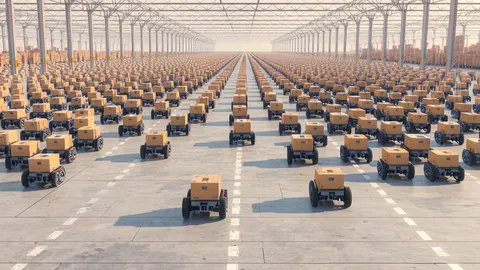
Amazon expands robotic fleet to one million units while retaining massive human workforce
The e-commerce giant is building factories for new robots to handle dangerous tasks, though experts warn of increased pace and injury risks for workers.
Key points
- Amazon operates more than 1 million robots in warehouses globally to support daily deliveries.
- The company remains the second-largest corporate employer with 1.5 million human workers.
- Experts warn that collaborative robots increase physical proximity and dictate work pace for humans.
Amazon is significantly expanding its robotic workforce, operating more than 1 million robots in warehouses worldwide to facilitate millions of same-day and one-day package deliveries daily. According to a report by Ars Technica, the company is establishing new factories to produce increasingly capable robot workers, marking a major escalation in its automation strategy.
Despite this massive deployment of machinery, Amazon remains the second-largest corporate employer globally. The company’s 2025 annual report indicates it employs more than 1.5 million full-time and part-time human workers. Executives state that the growing robot fleet is designed to ease the burden on humans by handling the toughest fulfillment center tasks that carry the highest risks of physical fatigue and injury.
The Impact on Human Workers
Labor advocacy groups and independent researchers argue that warehouse automation driven by AI presents significant challenges for humans working alongside robots. Brian Greenwood, a professor of business at George Mason University, told Ars Technica that historical automation typically removed high-risk tasks from workers without placing machines in close physical proximity.
Greenwood noted that collaborative robots change this dynamic by being physically proximate to workers and having the ability to dictate the pace of work. This shift creates a different operational environment compared to traditional automation, where machines operated separately from human staff. The integration of AI-driven robotics requires humans to adapt to machine-led rhythms rather than independent workflows.
Industry Context and Safety Concerns
Robotics and AI are well suited to the relentless pace required inside e-commerce fulfillment centers. Amazon’s promise of speedy deliveries for its 200 million Prime subscribers requires hundreds of thousands of human employees to rapidly assemble and ship orders containing complex arrays of products. This demand drives the need for both high-speed logistics and extensive labor forces.
Much of the work in these centers involves tasks described as dull, dirty, and dangerous, which many prefer to hand over to robots. The US Occupational Safety and Health Administration notes that the injury and illness rate for workers in the US warehouse sector is typically more than double the average across all industries. Greenwood highlighted that the sector employs almost 2 million people in the United States, characterized by very high turnover and workplace injury rates.
What should you do?
Security and technology professionals should monitor how automation strategies impact operational continuity and workforce stability. Understanding the interplay between robotic systems and human labor is critical for risk management in logistics-heavy industries. Organizations should assess how increased automation affects their own supply chain dependencies and labor relations.
What to do and how to stay safe: Amazon
- Review internal policies regarding human-robot interaction to ensure safety protocols are updated for collaborative environments.
- Monitor industry trends in warehouse automation to anticipate shifts in labor demand and operational pacing.
- Assess supply chain resilience by understanding the reliance on automated logistics providers like Amazon.
- Stay informed on regulatory updates from agencies like OSHA regarding warehouse safety and injury rates.
General security guidance from the Threat Times newsroom. It is not confirmed advice from the organisations named in this story.
Frequently asked questions
How many robots does Amazon currently operate?
Amazon operates more than 1 million robots in warehouses around the world.
Does Amazon employ more humans or robots?
Amazon employs more than 1.5 million human workers, making it the second-largest corporate employer globally.
What concerns do experts have about collaborative robots?
Experts warn that collaborative robots are physically proximate to workers and can dictate the pace of work, changing traditional automation dynamics.