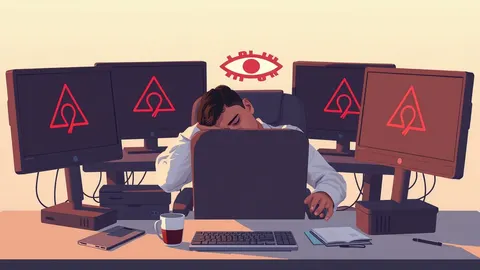
CISO Survey Shows Cyber Risk Shifting Inside Enterprise Workflows
A new report indicates that cybersecurity risks are no longer peripheral but are embedded directly within daily business operations and systems.

Key points
- The 2026 survey data highlights a convergence of resilience, AI governance, and human risk.
- Cybersecurity challenges are moving from the network perimeter into internal workflows.
- Board scrutiny and human factors are becoming central to enterprise security strategies.
Enterprise cybersecurity risks are increasingly embedded within daily business operations, according to new findings from The Hacker News. The report, titled "The Sixth Voice of the CISO," indicates that the primary locus of cyber risk has shifted from external threats to internal workflows where work actually happens. This development marks a significant departure from traditional security models that focused primarily on perimeter defense.
The 2026 findings represent the latest stage in a five-year trend where multiple security disciplines are converging. According to The Hacker News, resilience, artificial intelligence governance, human risk, and board-level scrutiny are now intersecting inside the systems employees use daily. This integration suggests that security is no longer a separate function but an inherent component of business processes. The report emphasizes that this is not merely a year-over-year change but a structural evolution in how enterprises manage digital risk.
The Evolution of Enterprise Security
For years, the narrative surrounding enterprise cybersecurity followed a linear trajectory of escalation. Organizations faced increasing volumes of attacks, greater data loss, and mounting pressure from stakeholders. This traditional view treated security as a reactive discipline focused on containing breaches after they occurred. However, the current data suggests a more complex reality where security measures must be proactive and integrated into the fabric of daily operations.
The convergence of AI governance and human risk is particularly notable. As organizations adopt new technologies, the potential for misuse or error increases. The report indicates that these factors are converging inside the very systems where work is performed, requiring a holistic approach to risk management. Board scrutiny has also intensified, reflecting a broader recognition that cyber risk is a business risk, not just an IT issue.
Implications for Security Leaders
Chief Information Security Officers and other security leaders must adapt to this new reality. The shift toward internal workflows means that security controls must be designed with usability and integration in mind. Siloed security measures are less effective when risks are embedded in daily tasks. Instead, security strategies must align with business objectives and employee behaviors.
The emphasis on human risk highlights the importance of training and awareness. Employees are often the first line of defense, but they can also be the weakest link if not properly supported. The report suggests that addressing human factors is critical to reducing overall cyber risk. Additionally, the increased focus on AI governance requires clear policies and oversight to ensure that new technologies are used safely and responsibly.
What should you do?
Security professionals should review their current risk management frameworks to ensure they address internal workflow vulnerabilities. Organizations should also evaluate their AI governance policies to mitigate risks associated with new technologies. Finally, stakeholders should consider the human element in security strategies, focusing on training and support for employees.
What to do and how to stay safe: CISO
- Audit internal workflows to identify where security controls may be lacking or cumbersome.
- Develop clear policies for the use of artificial intelligence tools within the organization.
- Implement regular training programs that focus on human risk and security awareness.
- Engage with board members to ensure cyber risk is treated as a strategic business priority.
Step-by-step guide: Social Engineering Warning Signs and How to Respond
General security guidance from the Threat Times newsroom. It is not confirmed advice from the organisations named in this story.
Frequently asked questions
What does the new CISO survey say about cyber risk?
The survey indicates that cyber risk has moved inside enterprise workflows, converging with resilience, AI governance, and human risk.
How has the enterprise cybersecurity story changed?
It has shifted from a linear escalation of attacks to a complex convergence of risks within daily business systems.
Who is affected by this shift in cyber risk?
Enterprises, particularly CISOs and board members, are affected as they must adapt to risks embedded in internal workflows.