Zoom Launches Unified Context Layer to Coordinate AI Agents Across Enterprise Apps
The new layer links meeting data with CRM and HR systems to help AI agents complete tasks without reconstructing context for every request.

Key points
- Zoom announced the Unified Context Layer at its Zoomtopia virtual conference to bridge gaps in enterprise AI execution.
- Internal benchmarks suggest the approach cuts costs by 45% to 65% compared to standalone agents, though no independent validation exists.
- New features include coordinated agent teams and expanded note-taking automation that sends summaries to third-party applications.
Zoom Communications Inc. introduced the Unified Context Layer at the Zoomtopia virtual conference, marking a strategic shift from pure videoconferencing to a broader AI-driven workflow platform. The announcement outlines how the company intends to help artificial intelligence agents transform meetings, calls, and customer interactions into actionable work across various business applications. This move addresses the limitations of current enterprise AI assistants, which often capture conversations but lack the necessary history, permissions, and system connections to act on them effectively.
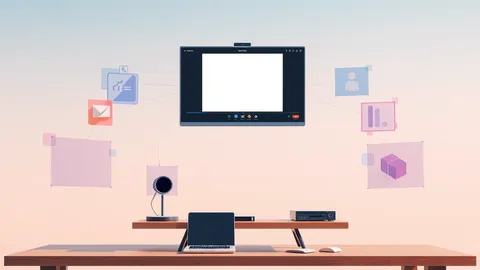
The core of this update is a shared intelligence layer that connects Zoom’s native tools with external enterprise systems. According to SiliconANGLE, this layer integrates conversation intelligence with documents and data from connected platforms such as Salesforce Inc.’s customer relationship management software, ServiceNow Inc.’s workflow management platform, and Workday Inc.’s human capital management application. By linking people, topics, and decisions in a graph that updates in near real time, the system prevents agents from having to reconstruct context for every single request.
Technical Architecture and Performance Claims
The Unified Context Layer is available immediately and provides shared memory and agent coordination across Zoom Workplace, customer experience products, and connected applications. During a briefing, Zoom Chief Product Officer Russell Dicker stated that the layer synthesizes and distills information so agents do not need to parse data individually. He cited internal benchmarks showing cost reductions of 45% to 65% compared to standalone agents. However, Zoom did not provide independent validation for these performance comparisons, leaving the accuracy of those figures unverified by third parties.
New Agent Features and Workflow Tools
Alongside the context layer, Zoom released ZoomMate Agent Teams, which assigns specialized agents to different parts of a project simultaneously. A lead agent coordinates these tasks and combines their output for human review before finalization. The company also introduced agentic search, which draws answers from Zoom and more than 40 third-party applications. These tools aim to streamline complex workflows by allowing multiple AI agents to work on distinct components of a project while maintaining a unified output.
Expanded Note-Taking and Capture Capabilities
The My Notes feature is expanding beyond simple meeting capture into broader workflow automation. Users can now send summaries to destinations like Salesforce and Zoom Chat using templates or natural-language instructions. Zoom is also planning a standalone mobile app for My Notes to extend its reach. Additionally, the company is partnering with DTEN Inc. and GalaxySailLab Inc.’s Bota to develop recording devices that capture in-person conversations, bringing offline discussions into the digital workflow ecosystem.
What should you do?
Organizations using Zoom should review the permissions granted to AI agents, particularly when connecting to sensitive systems like Salesforce or Workday. Security teams should monitor how the Unified Context Layer handles data retention and access controls across connected applications. IT administrators should evaluate whether the cost savings claimed by Zoom align with their specific usage patterns before fully adopting the new agent teams.
What to do and how to stay safe: Zoom
- Review API permissions for third-party integrations with Zoom to ensure AI agents have only the necessary access to external systems.
- Audit data retention policies for the new Unified Context Layer to verify that sensitive meeting data is not stored longer than required.
- Test the ZoomMate Agent Teams feature in a sandbox environment to assess the accuracy of automated task coordination before enterprise-wide deployment.
- Monitor logs for unusual data flows between Zoom and connected applications like ServiceNow to detect potential misconfigurations in agent workflows.
Step-by-step guide: Prompt Injection Warning Signs: How to Spot AI Manipulation
General security guidance from the Threat Times newsroom. It is not confirmed advice from the organisations named in this story.
Frequently asked questions
How does the Unified Context Layer differ from standard AI assistants?
It links conversation data with external systems like Salesforce and Workday in real time, allowing agents to act on historical context without reconstructing it for each request.
Are there independent benchmarks for the claimed cost savings?
No, Zoom cited internal benchmarks showing 45% to 65% cost reductions, but the company did not provide independent validation for these figures.
Can the new AI agents work with in-person meetings?
Yes, Zoom is developing recording devices with partners DTEN and GalaxySailLab to capture in-person conversations and integrate them into the workflow.