US Navy commits $150M to Shield AI’s X-BAT autonomous fighter drone
The Navy adds funding for the vertical-takeoff drone, pushing total project investment to $400 million ahead of this year’s flight tests.
Key points
- The US Navy has committed an additional $150 million to Shield AI’s X-BAT project.
- Shield AI is matching the funding with $150 million of its own capital.
- Flight testing is scheduled to begin later this year, with capability expected in 2028.
Shield AI announced that combined government funding and its own investment have reached $400 million for the X-BAT autonomous vertical take-off and landing fighter drone. The company stated that the US Navy has committed an additional $150 million to the project, on top of earlier funding already secured for the platform.
Shield AI is contributing another $150 million of its own capital to match the Navy’s latest commitment. The company also previously secured $50 million under the Runway Independent Maritime Expeditionary Strike program, which it had matched with internal funds. This brings the total financial backing for the X-BAT initiative to the $400 million mark.
Development Timeline and Specifications
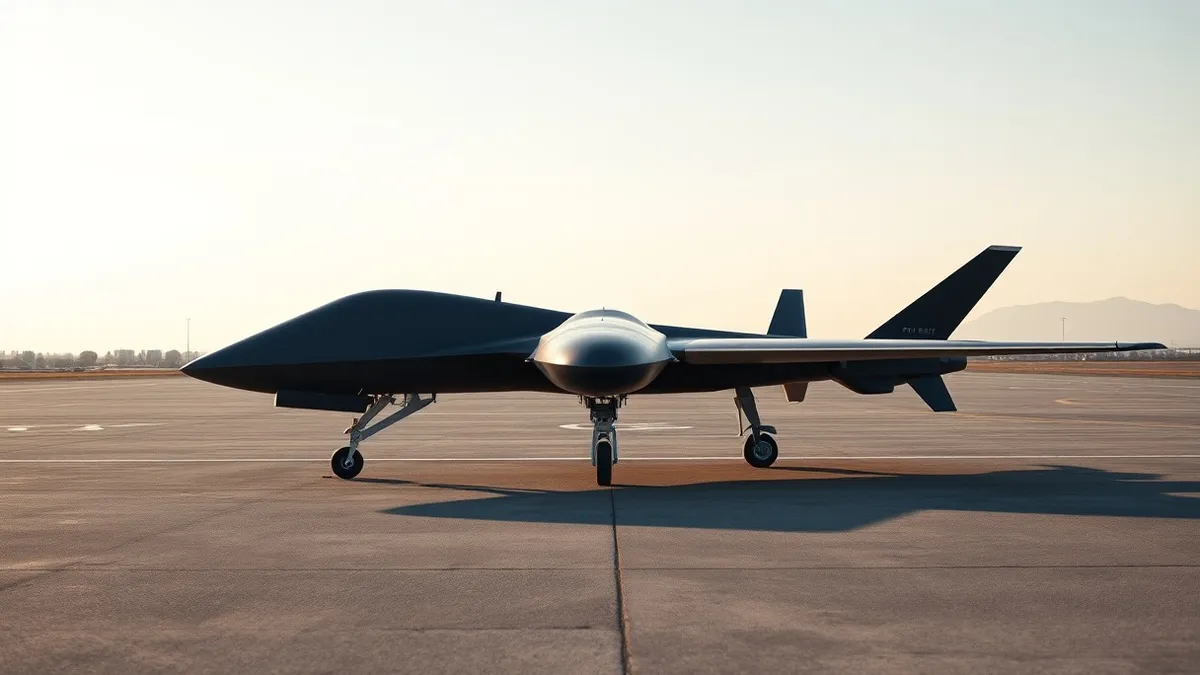
X-BAT is scheduled to begin flight testing later this year, according to Shield AI. The company expects the aircraft to achieve "mission capability" by 2028. The platform is designed to operate without a runway, allowing for vertical take-off and landing from various locations. This design aims to provide naval commanders with long-range strike assets that do not depend on traditional airfield infrastructure.
The aircraft measures 26 feet in length and features a 39-foot wingspan. Shield AI claims the drone will have a range exceeding 2,000 nautical miles and expects it to be capable of supersonic flight. The X-BAT was originally unveiled at an event in Washington DC last year, where it was presented to an audience of military leaders.
Operational Concept and Technology
The X-BAT is configured as a tail-sitter, meaning it takes off vertically before leveling out for horizontal flight. After completing its mission, it lands vertically back on its launcher. This operational profile is intended to allow the US Navy to deploy combat aircraft from a wider variety of vessels than just large carriers or amphibious assault ships.
According to the company, the Navy could operate X-BAT from vessels such as the Expeditionary Sea Base. This contrasts with current operations that rely on carriers like the USS Gerald R. Ford or ships carrying Marine Corps F-35B fighters. The goal is to enhance the lethality and survivability of US Naval Aviation by dispersing operational assets.
Shield AI’s Hivemind autonomy software will control the X-BAT aircraft. This software has been demonstrated previously in a modified F-16 fighter jet, which engaged in dogfights against human pilots a couple of years ago. The use of autonomous control is a central feature of the X-BAT’s design philosophy.
What should you do?
Security and technology professionals should monitor developments in autonomous military systems for implications regarding supply chain security and software integrity. As defense contractors integrate complex autonomy software, the attack surface for cyber intrusions may expand. Organizations involved in defense contracting should review their software development lifecycle practices for potential vulnerabilities in autonomous control systems.
What to do and how to stay safe: Shield AI
- Review software supply chain security practices for any projects involving autonomous control systems or third-party AI components.
- Monitor official announcements from defense contractors and government agencies for updates on autonomous platform testing and deployment timelines.
- Assess organizational exposure to risks associated with the integration of autonomous systems into critical infrastructure or defense contracts.
- Ensure that internal policies address the security requirements for software that operates with a high degree of autonomy or without direct human intervention.
Step-by-step guide: Prompt Injection Warning Signs: How to Spot AI Manipulation
General security guidance from the Threat Times newsroom. It is not confirmed advice from the organisations named in this story.
Frequently asked questions
How much total funding has Shield AI secured for the X-BAT project?
Shield AI stated that combined US government funding and its own investment commitments have reached $400 million for the X-BAT autonomous fighter drone.
When is X-BAT expected to begin flight testing?
According to Shield AI, the X-BAT aircraft is scheduled to begin flight testing later this year, with mission capability slated for 2028.
What is the primary operational advantage of the X-BAT design?
The X-BAT is designed for vertical take-off and landing, allowing it to operate from locations that do not require a runway, such as Expeditionary Sea Bases.