AI
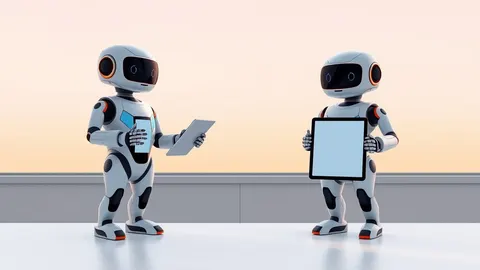
Meta Muse and OpenAI Dots launch autonomous AI agents with distinct pricing
Meta and OpenAI have released persistent AI agents that execute tasks independently, differing significantly in cost and operational scope.
Meta and OpenAI have released persistent AI agents that execute tasks independently, differing significantly in cost and operational scope.

New research reveals nearly half of industrial organizations experienced breaches, while most remain confident in their containment capabilities.

Palantir’s chief technology officer discussed the company’s role in AI targeting systems and defense contracts during a recent media interview.

New findings suggest that adjusting algorithms and precision formats offers a viable path to reducing power consumption without new hardware.

Survey shows most IT teams using AI for configuration lack rapid rollback capabilities, creating operational risk.

The new Razer Basilisk V4 Pro offers refined ergonomics and performance, but includes an unrequested AI feature that reviewers find unnecessary.

Willow Care leverages CoreWeave’s reinforcement learning infrastructure to streamline speech recognition and language processing tasks.

Finnish regulators have stopped work on two Google data center sites in Muhos and Kajaani due to alleged environmental violations.

Liquid AI is developing on-device AI agents that operate within fixed hardware limits while using continuous improvement loops to maintain performance.

Gremlin introduces an AI add-on that autonomously breaks infrastructure to find bugs before they reach production environments.

Automation Anywhere announced a Wednesday agreement to acquire conversational voice AI firm Boost.ai from Nordic Capital, aiming to enhance autonomous enterprise operations.

Google is expanding its Gemini AI assistant’s workplace capabilities by integrating email access, potentially changing how users interact with professional communications.

A five-year manufacturing deal will see GlobalFoundries produce silicon interposers for TSMC’s advanced packaging, enabling US-branded AI chip production.

Bay Area artist Jessica Hische reports intense backlash and doxxing after designing the logo for Meta’s new AI assistant, Muse.

Google Cloud positions Gemini as a single agent for work, handling planning and execution across enterprise systems with built-in governance controls.

Chinese startup Manus secures funding led by Boyu Capital with Tencent participation, following failed Meta acquisition.

Survey of 356 IT pros finds six to eight tools create staffing and integration burdens that AI alone cannot resolve into a single view.

Meta submitted 21 new top-level domain applications to ICANN, leading a wave of 1,615 requests focused heavily on artificial intelligence branding and identity.
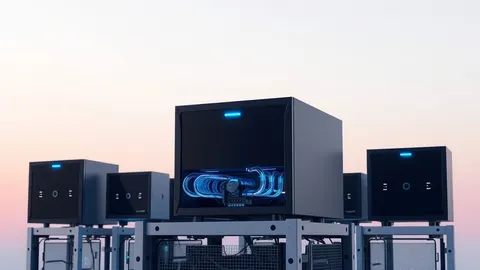
CoreWeave introduces Forge, a full-stack platform designed to unify workflows for running, observing and continuously improving AI agents in production environments.

The chipmaker announced a major funding commitment to support American scientific discovery and maintain technological leadership.

Israeli researchers developed Brain-IT, an AI model that decodes brain activity to reconstruct images people view, requiring significantly less training data than previous methods.

Elastic introduces a team of specialized AI agents for security operations, handling triage, hunting, and forensics with adjustable autonomy levels.

Anthropic pairs AI models with human engineers to patch vulnerabilities in critical systems and eligible open-source projects.

A Stanford researcher employed an AI model in 2025 to generate genetic designs for viruses, marking a significant step in computational biology research.