Nvidia RTX Spark in Surface Laptop Ultra Outpaces Apple M5 Max in Agentic AI Benchmarks
New testing shows the Windows on Arm platform delivers significantly faster AI completion times than Apple's latest silicon in specific agentic workloads.
Key points
- Nvidia’s RTX Spark Superchip outperforms the Apple M5 Max by approximately 25% in agentic AI benchmarks using Qwen models.
- The performance data comes from testing the Surface Laptop Ultra, which houses the new Windows on Arm silicon.
- Nvidia CEO Jensen Huang announced the RTX Spark platform with a focus on reinventing the PC for the agentic AI era.
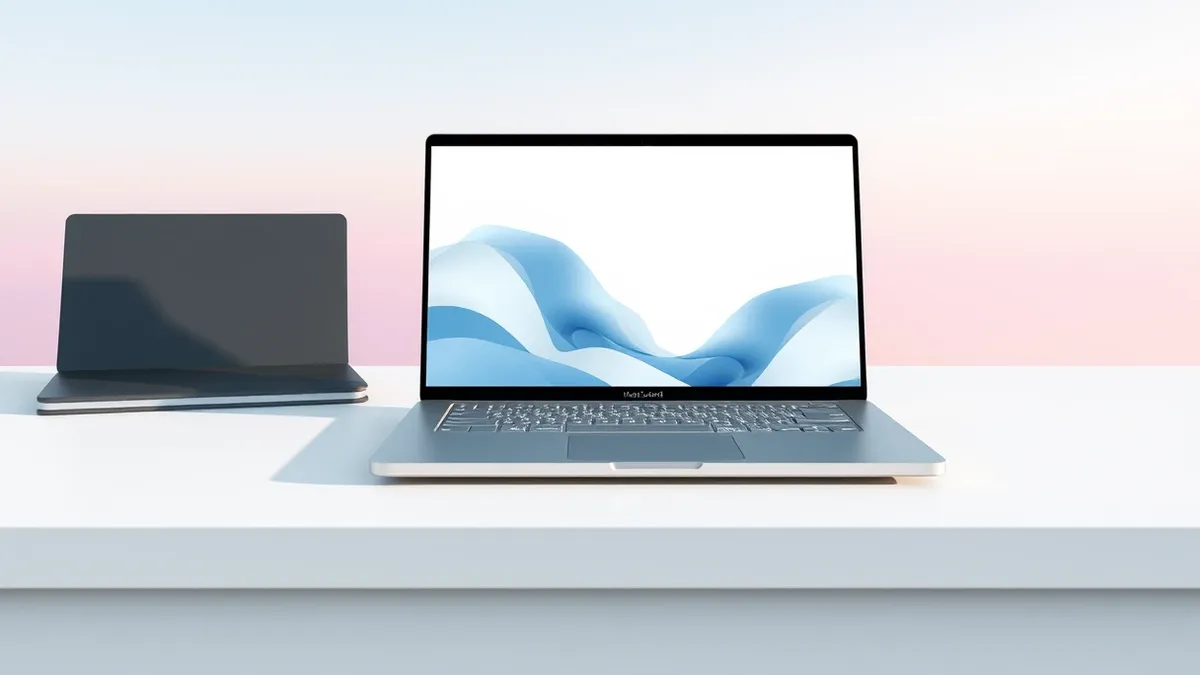
Nvidia’s RTX Spark Superchip, when installed in the Surface Laptop Ultra, delivers roughly 25 percent faster performance than Apple’s M5 Max MacBook Pro in specific agentic AI completion tasks, according to testing by Tom's Hardware. The benchmarks utilized Qwen models to measure the efficiency of the Windows on Arm platform against Apple’s latest silicon.
The performance data comes from an evaluation by Jeffrey Kampman at Tom's Hardware. The report notes that the RTX Spark Superchip in the Surface Laptop Ultra outperforms the Apple M5 Max MacBook Pro by approximately 25 percent in these specific agentic AI completion benchmarks. The source material does not provide data on other performance metrics or general usage scenarios.
Context and Background
Nvidia CEO Jensen Huang announced the RTX Spark platform with the stated goal of laying the foundation for the reinvention of the PC in the agentic AI era. The RTX Spark chip represents Nvidia’s entry into the Windows silicon market, targeting AI developers and content creators who require strong GPU performance for local inference tasks.
As Threat Times reported on 2026-10-15, Nvidia launched the RTX Spark SoC for Windows with a distinct focus on AI capabilities. That coverage noted the company’s strategy to leverage its GPU strengths to compete in the general-purpose computing space. The Surface Laptop Ultra serves as the primary reference device for this new architecture in early market reviews.
Who Is Affected
The primary beneficiaries of this performance data are AI developers and content creators who rely on local model inference for their workflows. These professionals often prioritize GPU performance and memory bandwidth over raw CPU benchmark scores when selecting hardware for agentic AI tasks. The findings suggest that Windows devices powered by Nvidia silicon may now be viable alternatives to MacBooks for certain AI-centric use cases.
Earlier testing by Tom's Hardware, as noted in previous reporting, found that while the local AI strengths of the Windows on Arm platform are significant, its CPU benchmarks remain weaker than those of Apple silicon. This trade-off means that general productivity tasks may still favor Apple devices, while specialized AI workloads could favor the Nvidia-based configuration.
What should you do?
Professionals evaluating hardware for local AI development should look beyond traditional CPU benchmarks when comparing systems. The disparity between CPU performance and AI completion speed suggests that specialized workloads require specific metric evaluations. Users should identify which specific models and frameworks their teams rely on before making purchasing decisions.
Monitoring further independent reviews of the RTX Spark platform will provide a clearer picture of its sustained performance under heavy loads. The initial benchmarks focus on Qwen models, so testing with other popular open-source models will be necessary to confirm the broader applicability of these results.
What to do and how to stay safe: Nvidia
- Review your organization’s specific AI model requirements to determine if GPU-centric performance outweighs CPU benchmark needs for your current workflows.
- Wait for additional independent benchmarks that test a wider variety of open-source models beyond Qwen to confirm the performance delta across different AI tasks.
- Evaluate the thermal and power efficiency profiles of the Surface Laptop Ultra under sustained AI workloads, as these factors impact long-term usability for developers.
- Consult with internal AI engineering teams to assess whether the 25 percent performance gain in agentic completion times translates to meaningful cost or time savings for your projects.
Step-by-step guide: Prompt Injection Warning Signs: How to Spot AI Manipulation
General security guidance from the Threat Times newsroom. It is not confirmed advice from the organisations named in this story.
Frequently asked questions
How much faster is the Nvidia RTX Spark compared to the Apple M5 Max?
In agentic AI completion benchmarks using Qwen models, the Nvidia RTX Spark in the Surface Laptop Ultra outperforms the Apple M5 Max by approximately 25 percent.
What device was used to test the Nvidia RTX Spark performance?
The performance data was gathered from testing the Surface Laptop Ultra, which features the Nvidia RTX Spark Superchip.
Did the Nvidia chip win in all performance categories?
No, earlier testing indicated that while local AI performance is strong, CPU benchmarks for the Windows on Arm platform are weaker compared to Apple silicon.