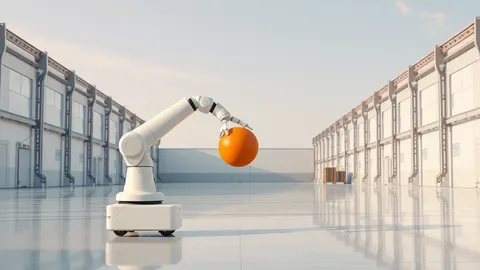
Eka Robotics Raises $150M at $1.45B Valuation for Force-Sensing Robot Grippers
The Cambridge startup secured Series A funding for its vision-force-action AI model that enables robots to adjust grips using tactile data.

Key points
- Eka Robotics raised $150 million in a Series A round led by Andreessen Horowitz and F-Prime.
- The company achieved a reported valuation of $1.45 billion based on its force-sensing robotic manipulation technology.
- Eka’s custom grippers cost under $1,000 and are rated for 5 million duty cycles in current industrial pilots.
Eka Robotics Inc. announced today that it has raised $150 million in new funding, reaching a reported valuation of $1.45 billion. The robot dexterity startup secured this capital to expand its artificial intelligence systems that combine visual and tactile data for precise robotic manipulation tasks.
Andreessen Horowitz and F-Prime, an affiliate of Fidelity Investments, led the Series A financing round. Obvious Ventures and E14 Fund also participated in the deal. E14 Fund had previously co-led Eka’s seed round in May 2025, which raised $11 million according to PitchBook data.
Technology and Performance Metrics
Eka utilizes a vision-force-action model that processes both camera images and force data from custom grippers. Sensors in the hardware inform the AI how firmly the robot holds an object, allowing the system to adjust its grip if an item begins to slip during a task. The company cites applications ranging from packing strawberries to assembling server racks for graphics processing units.
According to the company, its robots currently pick objects outside their training data at a rate of about 1,500 operations per hour. Eka compares this performance to a human baseline of approximately 600 operations per hour. The startup told TechCrunch that its robots handle objects weighing up to 1 kilogram and succeed on more than 95% of picks.
Industry Validation and Founder Background
Pulkit Agrawal, a professor at the Massachusetts Institute of Technology who leads its Improbable AI Lab, co-founded Eka last year with Tuomas Haarnoja. Haarnoja joined the startup from Google DeepMind, where his team previously trained small humanoid robots to play soccer.
Kris Hauser, a professor at the University of Illinois Urbana-Champaign, told TechCrunch that Eka’s demo had a significant wow factor compared to other recent robot demonstrations. He noted the system could adapt to many different objects without retraining but questioned whether it could run on an assembly line for a year without failure. Hauser stated that whether the technology generalizes beyond pick-and-place tasks remains an open question.
What should you do?
Security and technology professionals monitoring the robotics sector should track the deployment of these force-sensing systems in industrial environments. Organizations considering similar AI-driven automation should evaluate the reliability metrics and duty cycle ratings provided by vendors. It is important to verify whether these systems have undergone long-term stress testing in continuous production environments before integration.
What to do and how to stay safe: Eka Robotics
- Monitor vendor announcements regarding the expansion of pilot programs for force-sensing robotic grippers in industrial settings.
- Evaluate the duty cycle ratings and success rates of robotic manipulation systems before integrating them into critical production lines.
- Review academic and industry assessments regarding the long-term reliability and failure rates of adaptive AI robotics in continuous operations.
- Track funding developments in the robot dexterity sector to understand which technologies are receiving significant capital investment and validation.
Step-by-step guide: Prompt Injection Warning Signs: How to Spot AI Manipulation
General security guidance from the Threat Times newsroom. It is not confirmed advice from the organisations named in this story.
Frequently asked questions
How much funding did Eka Robotics raise in its latest round?
Eka Robotics raised $150 million in a Series A round led by Andreessen Horowitz and F-Prime.
What is the reported valuation of Eka Robotics after this funding?
The company achieved a reported valuation of $1.45 billion following the announcement of the new funding.
How does Eka’s robot performance compare to human workers?
Eka’s robots pick objects at about 1,500 operations per hour, compared to a human baseline of approximately 600 operations per hour.