Eka Robotics raises $150M Series A, hits $1.45B valuation
Eka Robotics secured $150 million in Series A funding led by a16z and F-Prime, achieving a $1.45 billion post-money valuation for its physical AI manipulation model.
Key points
- Eka Robotics closed a $150 million Series A round led by a16z and F-Prime.
- The startup achieved a $1.45 billion post-money valuation following the investment.
- The robot demonstrates superhuman dexterity, picking 1,500 objects an hour.
Eka Robotics closed a $150 million Series A funding round that values the company at $1.45 billion post-money. The investment was led by venture capital firms a16z and F-Prime, marking a significant milestone for the startup founded by MIT professor Pulkit Agrawal and former Google DeepMind researcher Tuomas Haarnoja.
According to TechCrunch, the capital injection supports Eka’s development of a manipulation architecture featuring a force-sensitive gripper and a novel deep-learning model. Raghu Raguram, an a16z general partner who co-led the round, stated that the system already exceeds superhuman performance in specific tasks. He anticipates that superhuman capability will expand to many dexterous manipulation tasks within the coming months.
Technical Capabilities and Performance
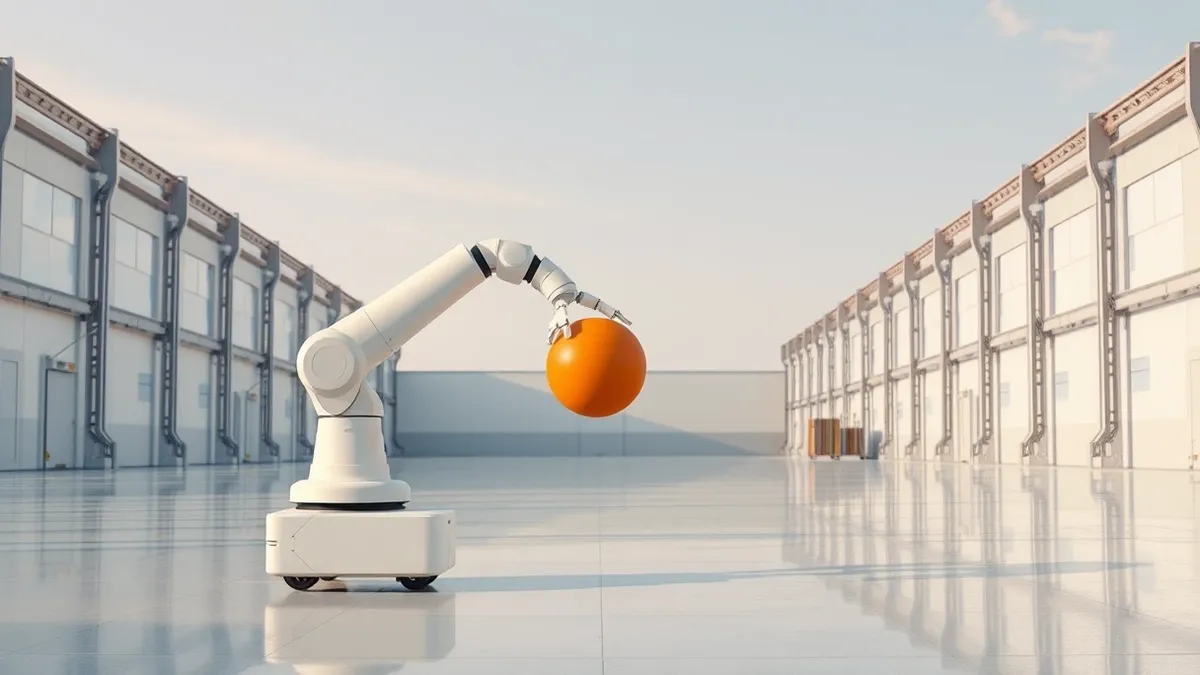
The Eka robot arm distinguishes itself through speed and adaptability, handling approximately 1,500 objects weighing up to 1 kilogram per hour. This throughput significantly exceeds the human average of about 600 objects in the same timeframe. Eka reports that its system reliably picks up objects more than 95 percent of the time without requiring retraining for different items.
Kris Hauser, a professor at the University of Illinois Urbana-Champaign, described the robot’s performance as having a notable “wow factor” compared to other recent demonstrations. He observed that the system adapts to a large variety of objects without retraining. Hauser also noted a “creepy humanness” in the robot’s behavior, particularly its persistence in retrying tasks after initial failures.
Industry Reaction and Safety
An anonymous roboticist from a frontier lab described viewing the Eka robot as an emotional experience comparable to early breakthroughs in legged locomotion five to ten years ago. The observer highlighted the smoothness and rapidity of the robot’s movements, noting that the arm is strong enough to potentially damage itself if it moves too quickly. This speed indicates high confidence in the underlying algorithm’s ability to prevent mechanical failure.
During a demonstration, the anonymous expert handed the robot a raspberry, a common test item in their lab. They recounted the sensation of the heavy robot rushing toward them before slowing down to gently touch their arm. This precise control suggests the foundational model effectively manages force and proximity in real-time interactions.
What should you do?
Security and technology professionals should monitor developments in physical AI and robotics for implications in automated supply chains. Organizations deploying robotic systems should assess the integration of deep-learning models for manipulation tasks. Stakeholders should evaluate the reliability metrics of new robotic architectures before scaling operations. Teams should also review safety protocols for high-speed robotic arms that operate in close proximity to human workers.
What to do and how to stay safe: Eka Robotics
- Review current robotic automation strategies for potential integration of physical AI models.
- Assess the reliability and safety metrics of high-speed robotic arms in operational environments.
- Monitor industry developments regarding superhuman performance in dexterous manipulation tasks.
- Evaluate the risk of mechanical failure in robots that rely heavily on algorithmic control.
Step-by-step guide: Prompt Injection Warning Signs: How to Spot AI Manipulation
General security guidance from the Threat Times newsroom. It is not confirmed advice from the organisations named in this story.
Frequently asked questions
How much funding did Eka Robotics raise?
Eka Robotics raised $150 million in a Series A round led by a16z and F-Prime.
What is Eka Robotics' post-money valuation?
The startup achieved a post-money valuation of $1.45 billion following the funding round.
How does Eka's robot performance compare to humans?
The robot can pick up 1,500 objects per hour compared to a human average of 600, with over 95 percent reliability.